
Several accidents, tied-up rescue resources and too few free safety helicopters: reports from participants and the media now give a more concrete picture of the neutralisation on the third stage of the Rallye du Maroc 2026. The interruption demonstrably did not affect only the trucks. Crews from the rest of the FIA field were also stopped and sent back to the bivouac.
This article does not have a detailed race direction decision covering all the participants affected.
Why the stage was neutralised
TV3/Sportas.lt reports, citing the Defender Rally Team, that after accidents on the course there were no longer enough free helicopters for further safety cover. Safety and medical personnel had been called out to incidents. The organisation made crews still running wait at checkpoints and then sent them back.
According to the report, Rokas Baciuška and Oriol Vidal had covered roughly 300 kilometres when they were told to stop. The team confirmed that both were fine. The helicopter shortage is therefore now backed up by specific accounts from participants; which individual call-outs tied up the capacity remains unclear.
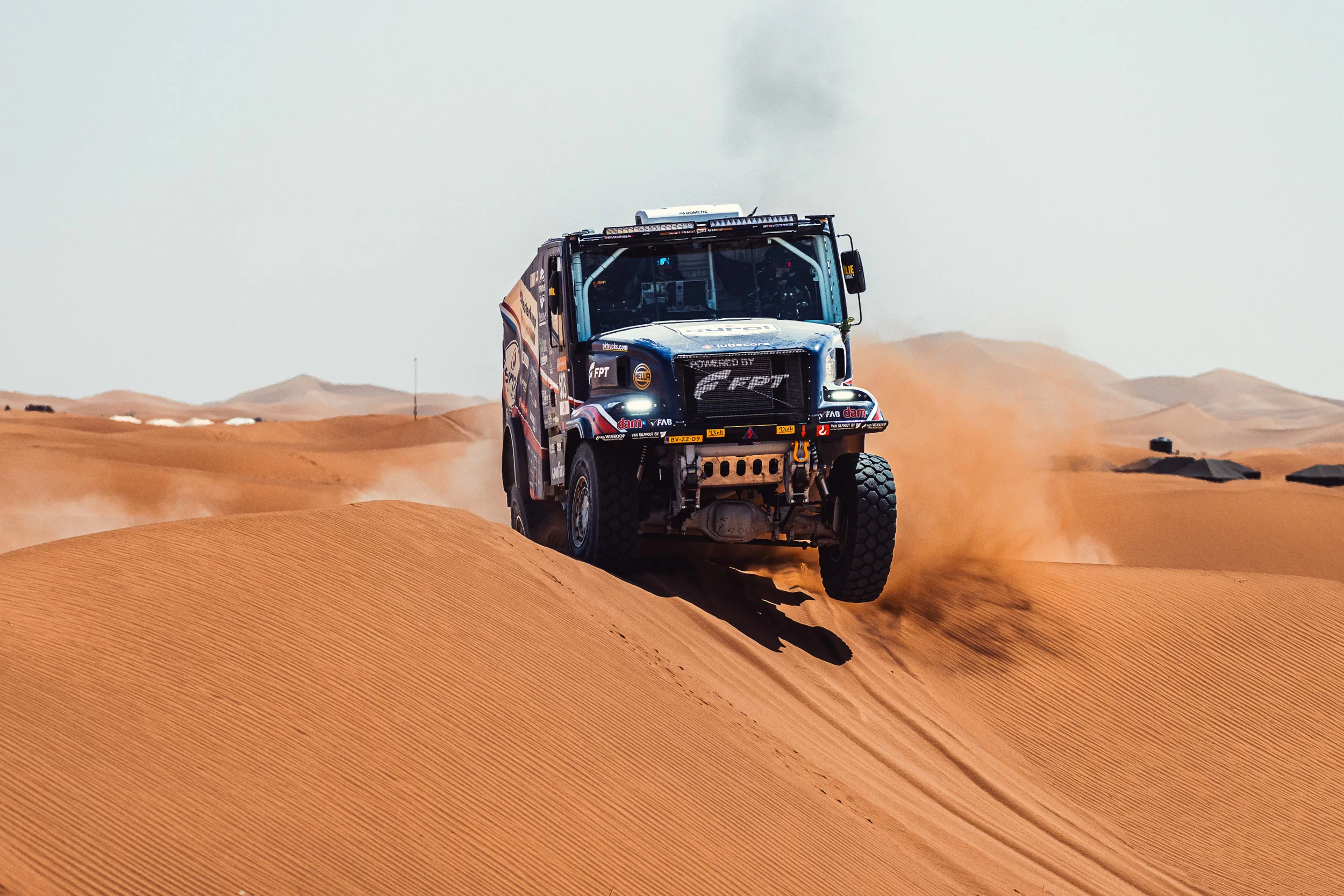
Kilometre 294 is not a confirmed accident location
Somos Dakar gives kilometre 294 as the point where the stage, originally about 363 kilometres long, was halted. Jorge Cano describes there that he and Abelardo Ruanova were stopped in a DZ, a speed control zone. The report cites missing helicopters after numerous accidents in various categories as the background.
This detail describes a stopping or neutralisation area. It does not prove that a triggering accident happened exactly there, nor that all participants were timed up to that kilometre.
Participants were also barred from continuing further back
How different the situation was across the field is shown by the report on Roger Grouwels and Rudolf Meijer at Rallymaniacs. Their vehicle stopped at kilometre 196 because of a faulty main switch. By their account, the repair took about 24 minutes. They were then not allowed to continue and waited roughly another hour and a half before the organisation sent them back.
This report also mentions several accidents and the resulting unavailability of safety helicopters. How the pair’s times would be treated was still open at the time of publication. A uniform classification of the entire FIA field at kilometre 294 cannot be derived from this.
Probabilities: expressly an assessment
The following figures are subjective editorial confidence values from the news scan, not official or statistically derived probabilities. They are not calibrated and must not be read as proof. Several reports may be based on the same original information.
| Statement or hypothesis | Assessment from the scan | Context |
|---|---|---|
| Neutralisation around kilometre 294 | approx. 99% | Reported several times for participants stopped there; no blanket statement on the overall classification. |
| Too few free helicopters after several accidents | approx. 97% | Strongly supported by participant and team reports. |
| Deliberate stop at a DZ | approx. 90% | Specific account from Jorge Cano; not transferable to all crews. |
| Moraes’ accident was one of the triggering incidents | approx. 65% | Unconfirmed hypothesis from the scan. |
| A further accident tied up the last safety resource needed | approx. 60% | Possible reconstruction, not a confirmed explanation from race direction. |
| Serious injuries or medical helicopter evacuations | No reliable percentage | Not sufficiently substantiated in the reports reviewed here. |
Moraes: accident reported, connection unclear
France Racing reports on Lucas Moraes’ accident on the third stage. It does not follow, however, that this accident triggered the neutralisation. The link mentioned in the scan remains conjecture. Likewise, a helicopter being tied up does not automatically mean a seriously injured person was flown out.
The motorcycle classification must be considered separately
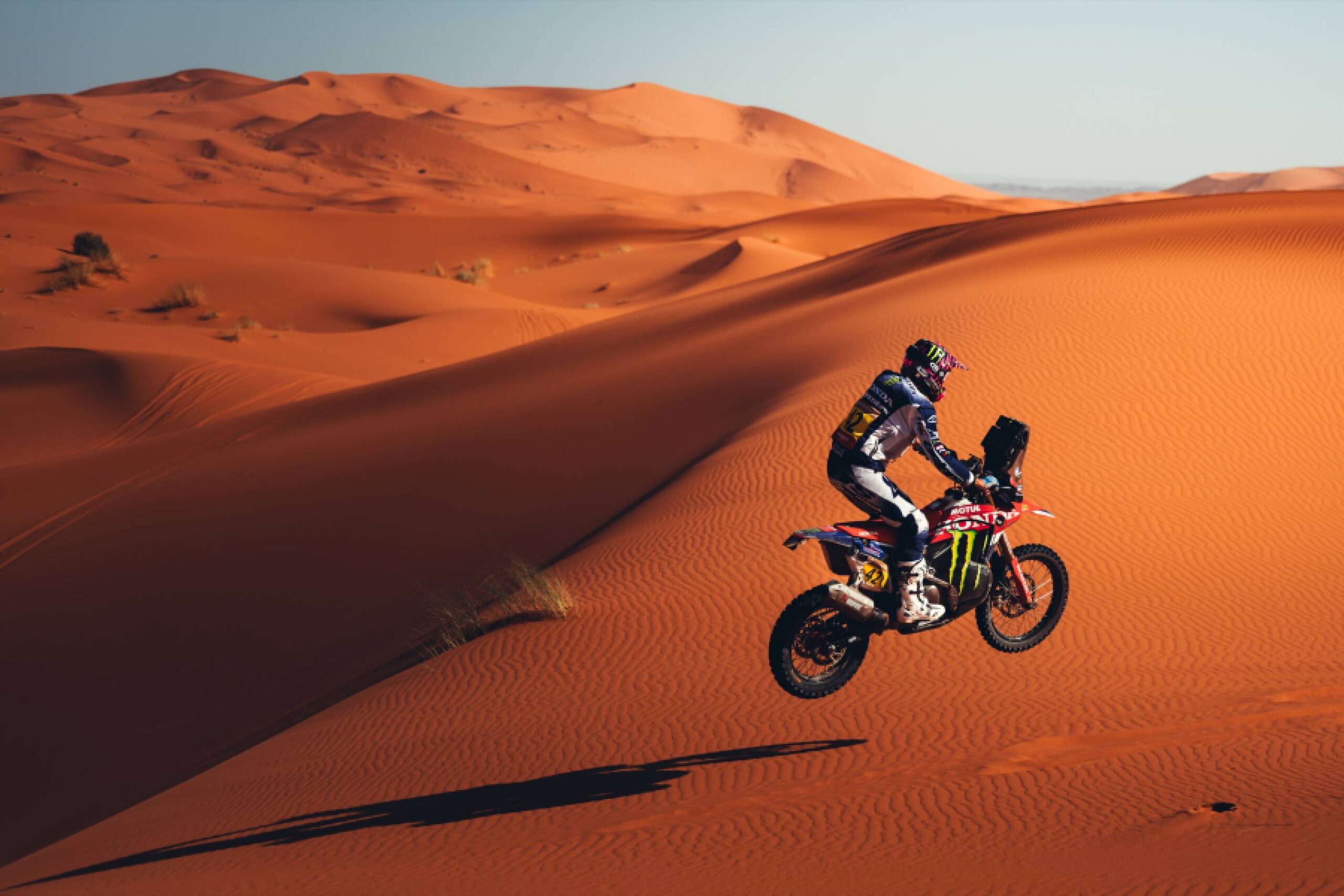
A daily classification exists for the motorcycles: in the published RallyGP results from Honda Racing, Luciano Benavides wins ahead of Tosha Schareina and Ignacio Cornejo. This does not prove that every later motorcycle starter was unaffected. It does contradict a blanket claim that the entire motorcycle stage was cancelled.
What still needs to be clarified
The reports now support the explanation that several call-outs exhausted the available rescue capacity. The specific triggering accidents, possible evacuations and the full treatment of the affected participants in the classification remain open. For riders and teams, the day shows that it is not only the terrain but also the available safety cover that decides whether a stage can continue.
Image credits
Image 1: Actiongraphers (copyright notice in the image metadata), provided in the race report from Rallymaniacs; individual photographer not named.
Image 2: Honda Racing / Monster Energy Honda HRC; individual photographer not named.
Rally logo: official Rallye du Maroc website. Title and social banners: AI-generated symbolic images of a desert landscape with a pause symbol, using the official rally logo; not documentary photographs of the neutralisation.