
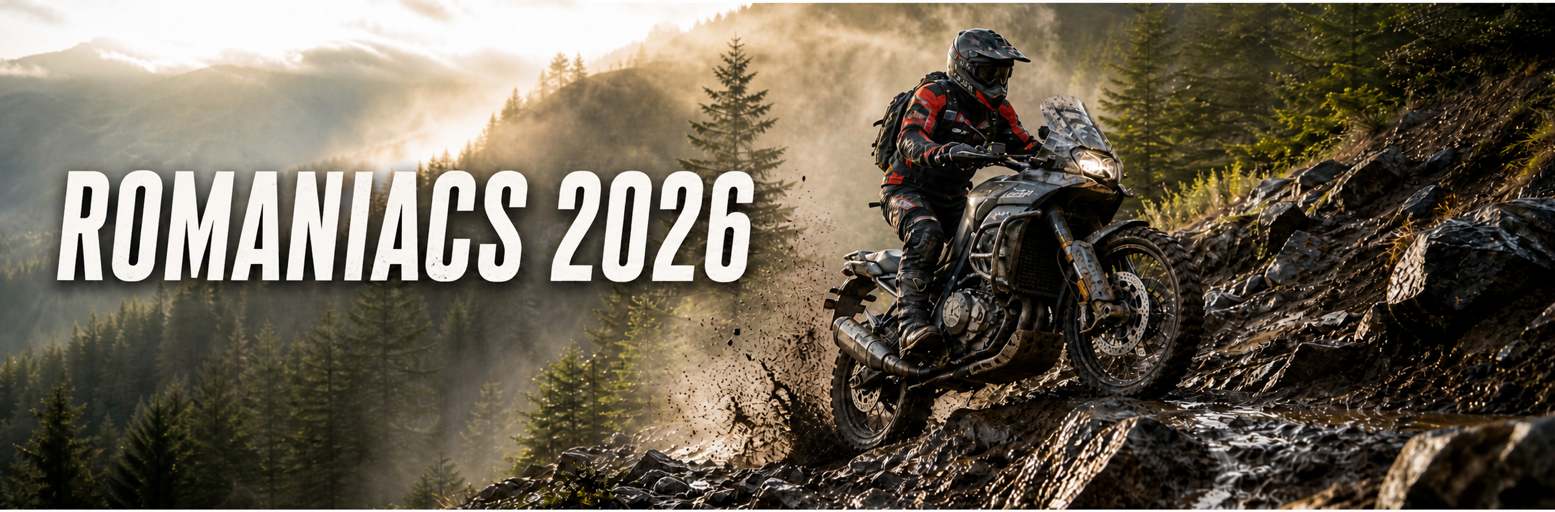
Three Adventure classes, around 100 starters and motorcycles ranging from a comparatively light 450cc twin to a full-size adventure bike: the 2026 Red Bull Romaniacs showed impressively that the “Adventure Bike” experiment has become a racing discipline in its own right. Particularly exciting was the meeting of hard enduro specialists, rally riders and ambitious privateers. And right in the middle of it: several remarkable German participants.
For a long time, the Red Bull Romaniacs was above all one thing: one of the toughest races in the world for classic sport enduro bikes. But in the Romanian Carpathians, you now hear twin-cylinder engines more and more often – and in some cases even triple-cylinder ones. In 2026, around 100 participants started in the three Adventure classes. Entirely different concepts met head-on: CFMOTO 450MT, Yamaha Ténéré 700, KTM 890 Adventure, Triumph Tiger 900, BMW R 12 G/S, BMW R 1300 GS, Kove 800X Rally and even a KTM 950 SuperEnduro.
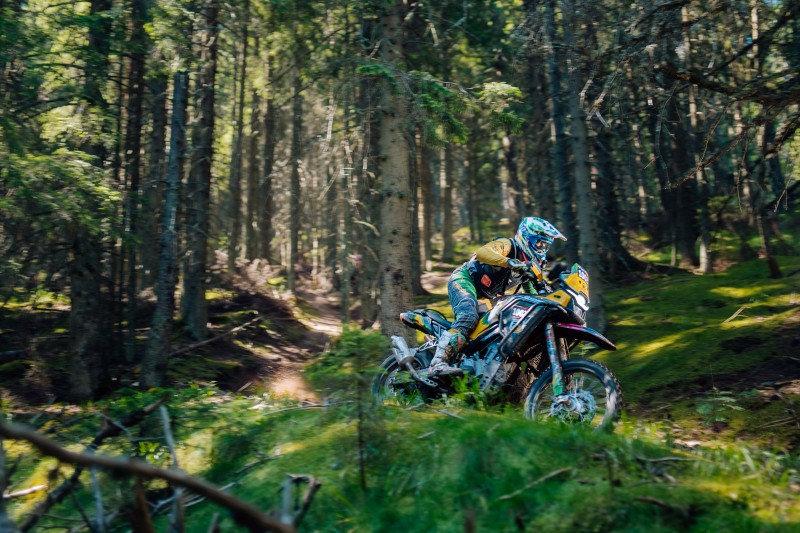
The question is no longer whether you can ride the Romaniacs on an adventure bike. The question now is:
How far can you take it?
Three classes – three ideas of Adventure
In 2026, the Adventure category consisted of three classes for the first time: Adventure Lite, Adventure Core and Adventure Ultimate. Lite is the entry point. The courses are flowing and less extreme than in the higher classes, but still contain typical Romaniacs elements. Above it, Adventure Core was introduced in 2026 for the first time. The new class is meant to close the large gap between Lite and Ultimate. Here, faster rally and adventure sections meet singletrails and significantly more technical climbs and descents.
And then there is Adventure Ultimate. Here, Adventure finally becomes Hard Adventure. Technical singletrails, rocks, steep climbs and descents, and terrain where even a normal sport enduro bike would be demanding to ride.
Except that here, twin-cylinder motorcycles weighing in some cases well over 200 kilograms are being ridden. The organiser itself now speaks of a new discipline:
Hard Adventure Racing.
And the 2026 field showed quite impressively where things are heading.
Adventure Ultimate: Mario Roman beats Pol Tarrés
Before the race, Pol Tarrés on his Yamaha Ténéré 700 was seen as one of the big favourites. Tarrés had won Adventure Ultimate in 2025 and had shown over the years what a big Ténéré can do in extreme terrain. But in 2026 he faced new competition.
With Mario Roman and Dieter Rudolf, two experienced Gold Class riders switched to adventure bikes. Roman chose a CFMOTO 450MT, Rudolf a KTM 890 Adventure. The prologue had already shown how close it would be.
Tarrés and the German Kevin Gallas took turns at the front in the first laps. A crash by Tarrés eventually opened the door for Roman. The Spaniard won the prologue. And he stayed fast in the Carpathians too.
Roman won the first two off-road days. Tarrés hit back on the third day, so that only around five minutes separated the two going into the finale. The decision came on the last day. Tarrés crashed twice, damaging a footpeg among other things and later his visor. Roman, by contrast, remained largely error-free.
After four off-road days, the result was set:
- Mario Roman – CFMOTO 450MT – 13:27:30
- Pol Tarrés – Yamaha Ténéré 700 – +14:40
- Dieter Rudolf – KTM 890 Adventure – +15:53
- Kevin Gallas – Yamaha Ténéré 700 – +37:54
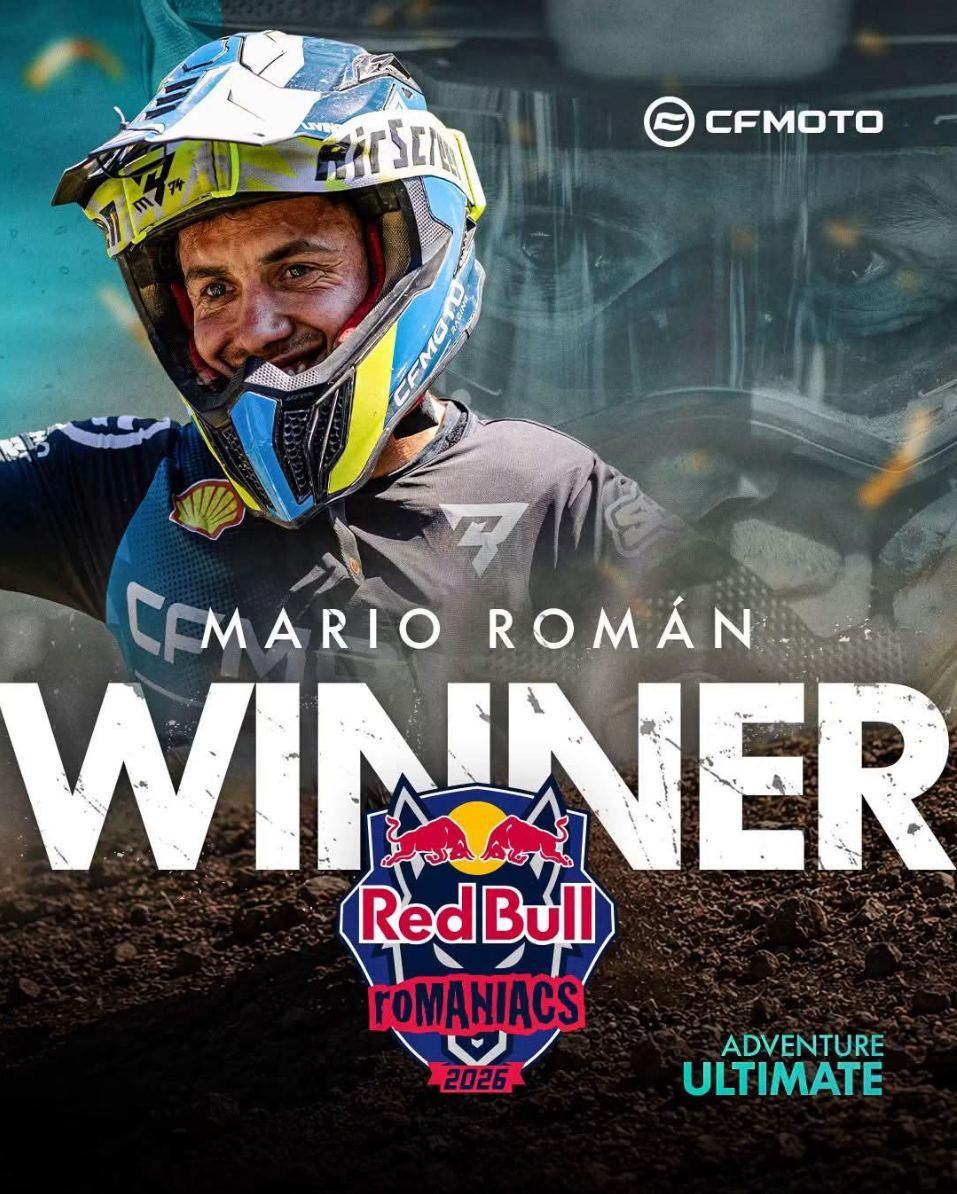 So three entirely different motorcycle concepts stood on the podium. A 450cc CFMOTO won ahead of a Ténéré 700 and a KTM 890 Adventure. Perhaps that was exactly one of the most important lessons of the 2026 Romaniacs:
The perfect Hard Adventure race bike apparently doesn’t exist yet.
Kevin Gallas: fourth place tells only half the story
From a German perspective, Kevin Gallas was one of the most eye-catching riders in the whole Adventure category. Gallas comes originally from a strong background in trial, SuperEnduro and hard enduro. Rally has now become part of his sporting profile too. He showed how successful this step has been at the start of the year: in 2026, Gallas won the overall motorcycle classification of the Africa Eco Race on a Yamaha. After the long route through Morocco, Mauritania and Senegal, he won in Dakar by just 41 seconds ahead of Gautier Paulin. He therefore brings a highly interesting mix: trial technique and extreme enduro experience on one side, rally, navigation and long race days on the other.
At the Romaniacs, this combination worked remarkably well. Already in the prologue, Gallas showed that he wasn’t there just to take part. On his Yamaha Ténéré 700, he fought Pol Tarrés directly for the lead in the first laps.
On the first off-road day, Gallas first had to find his rhythm, but worked his way up to fourth place. He stayed in the leading group afterwards too. After three days, he was still fourth overall. In the end, the podium was out of reach.
But his most spectacular moment came right at the end.
The final hill – and Gallas simply rides up it
The finish arena in Sibiu is one of the images people associate with the Red Bull Romaniacs. After four days in the Carpathians, an artificially or specially prepared final section awaits once more, with a brutal main climb in front of thousands of spectators. And it was right there that Gallas set one of the exclamation marks of the entire Adventure week.
On his Ténéré, he attacked the main hillclimb. And conquered it straight away.
Kevin Gallas was thus the first Adventure rider to conquer the big final main hillclimb.
The organiser later described his run as one of the defining moments of the Adventure race. And perhaps this very scene describes Gallas’ Romaniacs better than the results list. There, the entry at the end reads fourth place.
Anyone who saw him on the final hill, however, is likely to remember something else: a Ténéré 700, a rather absurd slope – and a rider who simply rides up.
Maxi Schek: Dakar, GCC – and the Romaniacs with a boxer
Maxi Schek wrote an entirely different story. Schek comes from enduro and cross-country racing, rides the German Cross Country Championship (GCC) and has at the same time developed more and more towards rally raid. In 2026 he finished the Dakar in the particularly raw Original by Motul / Malle Moto classification, in which riders manage without classic team service and have to do a large part of the work on the motorcycle themselves.
For the coming Dakar, too, this path remains part of his sporting direction. For the Romaniacs, however, Schek chose a remarkable tool:
a BMW R 12 G/S.
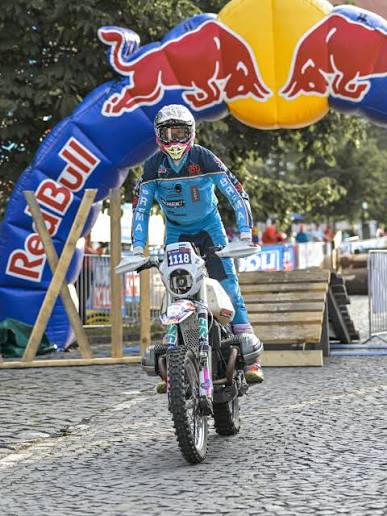 While other teams optimised their adventure bikes consistently for competition, Schek put a big air/oil-cooled boxer on the start line of Adventure Core. The prologue alone brought fifth place. On the first off-road day Schek was seventh, on the second seventh again. On the third day he had worked his way up to sixth overall.
The week was by no means trouble-free. Rider and BMW had to cope with technical difficulties. But Schek stayed in the race. In the end, it turned into a remarkable result:
Fourth place in Adventure Core.
His total time was 12:02:24 hours – 41:37 minutes behind the winner. Schek therefore missed the podium by only one place. His rider profile in particular makes this performance interesting.
Dakar and rally raid demand navigation, endurance and the management of rider and motorcycle over long race days. The GCC, by contrast, brings high-speed cross-country racing on sight, direct duels and quick reactions to constantly changing terrain. At the Romaniacs, Schek had to combine these skills with technical enduro.
And with a boxer, at that. The Romaniacs themselves picked up the story during the event and dedicated a piece to Schek with a rather fitting title:
“Boxer power, baby!”
Manolito Welink: Adventure racing long before the adventure hype
Another German rider deserves more attention in this context: Manolito Welink. Welink’s motorsport CV fits surprisingly well with the development we are currently seeing in adventure racing. His story does not begin with adventure bikes.
As a child he rode motocross, and road racing and supermoto followed later. After that, the focus shifted more and more towards off-road. The GCC is no new territory for Welink either. In 2010 he finished seventh overall in GCC Pro Experts, and in 2011 even sixth overall.
He thus brings exactly the kind of cross-country experience that can be extremely valuable on an adventure bike: high speed on sight, changing terrain, duels and the ability to ride consistently fast over a long period. Even more interesting, however, is that Welink was riding big twins competitively before Hard Adventure Racing became the current trend. In 2022, for example, he used a Husqvarna Norden 901 in genuine enduro competition.
Not on a touristy adventure ride. But in a three-hour enduro, among other things, and even at the German Enduro Championship in Streitberg. Riding a motorcycle weighing around 200 kilograms through slippery climbs and descents and classic enduro tests was still much more unusual then than it is today.
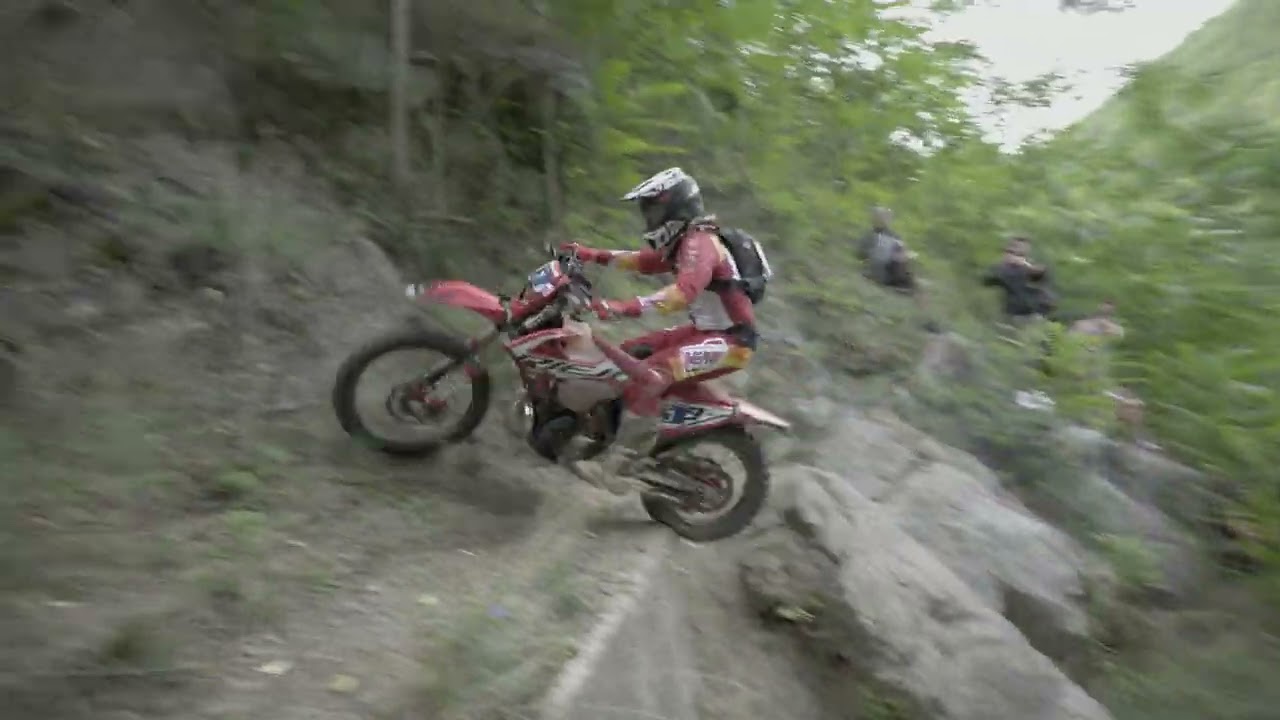
Welink is therefore one of the riders who showed early on:
A big adventure bike can also be a sports machine.
At the 2026 Romaniacs, his start therefore fits into a remarkable German group. There is Kevin Gallas, who combines trial, hard enduro and rally. Maxi Schek brings together Dakar, rally raid, Malle Moto, GCC and enduro.
And Manolito Welink comes with decades of experience in motocross, supermoto, cross country, enduro and the competitive use of heavy twins. Three riders – and three entirely different paths to adventure racing.
Sam Sunderland: a Dakar champion at the Romaniacs
The most prominent rally rider in the Adventure field, however, was Sam Sunderland. Two-time Dakar winner. Two-time Rally Raid World Champion.
In 2025, on his Romaniacs debut, Sunderland had practically dominated Adventure Lite. He won the prologue and all four off-road days and finished more than four hours ahead of the competition. For 2026 it was therefore clear: Lite was done.
Sunderland moved up to the new Adventure Core. His motorcycle was remarkably conventional. The Triumph Tiger 900 Rally Pro remained comparatively close to standard specification and was among the heaviest motorcycles in the class.
Even so, Sunderland fought for the overall win. But René Columna on the CFMOTO 450MT proved a tough opponent. Sunderland also had to overcome technical difficulties during the race. On the final day, the Dakar champion launched one more big charge.
It wasn’t quite enough. René Columna won Adventure Core in 11:20:47 hours. Sunderland finished second – 11:42 minutes behind.
For a two-time Dakar winner, second place is unlikely to have been the desired result. For the development of Hard Adventure Racing, his performance is nevertheless highly interesting. A Dakar champion rides a largely standard, heavy Tiger 900 through genuine Romaniacs terrain and fights with it for the class win until the last day.
That shows how far rally raid skills can carry at the Romaniacs. And at the same time, where their limits begin.
Ivan Cervantes: sacrificing his own race for his team-mate
Sunderland’s Triumph team-mate Ivan Cervantes also belongs in this story. Cervantes, however, is not a classic rally rider. He is a five-time enduro world champion who later made a successful move towards rally and adventure.
He thus embodies almost perfectly the fusion of the various off-road disciplines. Cervantes also started on a Tiger 900 in Adventure Core. His Romaniacs ended, however, on the second off-road day.
And the story behind it is more remarkable than any result. Both Cervantes and Adventure Ultimate rider Jonny Walker had technical problems with their Triumph motorcycles. Cervantes then decided to abandon his own race and give Walker parts of his motorcycle so that he could continue.
Walker eventually reached sixth place in Adventure Ultimate on the roughly 220-kilogram, near-standard Tiger 900. Cervantes got no result in the table for it. But probably one of the strongest team moments of the entire event.
The German Adventure riders
Gallas, Schek and Welink were not the only German riders to get on big motorcycles. In Adventure Core, for example, Nikolaus Häring started on a Kove 800X Rally and worked his way up noticeably during the week. In Adventure Lite the German contingent was larger still.
Among others, Raimund Ochs with a KTM 950 SuperEnduro and Ralf Zeisberg with an Aprilia RXV 450 were on the start line. The motorcycles used show how broad the Adventure idea has become at the Romaniacs. Getting a full-size adventure bike through several days of Romanian off-road terrain is something entirely different from the fight for seconds between Roman and Tarrés in Ultimate.
But that is exactly why Lite exists. For many participants there, it is not about beating a factory rider. The first big goal is:
To finish the Romaniacs on an adventure bike.
Four German participants achieved the Adventure Lite finish in 2026. The German range thus extended from the fight for the lead in Ultimate to successful finishes on full-size adventure motorcycles.
Ellie Pleissner: from GS Trophy experience to a Romaniacs finish
One of these German finishers was Ulrike “Ellie” Pleissner of The8hundreds. She competed in Adventure Lite on a BMW R 1300 GS – a motorcycle that makes clear on paper where her personal challenge lay: not the fight for the class win, but tackling the Romaniacs safely and consistently on a full-size adventure bike.
Extreme terrain on a big BMW was not entirely new to Ellie, however. At the BMW Motorrad International GS Trophy 2024 in Namibia, she was part of the German women’s team together with Marion Linder. There she gained experience with heavy GS motorcycles, demanding off-road sections and tasks that required riding technique, endurance and teamwork in equal measure.
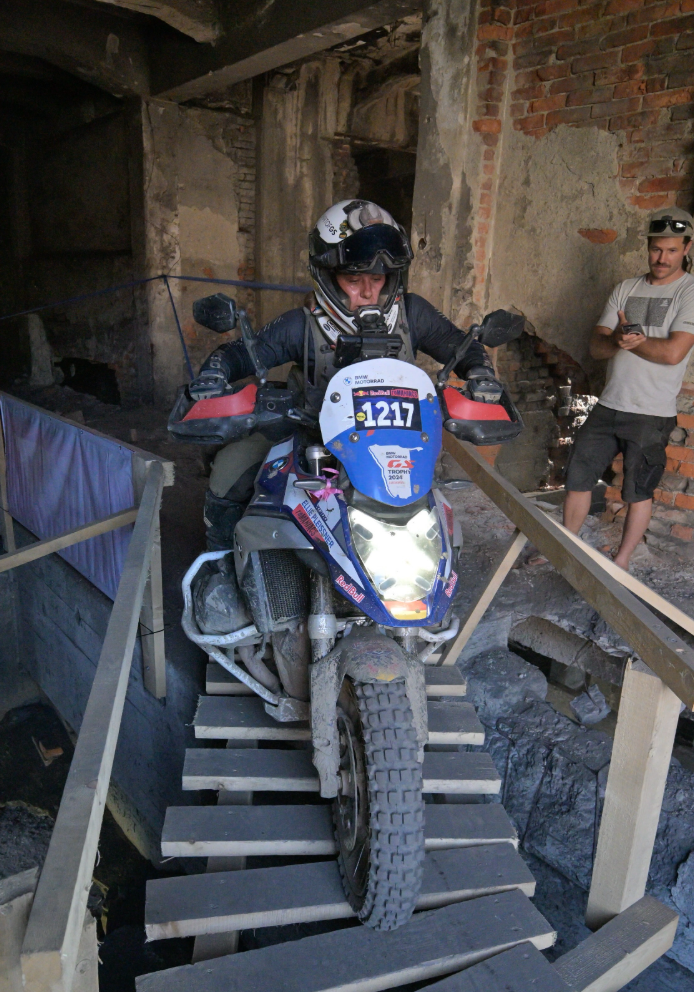
At the 2026 Romaniacs, she transferred this experience to a genuine multi-day hard enduro format. After the prologue and all four off-road days, Ellie reached the finish and took 31st place in Adventure Lite. She was also one of only six women to successfully complete one of the Adventure classes in 2026.
Her result stands for a different, but no less interesting side of Hard Adventure Racing: an R 1300 GS does not have to fight for podium times to write a remarkable story at the Romaniacs. Sometimes the real achievement lies in getting such a motorcycle through the Carpathians day after day – and arriving in Sibiu as a finisher.
Rally riders are changing the Romaniacs
It is particularly interesting which riders are now pushing into this young discipline. Sam Sunderland comes practically from the pure rally raid world. Maxi Schek combines Dakar and rally raid with Malle Moto, GCC and enduro.
Kevin Gallas comes from trial, SuperEnduro and hard enduro and has since clearly broadened his profile towards rally. Pol Tarrés has combined trial and hard enduro with professional rally raid for years. And Ivan Cervantes was initially one of the best enduro riders in the world before rally and adventure were added.
Then there are riders such as Manolito Welink, who have for years combined cross country, classic enduro and the competitive use of big twins. At the Romaniacs they meet riders such as Mario Roman, Dieter Rudolf and Jonny Walker, whose foundation lies even more in hard and extreme enduro. It is precisely this meeting that makes the Adventure classes so exciting at the moment.
Nobody yet knows what the perfect motorcycle looks like
At least as interesting as the riders is the technical development. Mario Roman won on a CFMOTO 450MT. Pol Tarrés finished second on the Yamaha Ténéré 700.
Dieter Rudolf put a KTM 890 Adventure in third place. Kevin Gallas finished fourth on another Ténéré. Jonny Walker brought a roughly 220-kilogram Triumph Tiger 900 to sixth place.
In Core, Sunderland fought for the win on a likewise largely near-standard Tiger 900, while Maxi Schek finished fourth on the BMW R 12 G/S. These are not variations of the same concept. These are entirely different answers to the same question.
Light and nimble? Lots of torque? Big suspension?
Close to standard? Extreme modification? 450cc?
700? 900? Or boxer?
In 2026 there was still no definitive answer. And that is exactly what makes this young class interesting.
From the Romaniacs to the rally
For some of the German riders, the story does not end in Sibiu. Maxi Schek and Manolito Welink will reappear in a different setting: at the Dinaric Rally.
And there the demands change significantly. At the Romaniacs, the task is to move a big motorcycle through terrain that is at times technically absurd. Traction, balance, line choice and avoiding mistakes can matter more than absolute speed. At a rally, the picture shifts.
Navigation, roadbook, high speed over longer distances and the ability to manage motorcycle and body over several race days come more to the fore. That is precisely why riders such as Schek and Welink are interesting. They do not move within just one discipline.
They move between disciplines. And it is right there that a new type of adventure rider currently seems to be emerging.
Adventure Ultimate is long past being a “travel enduro race”
Anyone who still thinks of Adventure Ultimate as a somewhat tougher adventure bike event is likely to have been taught otherwise by 2026 at the latest. The level is rising enormously. Hard enduro professionals are switching to adventure bikes.
Rally raid riders are discovering the Romaniacs. Cross-country and enduro riders are bringing their experience to big motorcycles. Manufacturers are developing special motorcycles, suspension and concepts.
At the same time, riders are learning to tackle obstacles with machines that in some cases weigh twice as much as a classic hard enduro bike. The boundaries between rally raid, hard enduro, trial, cross country and adventure racing are beginning to blur. Perhaps, then, not even Mario Roman’s win was the most important image of the 2026 Romaniacs.
Perhaps it was Kevin Gallas on the last hill. A Yamaha Ténéré 700 stands in front of a climb that is not really made for such a motorcycle. Gallas opens the throttle.
And rides up. That is exactly what Hard Adventure Racing is about at the moment:
Trying things on an adventure bike that, until a few years ago, you were convinced you were better off not trying on an adventure bike.
The 2026 Red Bull Romaniacs showed that this has now become more than a spectacular experiment.
A new motorsport discipline is emerging.
And for some of the riders, the next chapter begins just a few weeks later:
Rally.
PS: In the upcoming podcast from Make it Rally, participants will also have their say and share their impressions directly and unfiltered. Give it a listen.