Last updated on 16. June 2025
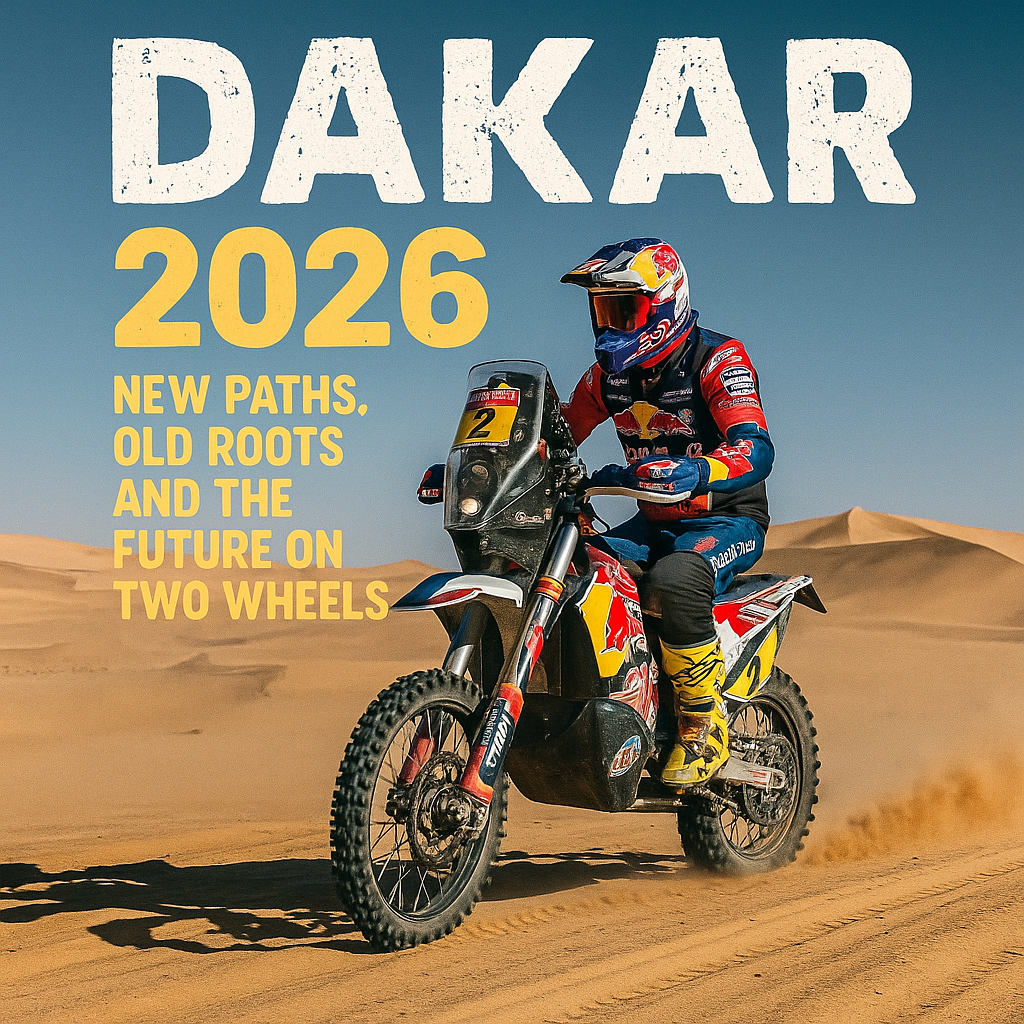
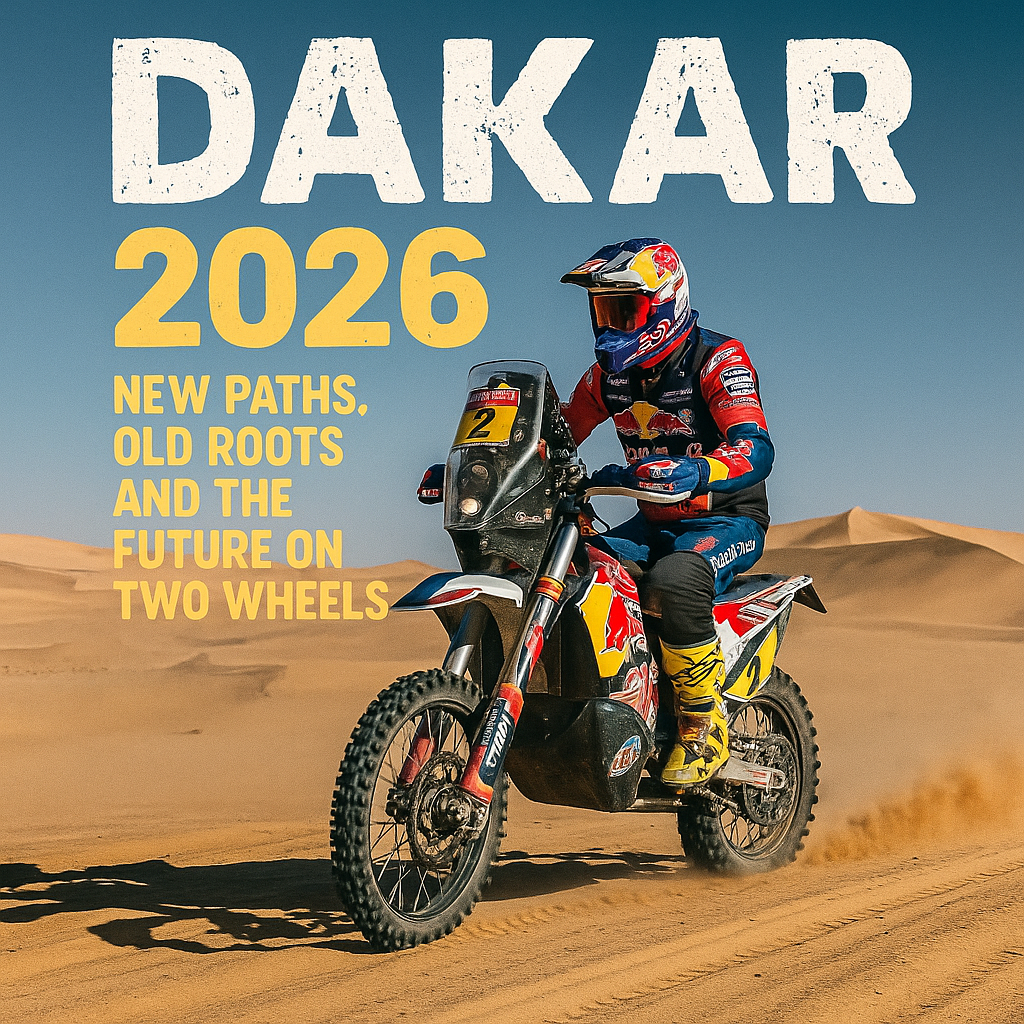
The Dakar 2026 is just around the corner – and with it, one of the most exciting and profound developments in the rally’s recent history. From January 3 to 17, 2026, riders, teams, and fans will gather for the 7th edition in Saudi Arabia – with new challenges, tougher stages, and a clear desire to revive the roots of adventure racing. For motorcycle riders, this means: more autonomy, more navigation, more endurance – and maybe a touch more of that old-school magic.
The 2026 Route – Loops, Layers & Sweat
The rally starts and finishes in the coastal town of Yanbu on the Red Sea. The total distance is around 8,000 km, with approximately 5,000 km of special stages. In between: a well-deserved rest day in Riyadh before returning to the loops.
What’s new:
– No Empty Quarter this time – instead, cleverly designed loop stages that reduce logistics but remain demanding for riders.
– Separate routes for motorcycles and cars on four stages – a smart step to increase safety and fairness.
Back to the Roots: The New Marathon Stages
Two new marathon stages are on the schedule for 2026. And they carry the spirit of the infamous “48h Chrono Stage”:
– No service, no mechanics.
– No tents.
– Overnight stays in the middle of nowhere.
– Meals consist of military rations.
This demonstrates the organizers’ intention to give the modernized Dakar a rougher, more original face again.
Motorcycles in Focus: Navigation, Nerves & New Opportunities
For the two-wheel category, the new structure marks a return to real rally skills:
– Navigation takes on an even greater role.
– Tire and energy management becomes critical.
– Young riders receive more visibility and spotlight.
With the retirement of Kevin Benavides and Pablo Quintanilla, 2026 also marks the beginning of a new sporting era.
New Categories, New Opportunities: The Stock Class Arrives
With the introduction of the revised Stock Class (T2), Dakar 2026 also opens the door to more accessibility in other categories:
– Budget cap: €300,000–500,000
– Reduced homologation requirements
– Rugged, near-production vehicles – e.g. Land Rover Defender
This broader push for accessibility and simplification also inspires developments in the motorcycle category.
More Media Access, More Fan Engagement
Another goal of Dakar 2026: more visibility – both on-site and worldwide:
– Loop stages enable greater media presence at key locations
– More drone coverage, easier access for teams
– Enhanced fan experience through social media and bivouac visits
Sustainability & Technology: Mission Future
– Under the Dakar Future initiative, all elite cars and trucks must meet ultra-low emission standards starting in 2026.
– The Mission 1000 program continues: hybrid, electric, and hydrogen vehicles will participate in testing mode – turning the bivouac into a green lab.
W2RC 2026 – Strategically Important for Motorcycles Too
Dakar serves as the opening round of the FIM World Rally-Raid Championship (W2RC). The 2026 calendar includes:
– Saudi Arabia (Dakar)
– Portugal
– Morocco
– Argentina (Desafío Ruta 40)
– Abu Dhabi (replacing South Africa)
Speculation & Reality: What Will Motorcycle Rallying Look Like in a CO₂-Neutral Dakar 2030?
An ambitious goal is on the table: Dakar aims to be CO₂-neutral by 2030. While hybrid engines, e-fuels, and hydrogen solutions seem technically feasible for cars and trucks, this raises big questions for the motorcycle category.
So far, Mission 1000 has only tested electric motorcycles – under real conditions, but outside of the main competition. The results have been underwhelming: limited range, thermal issues, and questionable durability in desert conditions.
The Africa Eco Race has only ever been completed by an electric motorcycle once – and far outside of competition ranking.
Three future scenarios:
1. Hybrid motorcycle systems
2. Synthetic fuels (e-fuels)
3. A separate category for alternative powertrains
Conclusion: If the Dakar Rally is to survive in the form we know and love by 2030, real solutions are needed – not just PR slogans. Perhaps the shift doesn’t begin with bans or mandates, but with innovation in the hands of riders and teams who are already willing to explore new paths.