Skip to content

€19,630 for the Rallye du Maroc: Bruno Bozzo Reveals His Budget

What does a Rally2 entry at the Rallye du Maroc cost? Bruno Bozzo has made his calculation public: the Chilean budgets €19,630 for his 2026 campaign. His breakdown shows how the cost of the bike, support and the remaining items add up.

The figures come from his official project website. This is the budget before the event; no final statement of costs is available yet.

Bruno Bozzo’s Path: From Motocross to a Dakar Dream

Between 2017 and 2020, Bozzo won three Chilean motocross championship titles. In 2021 he moved to Spain, combined a business administration degree with racing, and rode as a Rieju factory rider in EnduroGP and the Spanish championship. This is described by +Motor Chile in its profile of 9 September 2026.

An international success followed in 2023 at the International Six Days of Enduro in Argentina: Bozzo won the Club class C3. Rieju’s race report at the time confirms this. He therefore already had experience of a demanding multi-day competition.

The turning point came in June 2025: a cruciate ligament rupture in training meant surgery and eight months of rehabilitation. While recovering, Bozzo took online navigation lessons from John Guerra. His Dakar dream, inspired by Carlo de Gavardo and Francisco “Chaleco” López, became a concrete rally raid project. He also reports on this change in +Motor Chile.

2026: Spanish Runner-Up, Morocco Is the Next Step

In his first rally raid season, Bozzo became Spanish motorcycle runner-up behind team-mate Mario Olmedilla. He is now planning his first World Championship round in Morocco with Pedregá. The Dakar remains the goal; financing it is still a prerequisite. The profile does not report a confirmed Dakar start.

This gives the budget question a personal dimension: between sporting progress and the next race stands a sum that has to be financed. The breakdown below makes that step tangible.

How the Morocco Budget Is Made Up

Cost item Amount
Pedregá Premium package: KTM 450 Rally Replica, assistance and bivouac logistics €11,900
W2RC entry, FIM Rally2 €5,000
GPS Unik 4, Sentinel and Iritrack €800
International FIM single-event licence via the RFME €520
Hotels, travel costs and meals around scrutineering €500
Safety and consumables: airbag, mousses €400
Mounts and mounting kits for the navigation tower €330
Flights Valencia–Morocco €180
Total budget according to Bozzo €19,630
Source: Bruno Bozzo’s published project calculation, accessed on 15 September 2026.

The Biggest Item Is the Team Package

Calculated from the table: around 61 per cent goes on the team package, and together with the entry fee it is about 86 per cent. A close comparison of offers is worthwhile here.

For your own planning, it is therefore worth looking closely at what is included: which work does the assistance team carry out? How are spare parts and crash damage charged? Which transport services are included? Only with these answers can two package prices be compared meaningfully.

€5,000 Entry Fee: The Booking Date Matters

The official fee table for the Rallye du Maroc 2026 lists a standard rate of €5,500 for RallyGP and Rally2. Payment before 15 July 2026 earned a €500 discount. Bozzo’s figure therefore corresponds to the reduced rate; his breakdown does not show when he paid.

According to the organiser, the entry fee covers, among other things, sporting participation, medical resources, the W2RC registration for Rally2 and defined catering services. Travel, sporting licence, accommodation, fuel and navigation and safety equipment, on the other hand, appear on the list of services not included.

Deposit and Open Detail Questions Belong in the Calculation

Bozzo also lists a refundable Iritrack deposit of €1,500. On paper, €21,130 must therefore be available temporarily. If it is refunded in full, the deposit does not become a final expense.

For a personal calculation, it should also be clarified where fuel, additional tyres, repairs and possible excesses are accounted for. A lump-sum package item does not yet answer such detailed questions. It makes sense, therefore, to obtain a written list of the services included and the possible additional costs.

What Amateur Riders Can Take From This

Anyone considering a World Championship round themselves can use the table as a framework and fill each item with their own quote. Travel, existing equipment, licence and the support wanted must fit one’s personal situation. A separate reserve for unplanned expenses also helps.

The value of such a publication lies in its transparency: a large total becomes concrete questions that can be settled before booking. That is where solid rally planning begins: with the scope of services, with payment deadlines and with the money that must still be available during the race.

Published inAllgemeinNews

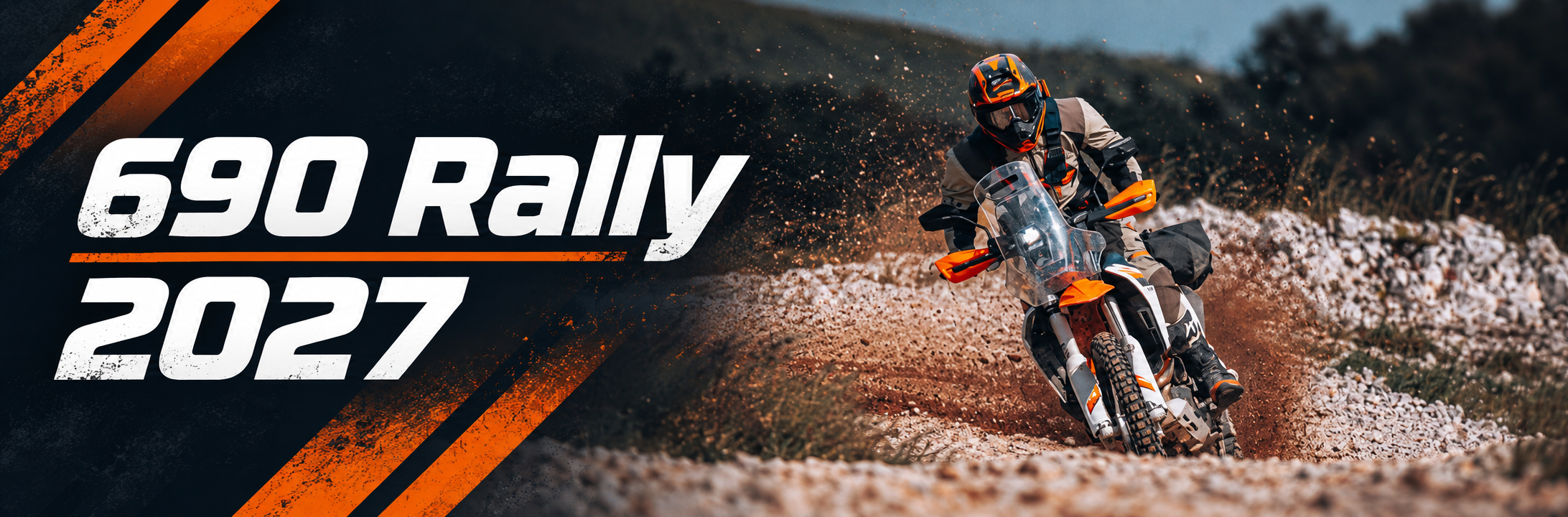
KTM unveils the 690 Rally 2027: in dealerships from October 2026

KTM has unveiled the new 690 Rally for the 2027 model year. Based on the 690 Enduro R, it is a single-cylinder motorcycle for longer off-road journeys, with additional fuel tanks and a distinctive rally front end. Production in Austria is due to start in September, and availability at authorised KTM dealers is announced for October 2026.

The new bike could therefore be in dealerships as early as this autumn. Anyone interested should ask their local dealer directly when demonstration bikes and individual equipment variants will be available. The dates come from the official KTM press release on the launch.

The idea: a single-cylinder bike for longer off-road adventures

KTM describes the 690 Rally as the spiritual successor to the 640 Adventure. The focus is on range, wind protection and usability over longer distances. To achieve this, the manufacturer combines the familiar enduro base with a rally tower including a windscreen and adjustable WP XPLOR suspension.

The concept appeals to riders who want to cover both the ride to the start and off-road stages on the same motorcycle. For this mix of liaison sections, gravel and more demanding tracks, the key question is how the overall package performs over a long day in the saddle.

More fuel capacity and a new front end

Two additional front tanks add a combined seven litres. Together with the 13-litre rear tank, this gives 20 litres of fuel capacity. A fixed range cannot be derived from this: fuel consumption, terrain, load and riding style remain decisive.

Behind the windscreen sits a 4.2-inch TFT display. According to KTM, the LED lighting is derived from the 450 Rally Replica. The equipment is completed by electronic rider aids; the rally mode and Quickshifter+ are listed as optional on the model page. Further details are given on the official product page for the KTM 690 Rally 2027.

Where could the 690 Rally be used in practice?

The following examples describe possible areas of use, not tests already completed with the new model.

Off-road trips with your own ride to the start

Riders who first travel to the destination on country roads and then spend several days on legally accessible tracks could benefit from the extra fuel capacity and wind protection. How comfortable the riding position and fairing really are has to be shown by a test ride, ideally with the intended luggage solution as well.

Roadbook tours and navigation training

The concept looks interesting for organised roadbook rides. Before use, it would need to be checked how your own navigation device can be mounted and powered. The standard TFT display should not automatically be equated with a complete roadbook system.

Amateur rallies with a suitable motorcycle class

Events with open enduro or adventure classes could also be considered. This requires suitable regulations and the required equipment. The model name alone says nothing about eligibility for a particular rally.

What will matter at the start of sales

For prospective buyers, the key points now are the specific dealer date, the price in their country and the scope of the standard equipment. A confirmed German retail price is not given in the sources used here.

Once the first bikes are available, practical questions can also be answered: How does the motorcycle ride with full tanks? How well does the screen protect riders of different heights? And how easily can navigation and travel luggage be added?

The launch thus offers a concrete outlook on a new option for single-cylinder travellers and roadbook fans. According to KTM, the next step follows in October 2026 with the announced dealer availability.

Sources

As of 10 September 2026. The technical data and delivery announcements come from the manufacturer. The described possible uses are an editorial assessment; no own road test has been carried out.

Published inAllgemein

Tech4Rally ChromoX: The New Tripmaster with TerraPirata Integration

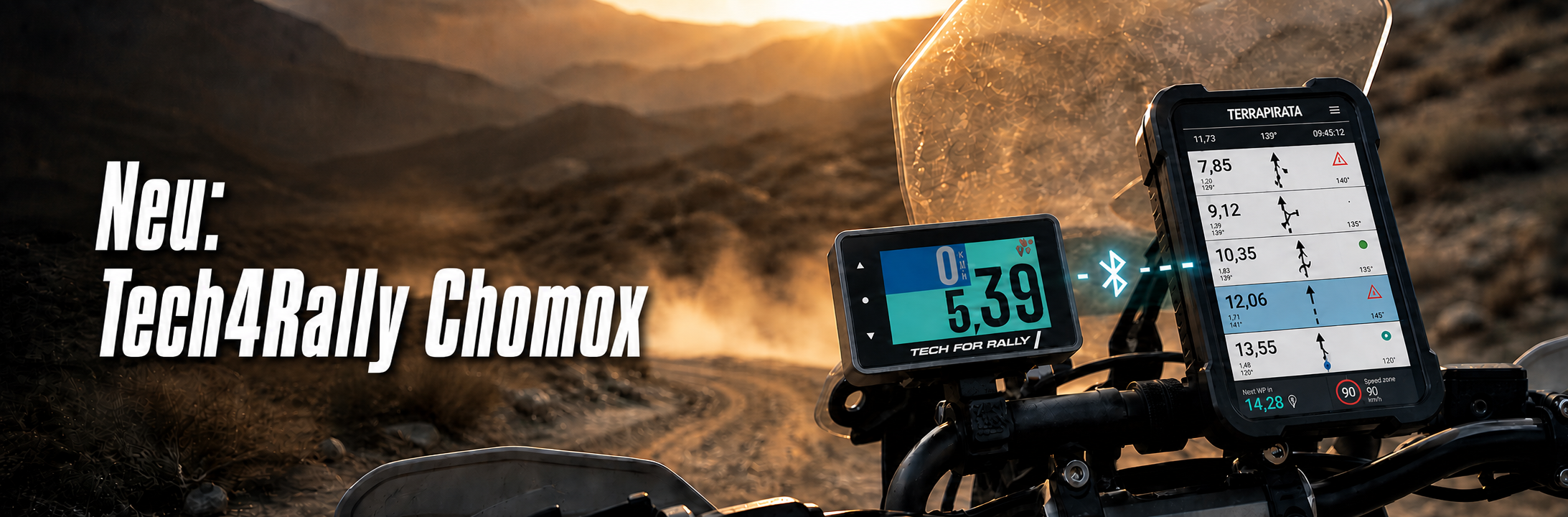
With the ChromoX, Tech4Rally is launching a new tripmaster that is meant to combine classic rally navigation with the capabilities of a digital roadbook. The announced integration of the TerraPirata app is of particular interest.

Classic tripmaster meets digital roadbook

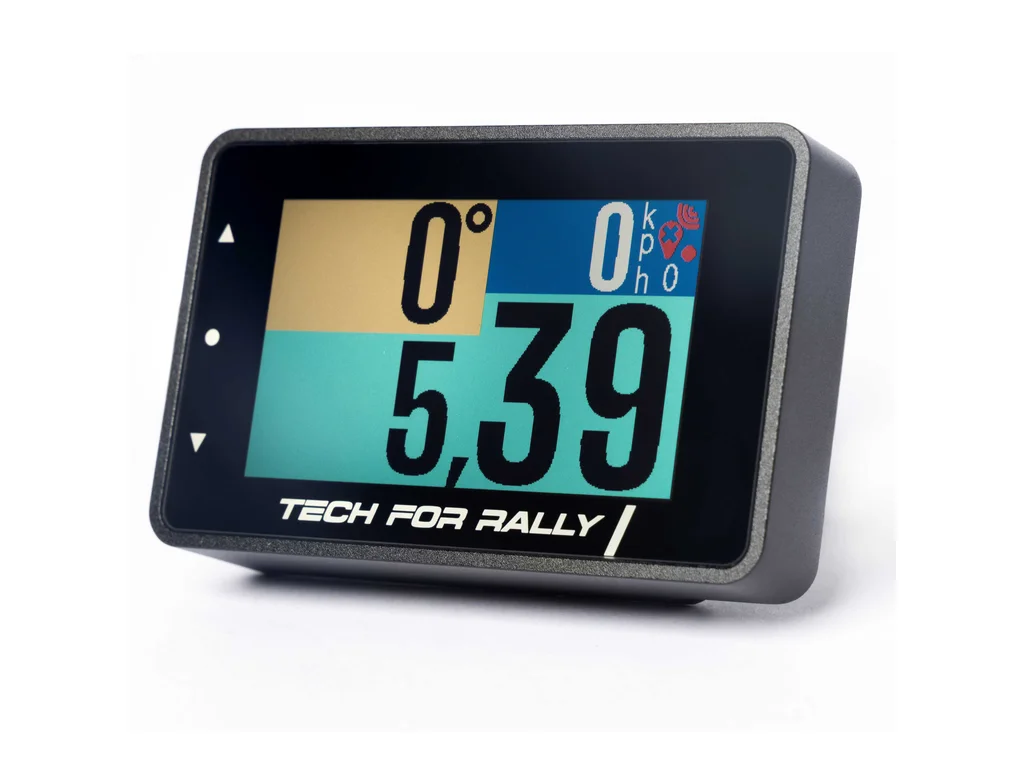
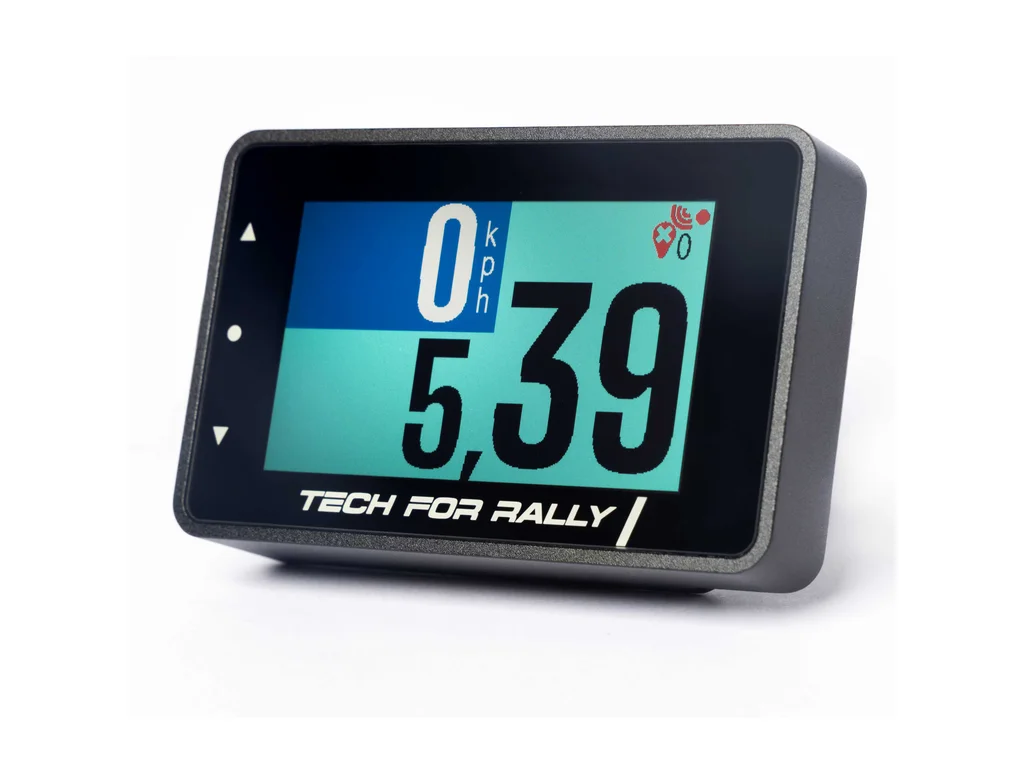
The ChromoX is a standalone rally instrument for motorcycle riders, car drivers and co-drivers. Among other things, it shows trip distance, speed and CAP heading. The required data can be obtained either via the GNSS system or an optional wheel sensor.

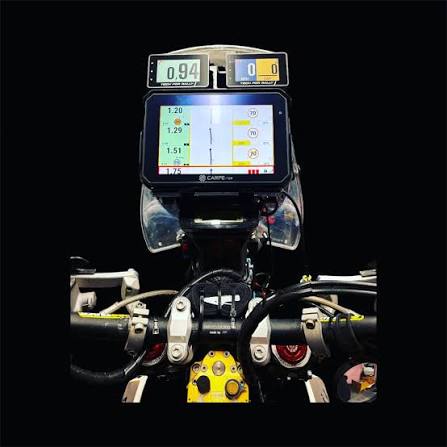
The device can also be connected via Bluetooth to an Android tablet running TerraPirata’s Rally Roadbooks app. The ChromoX does not replace the tablet: the digital roadbook stays visible on the large screen, while the tripmaster brings the most important navigation information directly into the rider’s line of sight.

Already tested at the Dinaric Rally 2026

The ChromoX is apparently no longer entirely new in practical rally use. At the Dinaric Rally 2026, I was able to see the tripmaster in test operation. Among other things, the device was mounted on the motorcycle of Maxi Schek.

This shows that Tech4Rally is not developing the ChromoX solely under controlled conditions, but is already testing it at a demanding rally. Dust, vibrations, changing light conditions and long days in the saddle in particular place high demands on the display, housing, connectors and measurement accuracy.

Which functions of the TerraPirata integration were already active in this test, and what experience was gained, has not been publicly documented so far. Use on a competition vehicle is nonetheless an interesting sign that the system is already in an advanced testing phase.

The That’s Rally Rally Shop is also currently testing the new tripmaster. The aim is to check the device under realistic conditions and then decide whether the ChromoX will be added to its own product range. This could add another source for customers in German-speaking countries in future.

What can the TerraPirata integration do?

According to the information published so far, the connection is supposed to offer considerably more than controlling the digital roadbook via a Bluetooth remote control.

The following functions, among others, have been announced:

  • Display of waypoint direction and distance
  • Speed zone notices
  • Warning messages from the TerraPirata app
  • Display of important navigation data on the ChromoX screen
  • Automatic correction of the trip distance after a waypoint is confirmed
  • Support for a Bluetooth remote control

The automatic trip correction in particular could bring a real advantage in rally use. When a waypoint is confirmed by TerraPirata, the ChromoX’s odometer reading is supposed to be adjusted automatically to the distance stored in the roadbook. Manual corrections while riding could therefore become considerably less frequent.

Designed for good legibility

The ChromoX has a reflective 2.7-inch colour display with a resolution of 400 × 240 pixels. This display technology is said to remain easy to read even in direct sunlight. A night mode is also available for night stages or poor light conditions.

Up to three key pieces of information are said to be displayable at the same time. Depending on personal settings, trip distance, CAP heading and speed, for example, can be combined on one screen.

The device is operated via classic buttons. Tech4Rally deliberately does without a touchscreen so that the tripmaster can be used reliably with gloves and in rain, dust and heavy vibration.

GNSS or wheel sensor

There are two options for measuring distance and speed. As standard, the GPS version of the ChromoX works with an external GNSS receiver. Retailers give an update rate of five hertz for it.

Alternatively, a wheel sensor can be connected. This is particularly interesting for riders who need the most accurate distance measurement possible, independent of reception conditions. The so-called RoadMatch function is said to calibrate the wheel circumference automatically.

According to the product description, anyone who wants to use GNSS and a wheel sensor together needs an additional Y-splitter or the complete wheel sensor kit.

Robust construction for rally use

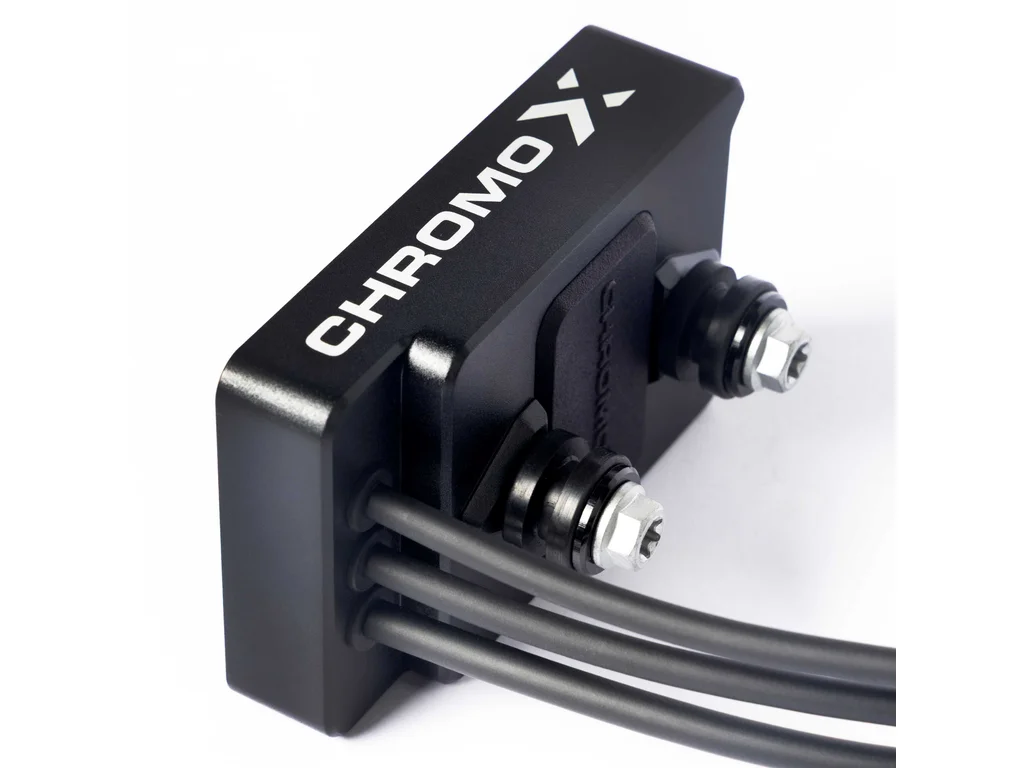
The housing is CNC-milled from aluminium and designed for use in dust, rain, heat and heavy vibration. The connection to the power supply, GNSS receiver and controls is made via robust M8 connectors.

Technical data at a glance

  • Reflective 2.7-inch colour display
  • Resolution: 400 × 240 pixels
  • Dimensions: 85 × 53.5 × 22 millimetres
  • Weight: around 195 grams
  • Bluetooth for TerraPirata and remote controls
  • Wi-Fi for wireless firmware updates
  • External GNSS receiver on the GPS version
  • Optional wheel sensor
  • Configurable day and night display
  • Storage of stage, speed and time data

Where can you buy the Tech4Rally ChromoX?

The ChromoX is currently offered by several European rally retailers. As the device is still at an early stage in the market, delivery time and scope of delivery should be confirmed directly with the respective seller before ordering.

  • Adventure Rally, Czech Republic:
    The ChromoX is offered for around 649 euros including VAT. The status shown suggests that stock has been ordered or is expected.
    Go to the offer at Adventure Rally
  • RustyMoto91, Slovakia:
    The ChromoX without GPS is offered for around 599 euros. For this version, the shop states a delivery time of five to seven days. The GPS version is listed at around 649 euros, but still without a specific availability date.
    Go to the offer at RustyMoto91
  • Hugerock, France:
    There, the GPS version is offered to order for around 649 euros. The expected delivery date given on the product page is no longer current, so the actual delivery time should be asked about in advance.
    Go to the offer at Hugerock
  • That’s Rally Rally Shop:
    The shop is currently testing the ChromoX to decide whether to add it to its own portfolio. It is therefore not yet a confirmed sales offer. If the test turns out positive, the tripmaster could also become available via That’s Rally in future.

Alternatively, interested buyers can contact the manufacturer Tech4Rally directly at info@tech4rally.eu. Before buying, it should be clarified whether the external GNSS receiver, the necessary cables and the TerraPirata-capable firmware are already included in the respective package.

Open questions on compatibility

The announced TerraPirata integration is one of the most exciting features of the ChromoX. However, not all practical details have been publicly documented yet.

On the official TerraPirata website, only 7Solid Joymap and Carpe Iter Terrain Command III are currently named explicitly among the compatible wheel sensor systems. Tech4Rally and ChromoX do not appear on this list so far. A publicly available guide to the full pairing and set-up process cannot be found either.

The following should therefore be clarified before buying:

  • Is the TerraPirata integration already activated in the firmware as delivered?
  • Which version of the TerraPirata app is required?
  • Are all functions available only with Android?
  • Is a TerraPirata subscription required for the wheel sensor connection?
  • Which of the announced functions are already fully unlocked?
  • Which accessories are included in the package on offer?


Conclusion

The Tech4Rally ChromoX could become an interesting bridge between classic rally hardware and modern roadbook navigation. The compact, robust housing, the sunlight-readable display and the choice between GNSS and wheel sensor provide a convincing technical foundation for this.

The collaboration with TerraPirata is particularly promising. If waypoint information, speed zone warnings and automatic trip corrections are exchanged reliably between app and tripmaster, the result is a tidy cockpit in which the most important information is right in front of the rider.

The fact that I was able to see the ChromoX in test use at the Dinaric Rally 2026, among other things on Maxi Schek’s motorcycle, and that the That’s Rally Rally Shop is now also testing the device, makes the project more interesting still. Before the tripmaster can be judged conclusively, however, the full documentation and further experience from rally use will have to be awaited. The concept certainly sparks curiosity.


Sources:
Adventure Rally,
RustyMoto91,
Hugerock,
TerraPirata Rally Roadbooks and
Tech4Rally.


Published inAllgemein

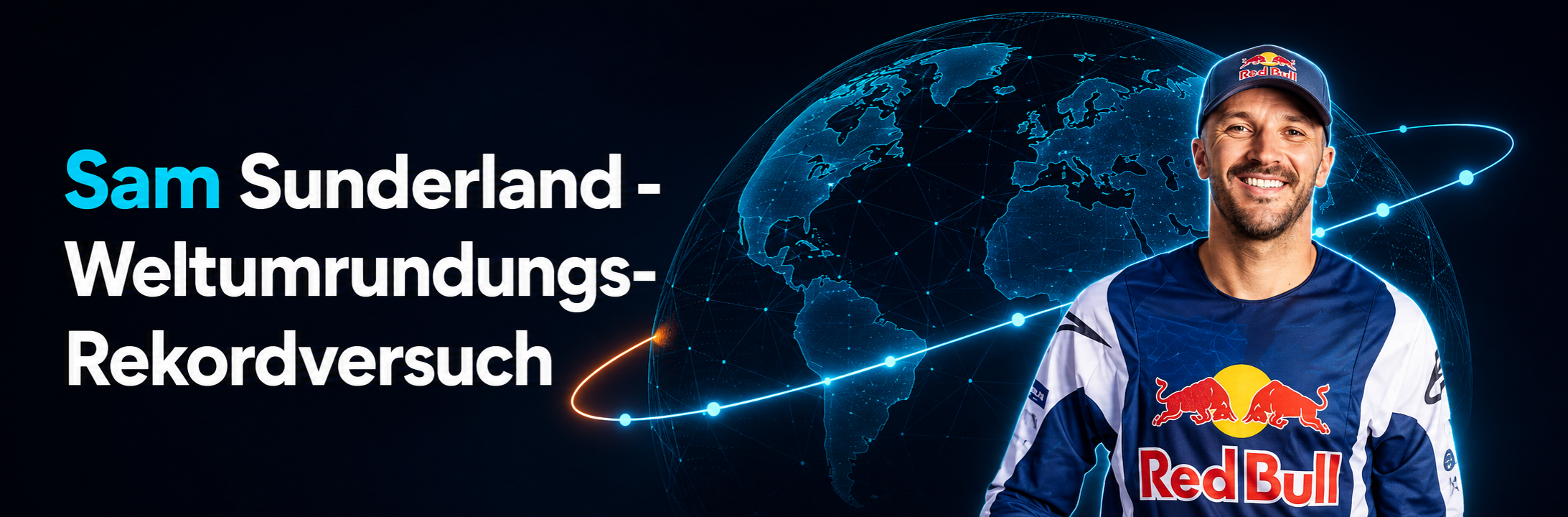
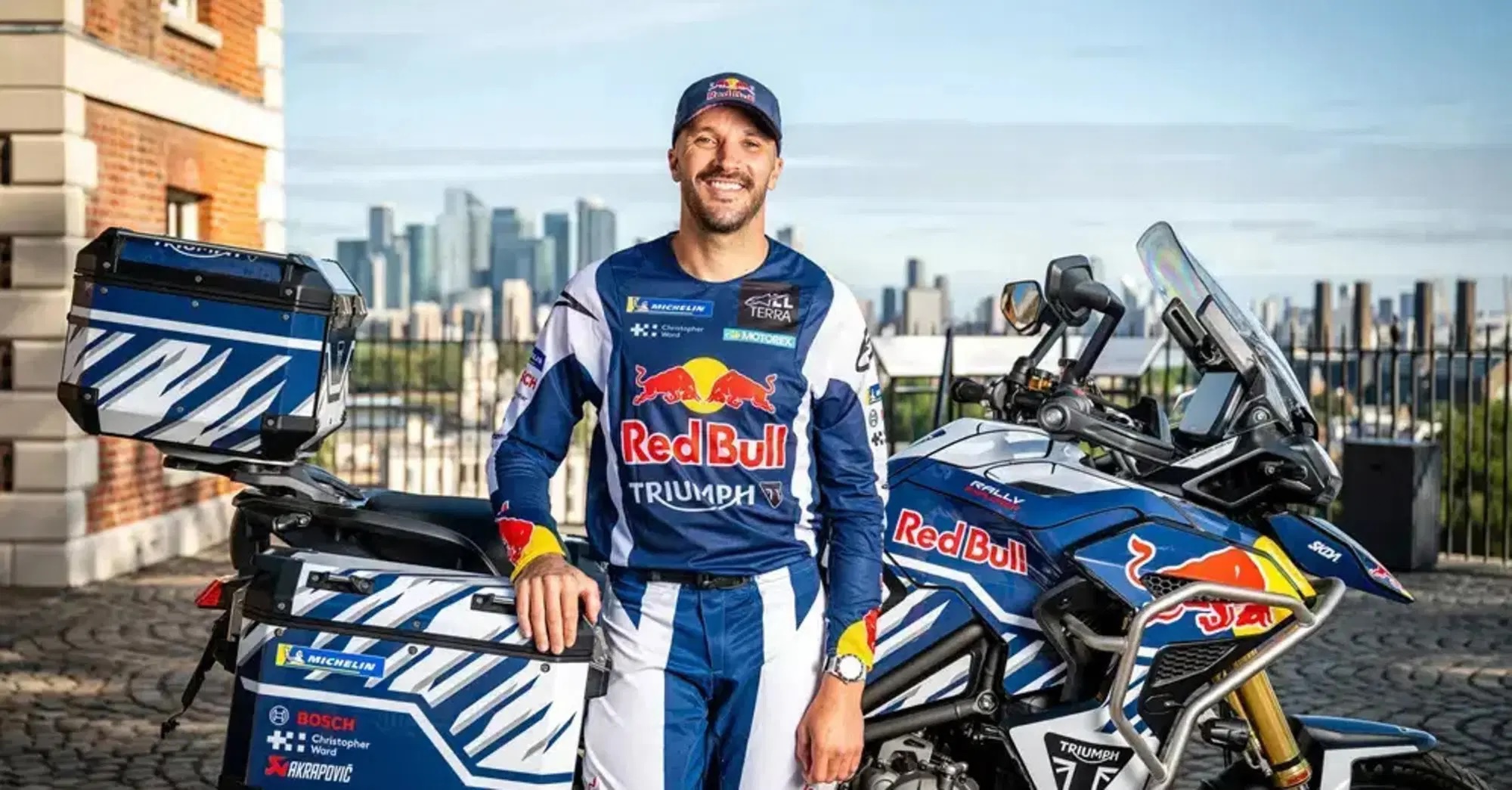
Sam Sunderland Back on the Bike: Round-the-World Record Attempt Under Way

Sam Sunderland is back in the saddle and on an extraordinary mission: the two-time Dakar winner wants to circle the globe by motorcycle faster than the existing benchmark. He set off from London on 5 September 2026 on a Triumph Tiger 1200 Rally Explorer. Fans can follow his journey online.

A new attempt after time out through injury

The attempt was originally planned for 2025. However, a serious back injury sustained in a training accident forced Sunderland to postpone it. His planned debut at the Enduropale du Touquet also fell through.

Since then he has returned to events such as the Red Bull Romaniacs. With his departure on the round-the-world ride, Sunderland is now carrying out a project that initially had to wait after the accident.

Around 29,000 kilometres on a Triumph

The planned journey covers more than 18,000 miles, or around 29,000 kilometres, across five continents. The six sections run from London to Istanbul, from Bangkok to Kuala Lumpur, from Perth to Sydney, through New Zealand, from Vancouver to Montreal and finally from Casablanca back to London.

Daily distances of almost 1,600 kilometres are planned, with up to 17 hours in the saddle at times. Changing weather conditions, border crossings, time zone changes and fatigue make the project an enormous test of endurance.

Which record does Sunderland want to beat?

The target is 19 days, 8 hours and 25 minutes. Kevin and Julia Sanders achieved this time in 2002 on a BMW R 1150 GS. The couple already supported Sunderland in preparing his attempt, originally planned for 2025.

An important caveat: According to Red Bull, this record is no longer officially recognised by Guinness World Records. Sunderland wants to beat it and thereby set a new benchmark for the fastest motorcycle circumnavigation. Guinness recognition is therefore not guaranteed.

According to the published rules, the clock stops during ocean crossings. Sunderland must complete the motorcycle route on the same machine, travel around the world in one direction and reach two opposite points on the globe. The time that counts is therefore not the total elapsed travel time.

How to follow Sam Sunderland’s journey online

Red Bull is covering the attempt on its own project page. There you will find the journey tracker and updates on the progress of the circumnavigation. This lets you see where Sunderland is and how his attempt is developing.

Follow Sam Sunderland’s round-the-world ride on Red Bull now →

Endurance, planning and a long road back to London

For rally fans the project is particularly interesting because different skills come to the fore: staying focused over many days, coping with delays and managing one’s own strength. Each section brings new conditions, while the big goal remains unchanged.

Sunderland has made the start after his injury break. Whether he can also beat the existing record time will be decided over the kilometres ahead, until the return to London.

As of 7 September 2026. The attempt has begun; no final result is available at this point.

Published inAllgemein

Blue Day Rally 2026: Through Thuringia with a Roadbook on 12 September

Reading junctions, keeping an eye on distances and finding the right way: on 12 September 2026, the Blue Day Rally heads into the Thuringian Forest. The motorcycle event is organised by the Hessler-Rallye-Team and MC Freital. It is part of the nationwide event series run by zweirad-rallye.de.

Start, finish and paddock are in Schleusingen. The navigation rally links small tarmac roads with unsurfaced roads and tracks that are legal to ride. According to the organiser, the unsurfaced share is roughly 50 per cent, depending on the category.

Two routes to choose from

  • Blue Day Pokal: around 270 kilometres, the more demanding option.
  • Sachsen Pokal: around 200 kilometres, well suited to beginners according to the organiser.

Navigation is by digital roadbook and tripmaster. The organiser provides the software offered for this free of charge; it is said to work on smartphones and navigation pads. Adventure bikes and enduro motorcycles are expressly welcome. Riding is under the rules of the StVO (German road traffic regulations), with the appropriate licence and a road-registered motorcycle.

A day for navigation and concentration

The appeal of a roadbook tour lies in the interplay of riding and orientation. Every junction demands attention, and every correctly found turn brings a small sense of achievement. Anyone wanting to get to grips with this kind of navigation has a concrete reason here to prepare their setup and get ready for a long day in the saddle.

Before travelling, it is worth practising how to operate the navigation without pressure and checking the mount and power supply. That leaves more attention for the route and roadbook while out on the course.

Entry and schedule

A maximum of 29 starting places are on offer, with an entry fee of 59 euros. A booking is only valid once payment has been received. Whether places are still available should be checked directly with the organiser.

The provisional schedule provides for technical and paperwork scrutineering from 7:00 am. Finishers are expected from 3:45 pm.

Anyone wanting to gain roadbook experience on 12 September should check the current participation information and the event notice now. When choosing between 200 and 270 kilometres, the key factors are one’s own experience and stamina for navigation.

Information as of 7 September 2026. The organiser’s current details and event notice are authoritative.

Published inAllgemein

Make-It-Rally Podcast Availability

The Make-It-Rally Podcast is now available on the following platforms.

A new episode is released on the 15th of every month.

Amazon: https://podcasters.amazon.com/podcasts/3f89521f-11b2-4061-a14c-4e2de0a2543c

Apple: https://podcasts.apple.com/us/podcast/make-it-rally/id6796702571

Spotify: https://open.spotify.com/show/033JRlPA9BzaA0u5SWf6k6

Youtube: https://www.youtube.com/@MakeItRally/videos

RSS feed: https://anchor.fm/s/1148c5cc0/podcast/rss


Published inAllgemein

Tosha Schareina out of the Sertões: What does the crash mean for Morocco and the Dakar?

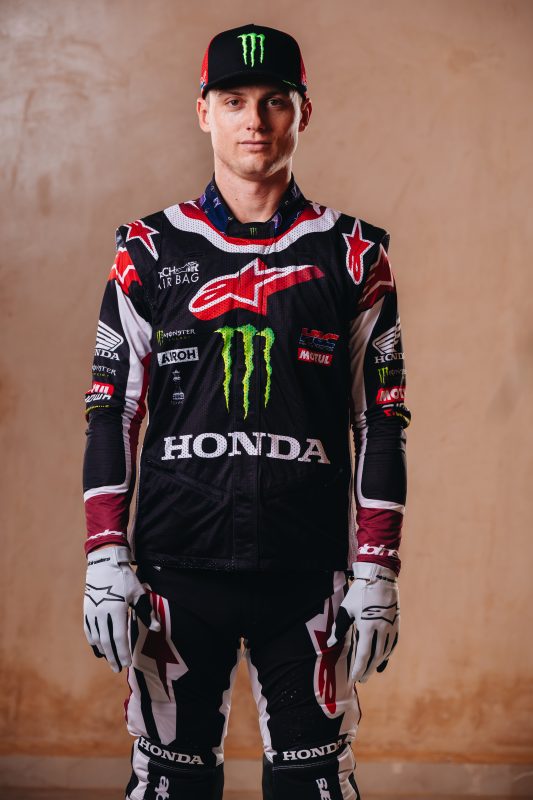
Tosha Schareina’s title defence at the 2026 Sertões ended early. The Monster Energy Honda HRC rider crashed on stage five on 27 August and was unable to finish the special stage. This also raises the question of possible consequences for his preparation for the Rallye du Maroc and the 2027 Dakar.

Defending champion out while still in contention to win

After four stages, Schareina was second overall – just 3 minutes and 43 seconds behind Bruno Crivilin. His chances of a successful title defence were therefore still intact. This is confirmed by the Honda HRC report on stage four.

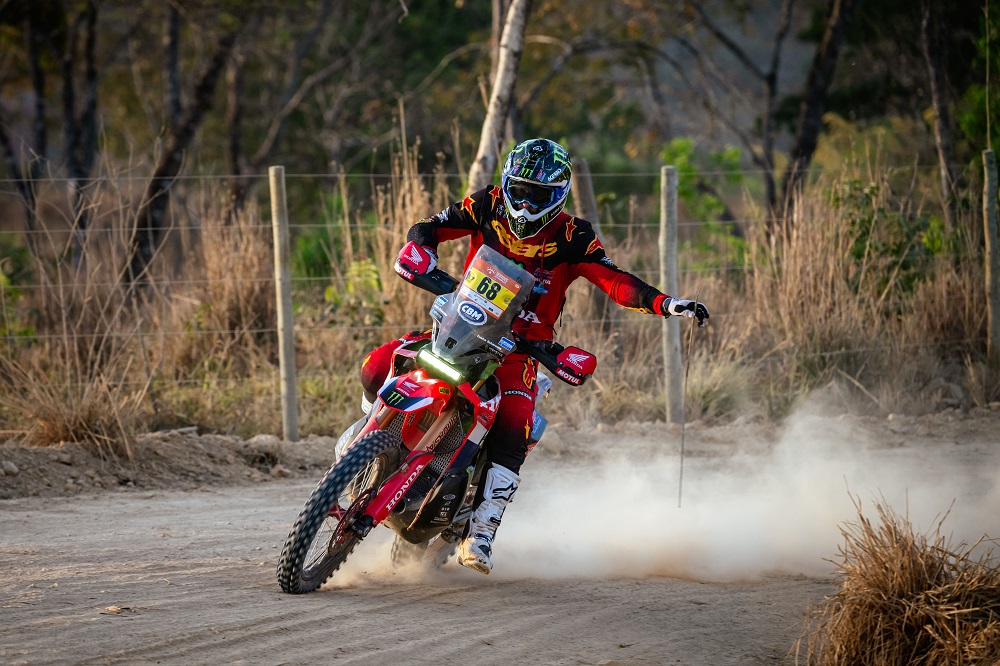
The following day, the route ran from Porto Nacional to Minaçu. During the special stage, Schareina crashed on his Honda CRF 450 Rally and had to retire. The official team report on his retirement does not give details of exactly how the crash happened.

What is known about his condition

After the crash, Honda HRC reported that the rider was in good condition and announced a medical examination. Schareina also said he was fine. No specific diagnosis of an injury or length of a possible break was given in that statement.

A withdrawal from the Rallye du Maroc or the Dakar is not confirmed in the reports reviewed. His retirement from the Sertões alone therefore does not allow any conclusion about whether he will be fit to start the upcoming events.


Possible consequences for the Rallye du Maroc

In sporting terms, the crash could have an effect above all if Schareina had to interrupt or reduce his training. Less time on the bike would also mean fewer opportunities to train fitness, navigation and riding feel under rally conditions.

Taking part in Morocco could provide valuable competitive kilometres. If a break became necessary, the team would on the other hand have to weigh up how much load makes sense and which preparation sessions take priority.

These considerations are a sporting assessment. They describe possible scenarios, not measures announced by Honda HRC. Whether Schareina’s Morocco programme will actually have to be adjusted remains open without further information from the rider or the team.

What does the crash mean for the 2027 Dakar?

With a view to the Dakar, a longer interruption to preparation would be the main concern. Endurance training, test rides and long days on the rally bike build on one another. If such sessions are missed, planning can become more difficult.

A possible decision to skip Morocco would also initially mean a loss of competitive practice. However, this does not automatically mean the Dakar start is at risk. What would matter is the actual consequences of the crash and how preparation continues.

The available reports do not show that his Dakar participation is endangered by this crash. Equally, it would be premature to rule out every effect on his training.

Honda wins the Sertões regardless

For Honda, the event ended successfully despite Schareina’s exit: Bruno Crivilin won the motorcycle classification. Martim Ventura finished second overall and won the Moto 2 category. This is reported by Cycle News in its results report and Honda HRC in its final report of 31 August 2026.

Schareina himself lost the chance of a second win in a row because of the crash. Whether there will be consequences beyond that for Morocco or the Dakar remains to be shown by further announcements on his condition and his racing programme.

Sources and further information

As of 7 September 2026. The possible effects on Morocco and the Dakar are an editorial assessment, not a medical prognosis or a confirmed change to his racing programme.

Published inAllgemein

Rally Moto TT Saint-Palais 2026 Cancelled: The Roadbook Will Have to Wait

Bad news for anyone who was looking forward to a taste of rally racing in the French Basque Country: the Rally Moto TT in Saint-Palais will not take place in 2026. The event had been planned for 11 to 13 September 2026. The tourist office now expressly lists the event as cancelled. The rally portal Owaka also confirms the cancellation and mentions a postponement to next year.The concept had sounded promising: three days of motorsport with a prologue and two stages, with navigation and special stages modelled on rally raid. Rather than technically extreme obstacles, the focus was to be on precise navigation with the digital roadbook. The event was therefore also aimed at riders who wanted to gain their first experience in rally sport.

It is this combination that makes the cancellation a shame: finding the right way yourself, making decisions under time pressure and then swapping the day’s stories in the paddock. Saint-Palais was meant to provide the setting for that.

The sources checked give no specific reason for the cancellation. The postponement to 2027 mentioned by Owaka has also so far been given without a specific date. Anyone hoping for a fresh attempt should therefore wait for further announcements from the organisers.

For participants who have already registered, the advice now is to contact the organiser and clarify how the entry and any fees already paid will be handled. Booked accommodation and travel should also be reviewed accordingly.

For this year, the roadbook in Saint-Palais stays closed. The hope remains that the announced postponement will turn into a new start, and that the idea of an accessible rally raid event in the Basque Country will still make it onto the route.

Sources:
Bayonne tourist office: event listed as cancelled,
Owaka: 2026 cancellation and note on postponement,
Official Rally Moto TT website.

Published inAllgemein

When Adventure Becomes Hard Enduro

Three Adventure classes, around 100 starters and motorcycles ranging from a comparatively light 450cc twin to a full-size adventure bike: the 2026 Red Bull Romaniacs showed impressively that the “Adventure Bike” experiment has become a racing discipline in its own right. Particularly exciting was the meeting of hard enduro specialists, rally riders and ambitious privateers. And right in the middle of it: several remarkable German participants.

For a long time, the Red Bull Romaniacs was above all one thing: one of the toughest races in the world for classic sport enduro bikes. But in the Romanian Carpathians, you now hear twin-cylinder engines more and more often – and in some cases even triple-cylinder ones. In 2026, around 100 participants started in the three Adventure classes. Entirely different concepts met head-on: CFMOTO 450MT, Yamaha Ténéré 700, KTM 890 Adventure, Triumph Tiger 900, BMW R 12 G/S, BMW R 1300 GS, Kove 800X Rally and even a KTM 950 SuperEnduro.
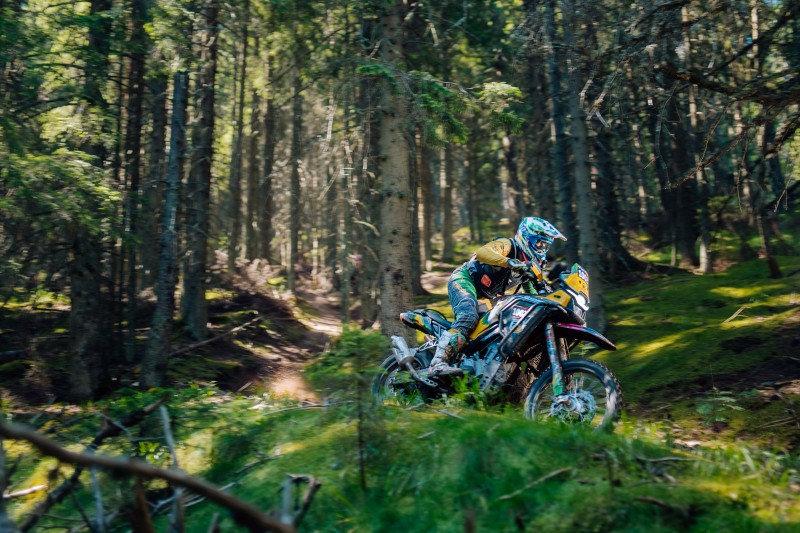
The question is no longer whether you can ride the Romaniacs on an adventure bike. The question now is:

How far can you take it?

Three classes – three ideas of Adventure

In 2026, the Adventure category consisted of three classes for the first time: Adventure Lite, Adventure Core and Adventure Ultimate. Lite is the entry point. The courses are flowing and less extreme than in the higher classes, but still contain typical Romaniacs elements. Above it, Adventure Core was introduced in 2026 for the first time. The new class is meant to close the large gap between Lite and Ultimate. Here, faster rally and adventure sections meet singletrails and significantly more technical climbs and descents.

And then there is Adventure Ultimate. Here, Adventure finally becomes Hard Adventure. Technical singletrails, rocks, steep climbs and descents, and terrain where even a normal sport enduro bike would be demanding to ride.

Except that here, twin-cylinder motorcycles weighing in some cases well over 200 kilograms are being ridden. The organiser itself now speaks of a new discipline:

Hard Adventure Racing.

And the 2026 field showed quite impressively where things are heading.

Adventure Ultimate: Mario Roman beats Pol Tarrés

Before the race, Pol Tarrés on his Yamaha Ténéré 700 was seen as one of the big favourites. Tarrés had won Adventure Ultimate in 2025 and had shown over the years what a big Ténéré can do in extreme terrain. But in 2026 he faced new competition.

With Mario Roman and Dieter Rudolf, two experienced Gold Class riders switched to adventure bikes. Roman chose a CFMOTO 450MT, Rudolf a KTM 890 Adventure. The prologue had already shown how close it would be.

Tarrés and the German Kevin Gallas took turns at the front in the first laps. A crash by Tarrés eventually opened the door for Roman. The Spaniard won the prologue. And he stayed fast in the Carpathians too.

Roman won the first two off-road days. Tarrés hit back on the third day, so that only around five minutes separated the two going into the finale. The decision came on the last day. Tarrés crashed twice, damaging a footpeg among other things and later his visor. Roman, by contrast, remained largely error-free.

After four off-road days, the result was set:

  1. Mario Roman – CFMOTO 450MT – 13:27:30
  2. Pol Tarrés – Yamaha Ténéré 700 – +14:40
  3. Dieter Rudolf – KTM 890 Adventure – +15:53
  4. Kevin Gallas – Yamaha Ténéré 700 – +37:54
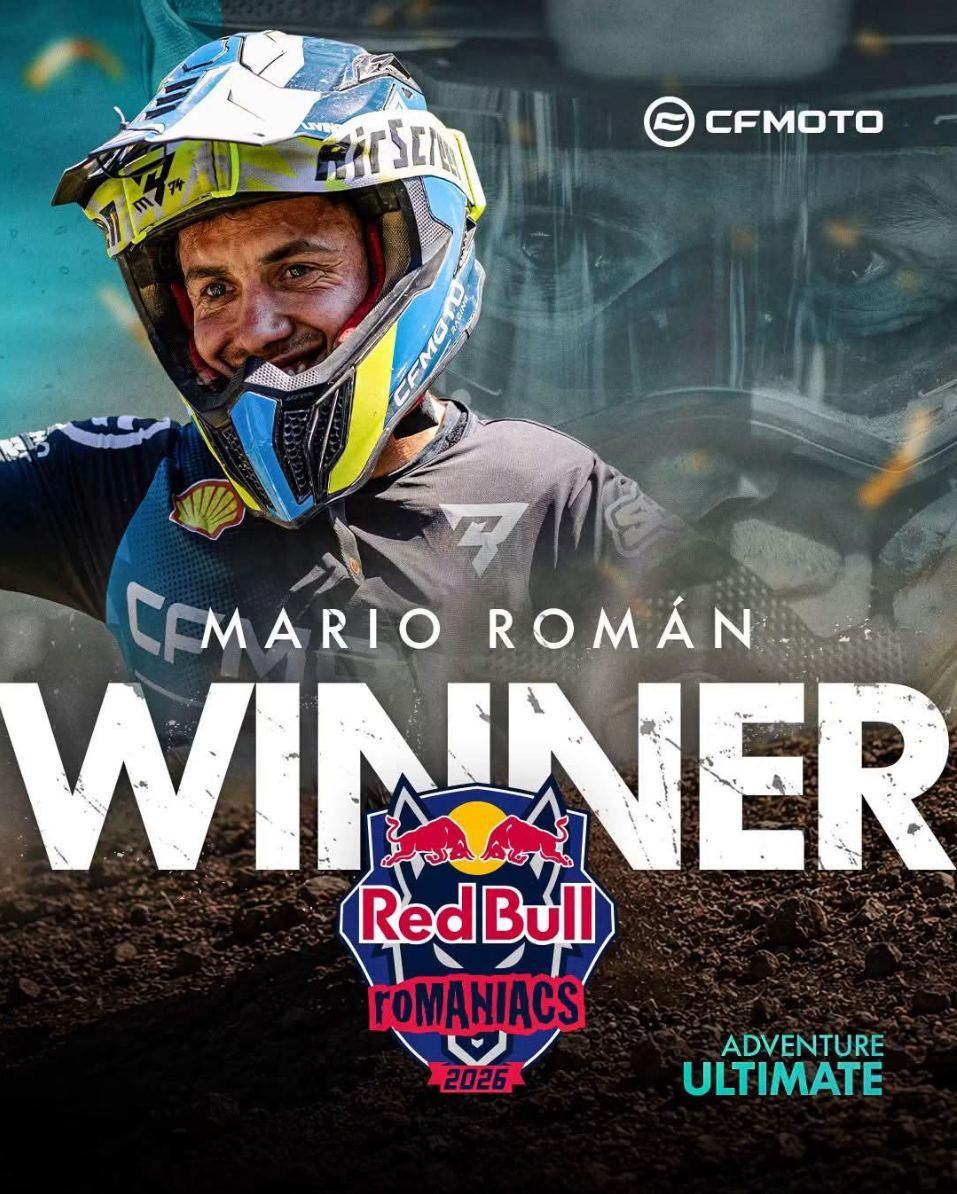
So three entirely different motorcycle concepts stood on the podium. A 450cc CFMOTO won ahead of a Ténéré 700 and a KTM 890 Adventure. Perhaps that was exactly one of the most important lessons of the 2026 Romaniacs:

The perfect Hard Adventure race bike apparently doesn’t exist yet.

Kevin Gallas: fourth place tells only half the story

From a German perspective, Kevin Gallas was one of the most eye-catching riders in the whole Adventure category. Gallas comes originally from a strong background in trial, SuperEnduro and hard enduro. Rally has now become part of his sporting profile too. He showed how successful this step has been at the start of the year: in 2026, Gallas won the overall motorcycle classification of the Africa Eco Race on a Yamaha. After the long route through Morocco, Mauritania and Senegal, he won in Dakar by just 41 seconds ahead of Gautier Paulin. He therefore brings a highly interesting mix: trial technique and extreme enduro experience on one side, rally, navigation and long race days on the other.

At the Romaniacs, this combination worked remarkably well. Already in the prologue, Gallas showed that he wasn’t there just to take part. On his Yamaha Ténéré 700, he fought Pol Tarrés directly for the lead in the first laps.

On the first off-road day, Gallas first had to find his rhythm, but worked his way up to fourth place. He stayed in the leading group afterwards too. After three days, he was still fourth overall. In the end, the podium was out of reach.

But his most spectacular moment came right at the end.

The final hill – and Gallas simply rides up it

The finish arena in Sibiu is one of the images people associate with the Red Bull Romaniacs. After four days in the Carpathians, an artificially or specially prepared final section awaits once more, with a brutal main climb in front of thousands of spectators. And it was right there that Gallas set one of the exclamation marks of the entire Adventure week.

On his Ténéré, he attacked the main hillclimb. And conquered it straight away.

Kevin Gallas was thus the first Adventure rider to conquer the big final main hillclimb.

The organiser later described his run as one of the defining moments of the Adventure race. And perhaps this very scene describes Gallas’ Romaniacs better than the results list. There, the entry at the end reads fourth place.

Anyone who saw him on the final hill, however, is likely to remember something else: a Ténéré 700, a rather absurd slope – and a rider who simply rides up.

Maxi Schek: Dakar, GCC – and the Romaniacs with a boxer

Maxi Schek wrote an entirely different story. Schek comes from enduro and cross-country racing, rides the German Cross Country Championship (GCC) and has at the same time developed more and more towards rally raid. In 2026 he finished the Dakar in the particularly raw Original by Motul / Malle Moto classification, in which riders manage without classic team service and have to do a large part of the work on the motorcycle themselves.

For the coming Dakar, too, this path remains part of his sporting direction. For the Romaniacs, however, Schek chose a remarkable tool:

a BMW R 12 G/S.
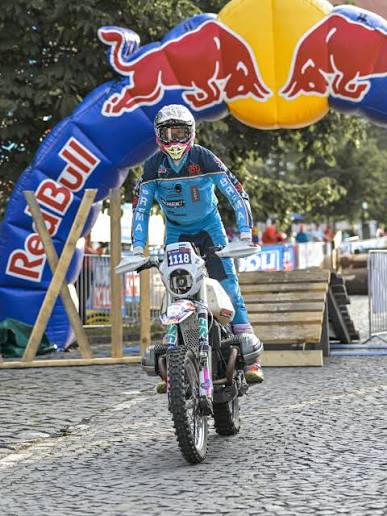
While other teams optimised their adventure bikes consistently for competition, Schek put a big air/oil-cooled boxer on the start line of Adventure Core. The prologue alone brought fifth place. On the first off-road day Schek was seventh, on the second seventh again. On the third day he had worked his way up to sixth overall.

The week was by no means trouble-free. Rider and BMW had to cope with technical difficulties. But Schek stayed in the race. In the end, it turned into a remarkable result:

Fourth place in Adventure Core.

His total time was 12:02:24 hours – 41:37 minutes behind the winner. Schek therefore missed the podium by only one place. His rider profile in particular makes this performance interesting.

Dakar and rally raid demand navigation, endurance and the management of rider and motorcycle over long race days. The GCC, by contrast, brings high-speed cross-country racing on sight, direct duels and quick reactions to constantly changing terrain. At the Romaniacs, Schek had to combine these skills with technical enduro.

And with a boxer, at that. The Romaniacs themselves picked up the story during the event and dedicated a piece to Schek with a rather fitting title:

“Boxer power, baby!”

Manolito Welink: Adventure racing long before the adventure hype

Another German rider deserves more attention in this context: Manolito Welink. Welink’s motorsport CV fits surprisingly well with the development we are currently seeing in adventure racing. His story does not begin with adventure bikes.

As a child he rode motocross, and road racing and supermoto followed later. After that, the focus shifted more and more towards off-road. The GCC is no new territory for Welink either. In 2010 he finished seventh overall in GCC Pro Experts, and in 2011 even sixth overall.

He thus brings exactly the kind of cross-country experience that can be extremely valuable on an adventure bike: high speed on sight, changing terrain, duels and the ability to ride consistently fast over a long period. Even more interesting, however, is that Welink was riding big twins competitively before Hard Adventure Racing became the current trend. In 2022, for example, he used a Husqvarna Norden 901 in genuine enduro competition.

Not on a touristy adventure ride. But in a three-hour enduro, among other things, and even at the German Enduro Championship in Streitberg. Riding a motorcycle weighing around 200 kilograms through slippery climbs and descents and classic enduro tests was still much more unusual then than it is today.
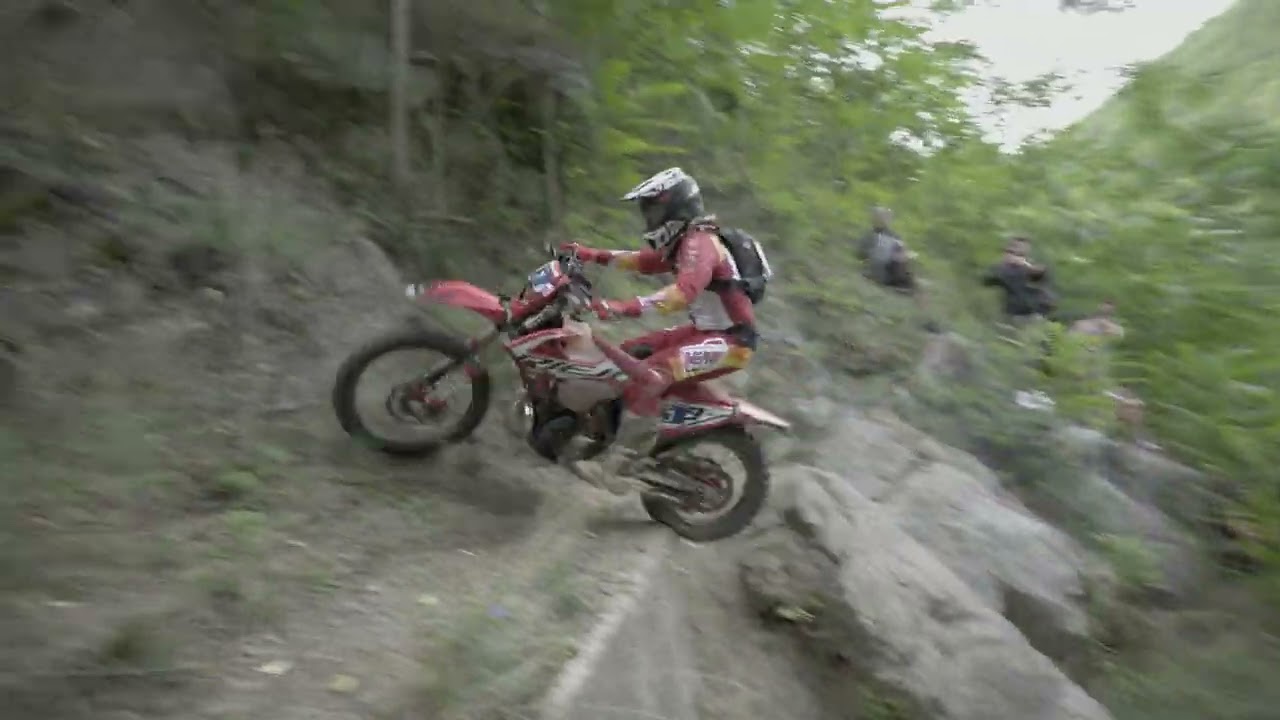
Welink is therefore one of the riders who showed early on:

A big adventure bike can also be a sports machine.

At the 2026 Romaniacs, his start therefore fits into a remarkable German group. There is Kevin Gallas, who combines trial, hard enduro and rally. Maxi Schek brings together Dakar, rally raid, Malle Moto, GCC and enduro.

And Manolito Welink comes with decades of experience in motocross, supermoto, cross country, enduro and the competitive use of heavy twins. Three riders – and three entirely different paths to adventure racing.

Sam Sunderland: a Dakar champion at the Romaniacs

The most prominent rally rider in the Adventure field, however, was Sam Sunderland. Two-time Dakar winner. Two-time Rally Raid World Champion.

In 2025, on his Romaniacs debut, Sunderland had practically dominated Adventure Lite. He won the prologue and all four off-road days and finished more than four hours ahead of the competition. For 2026 it was therefore clear: Lite was done.

Sunderland moved up to the new Adventure Core. His motorcycle was remarkably conventional. The Triumph Tiger 900 Rally Pro remained comparatively close to standard specification and was among the heaviest motorcycles in the class.

Even so, Sunderland fought for the overall win. But René Columna on the CFMOTO 450MT proved a tough opponent. Sunderland also had to overcome technical difficulties during the race. On the final day, the Dakar champion launched one more big charge.

It wasn’t quite enough. René Columna won Adventure Core in 11:20:47 hours. Sunderland finished second – 11:42 minutes behind.

For a two-time Dakar winner, second place is unlikely to have been the desired result. For the development of Hard Adventure Racing, his performance is nevertheless highly interesting. A Dakar champion rides a largely standard, heavy Tiger 900 through genuine Romaniacs terrain and fights with it for the class win until the last day.

That shows how far rally raid skills can carry at the Romaniacs. And at the same time, where their limits begin.

Ivan Cervantes: sacrificing his own race for his team-mate

Sunderland’s Triumph team-mate Ivan Cervantes also belongs in this story. Cervantes, however, is not a classic rally rider. He is a five-time enduro world champion who later made a successful move towards rally and adventure.

He thus embodies almost perfectly the fusion of the various off-road disciplines. Cervantes also started on a Tiger 900 in Adventure Core. His Romaniacs ended, however, on the second off-road day.

And the story behind it is more remarkable than any result. Both Cervantes and Adventure Ultimate rider Jonny Walker had technical problems with their Triumph motorcycles. Cervantes then decided to abandon his own race and give Walker parts of his motorcycle so that he could continue.

Walker eventually reached sixth place in Adventure Ultimate on the roughly 220-kilogram, near-standard Tiger 900. Cervantes got no result in the table for it. But probably one of the strongest team moments of the entire event.

The German Adventure riders

Gallas, Schek and Welink were not the only German riders to get on big motorcycles. In Adventure Core, for example, Nikolaus Häring started on a Kove 800X Rally and worked his way up noticeably during the week. In Adventure Lite the German contingent was larger still.

Among others, Raimund Ochs with a KTM 950 SuperEnduro and Ralf Zeisberg with an Aprilia RXV 450 were on the start line. The motorcycles used show how broad the Adventure idea has become at the Romaniacs. Getting a full-size adventure bike through several days of Romanian off-road terrain is something entirely different from the fight for seconds between Roman and Tarrés in Ultimate.

But that is exactly why Lite exists. For many participants there, it is not about beating a factory rider. The first big goal is:

To finish the Romaniacs on an adventure bike.

Four German participants achieved the Adventure Lite finish in 2026. The German range thus extended from the fight for the lead in Ultimate to successful finishes on full-size adventure motorcycles.

Ellie Pleissner: from GS Trophy experience to a Romaniacs finish

One of these German finishers was Ulrike “Ellie” Pleissner of The8hundreds. She competed in Adventure Lite on a BMW R 1300 GS – a motorcycle that makes clear on paper where her personal challenge lay: not the fight for the class win, but tackling the Romaniacs safely and consistently on a full-size adventure bike.

Extreme terrain on a big BMW was not entirely new to Ellie, however. At the BMW Motorrad International GS Trophy 2024 in Namibia, she was part of the German women’s team together with Marion Linder. There she gained experience with heavy GS motorcycles, demanding off-road sections and tasks that required riding technique, endurance and teamwork in equal measure.
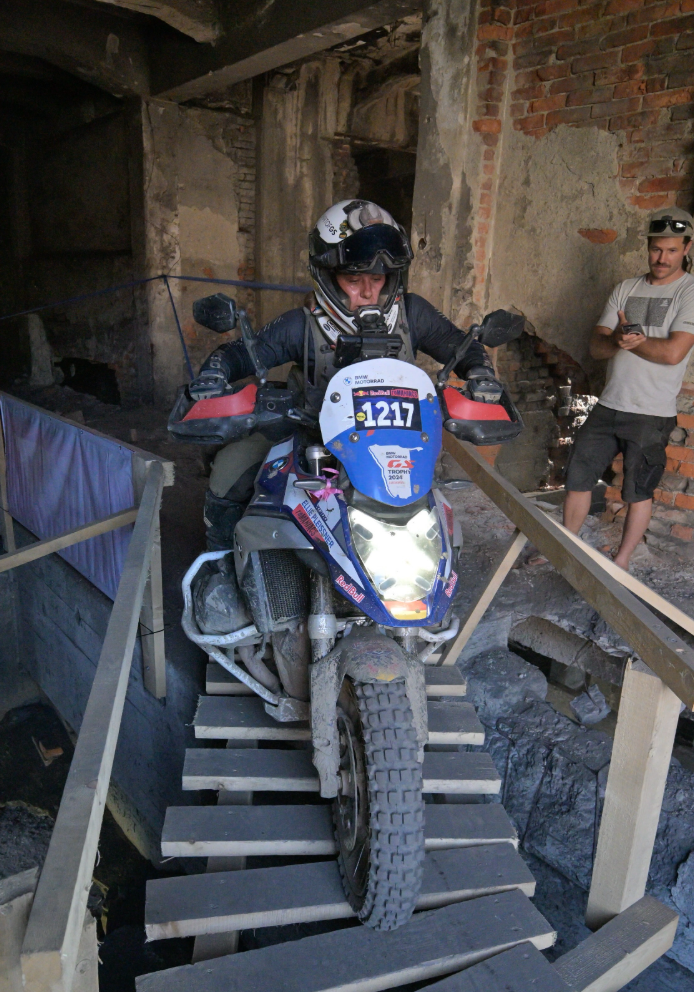
At the 2026 Romaniacs, she transferred this experience to a genuine multi-day hard enduro format. After the prologue and all four off-road days, Ellie reached the finish and took 31st place in Adventure Lite. She was also one of only six women to successfully complete one of the Adventure classes in 2026.

Her result stands for a different, but no less interesting side of Hard Adventure Racing: an R 1300 GS does not have to fight for podium times to write a remarkable story at the Romaniacs. Sometimes the real achievement lies in getting such a motorcycle through the Carpathians day after day – and arriving in Sibiu as a finisher.

Rally riders are changing the Romaniacs

It is particularly interesting which riders are now pushing into this young discipline. Sam Sunderland comes practically from the pure rally raid world. Maxi Schek combines Dakar and rally raid with Malle Moto, GCC and enduro.

Kevin Gallas comes from trial, SuperEnduro and hard enduro and has since clearly broadened his profile towards rally. Pol Tarrés has combined trial and hard enduro with professional rally raid for years. And Ivan Cervantes was initially one of the best enduro riders in the world before rally and adventure were added.

Then there are riders such as Manolito Welink, who have for years combined cross country, classic enduro and the competitive use of big twins. At the Romaniacs they meet riders such as Mario Roman, Dieter Rudolf and Jonny Walker, whose foundation lies even more in hard and extreme enduro. It is precisely this meeting that makes the Adventure classes so exciting at the moment.

Nobody yet knows what the perfect motorcycle looks like

At least as interesting as the riders is the technical development. Mario Roman won on a CFMOTO 450MT. Pol Tarrés finished second on the Yamaha Ténéré 700.

Dieter Rudolf put a KTM 890 Adventure in third place. Kevin Gallas finished fourth on another Ténéré. Jonny Walker brought a roughly 220-kilogram Triumph Tiger 900 to sixth place.

In Core, Sunderland fought for the win on a likewise largely near-standard Tiger 900, while Maxi Schek finished fourth on the BMW R 12 G/S. These are not variations of the same concept. These are entirely different answers to the same question.

Light and nimble? Lots of torque? Big suspension?

Close to standard? Extreme modification? 450cc?

700? 900? Or boxer?

In 2026 there was still no definitive answer. And that is exactly what makes this young class interesting.

From the Romaniacs to the rally

For some of the German riders, the story does not end in Sibiu. Maxi Schek and Manolito Welink will reappear in a different setting: at the Dinaric Rally.

And there the demands change significantly. At the Romaniacs, the task is to move a big motorcycle through terrain that is at times technically absurd. Traction, balance, line choice and avoiding mistakes can matter more than absolute speed. At a rally, the picture shifts.

Navigation, roadbook, high speed over longer distances and the ability to manage motorcycle and body over several race days come more to the fore. That is precisely why riders such as Schek and Welink are interesting. They do not move within just one discipline.

They move between disciplines. And it is right there that a new type of adventure rider currently seems to be emerging.

Adventure Ultimate is long past being a “travel enduro race”

Anyone who still thinks of Adventure Ultimate as a somewhat tougher adventure bike event is likely to have been taught otherwise by 2026 at the latest. The level is rising enormously. Hard enduro professionals are switching to adventure bikes.

Rally raid riders are discovering the Romaniacs. Cross-country and enduro riders are bringing their experience to big motorcycles. Manufacturers are developing special motorcycles, suspension and concepts.

At the same time, riders are learning to tackle obstacles with machines that in some cases weigh twice as much as a classic hard enduro bike. The boundaries between rally raid, hard enduro, trial, cross country and adventure racing are beginning to blur. Perhaps, then, not even Mario Roman’s win was the most important image of the 2026 Romaniacs.

Perhaps it was Kevin Gallas on the last hill. A Yamaha Ténéré 700 stands in front of a climb that is not really made for such a motorcycle. Gallas opens the throttle.

And rides up. That is exactly what Hard Adventure Racing is about at the moment:

Trying things on an adventure bike that, until a few years ago, you were convinced you were better off not trying on an adventure bike.

The 2026 Red Bull Romaniacs showed that this has now become more than a spectacular experiment.

A new motorsport discipline is emerging.

And for some of the riders, the next chapter begins just a few weeks later:

Rally.


PS: In the upcoming podcast from Make it Rally, participants will also have their say and share their impressions directly and unfiltered. Give it a listen.

Published inAllgemein

Dinaric Rally 2026: Rock, Dust and Genuine Rally Adventure

The Dinaric Rally 2026 was a week that tested rider and machine alike. From 22 to 28 August, the area around Knin in Croatia once again became an impressive rally arena. Around 160 participants from 23 countries took on the demanding terrain of the Dinaric Alps, on motorcycles, quads and in SSVs.

The prologue already showed what the riders could expect: fast gravel sections, demanding navigation, rocky climbs and a surface that could change completely within a few kilometres. The Dinaric Rally is not a race decided by top speed alone. Concentration, a clean line and the ability to keep making the right decisions after many hours in the saddle are what count.

A Rally with Many Faces

The longest stage covered around 425 kilometres through the Krbava region. Later, the special stage around Kotari proved surprisingly grippy, fast and flowing after heavy rain. Velebit, by contrast, offered a much more technical track: loose stones, hidden boulders and a demanding climb asked everything of the riders.

The second special stage also had to be cancelled after an accident. The sporting story of the Dinaric Rally 2026 was then continued with great mutual respect and full concentration on the remaining stages.

From the Romaniacs to the Dinaric Alps

For Maxi Schek and Manolito “Mano” Welink, the extreme world of international off-road racing was by no means new. Both took part in the 2026 Red Bull Romaniacs in Romania before lining up at the Dinaric Rally a few weeks later.

In the Carpathians they faced steep forest climbs, roots, rocks, mud and technically difficult descents. The Red Bull Romaniacs are among the most demanding off-road events in the world and ask everything of participants, physically and mentally, over several days of racing.

Maxi Schek competed at the Romaniacs on a BMW R 12 G/S in the Adventure Core class. On the heavy twin-cylinder bike he made his way through terrain in which even considerably lighter sport enduros reach their limits. Maxi finished the event in a strong fourth place in his class.

Mano also took on the extreme challenges of the Red Bull Romaniacs in 2026. The experience gained there with difficult terrain, long race days and high physical strain formed a valuable foundation for the start at the Dinaric Rally that followed.

Hard enduro and rally raid differ considerably, yet both disciplines demand stamina, precise vehicle control and the ability to stay calm under heavy strain. While the Romaniacs focus on extreme technical sections, the Dinaric Rally adds long distances, higher speeds and roadbook navigation.

Maxi Schek Rides the BMW F 900 GS to Overall Victory

From a German perspective, Maxi Schek stood out at the Dinaric Rally. With start number 69 and his BMW F 900 GS, he took the lead of an international field. He impressed not only with speed but above all with consistency and a remarkably controlled riding style.

The BMW F 900 GS presented Maxi with a particular challenge. Compared with the lighter rally bikes, he had to move the greater weight of his twin-cylinder machine over gravel, stones and technically difficult sections. At the same time, he was able to use the BMW’s strengths effectively on the fast, flowing parts.

Before the final stage, the leaders were close together. Over the closing 250 kilometres, Maxi therefore had to work with concentration once more. Conditions were hot, dusty and in places very loose. A small navigation error or a poor choice of line could have changed the result at any moment.

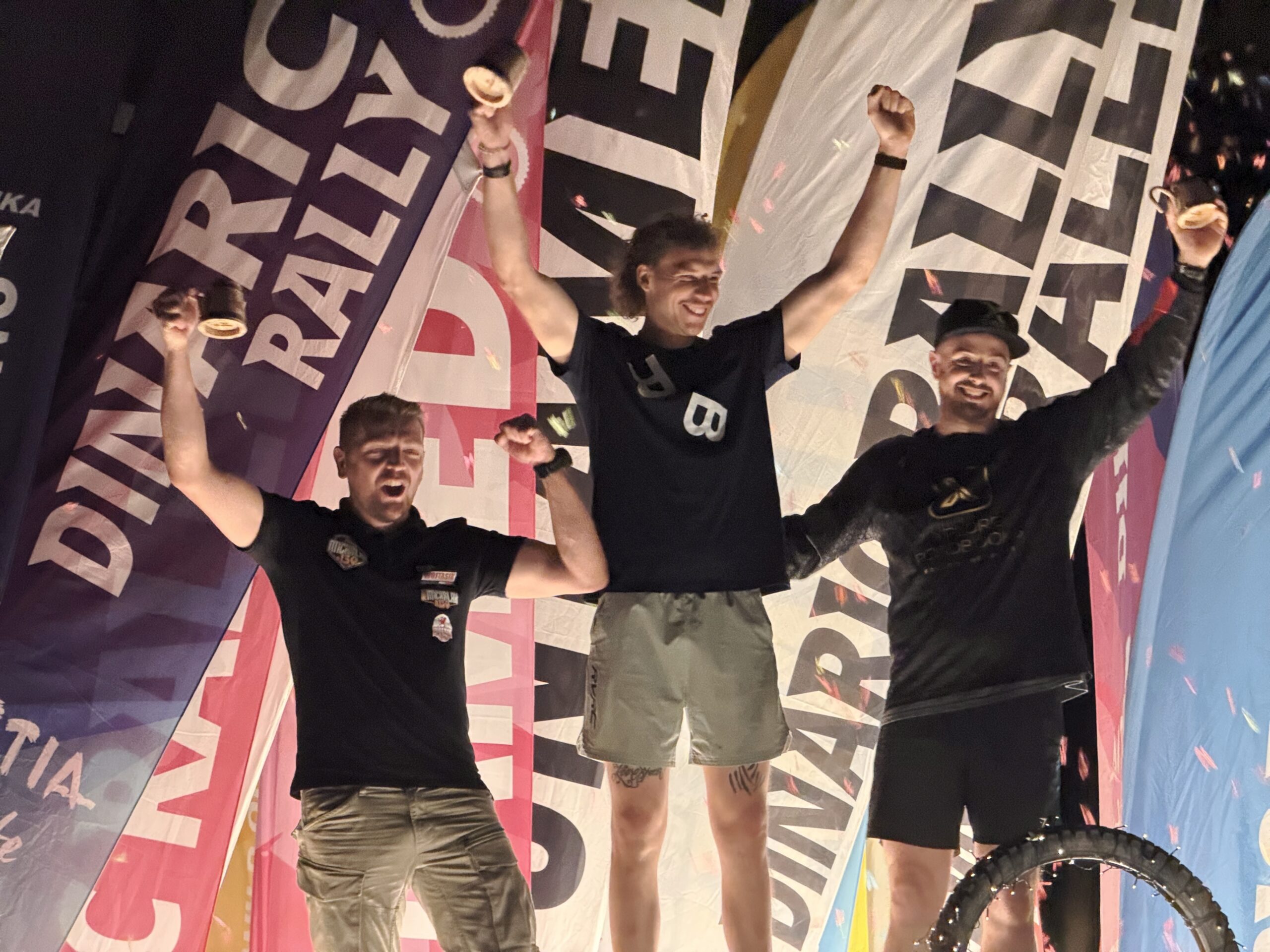
But Maxi withstood the pressure. After five days of racing, he won the Dinaric Rally 2026 with a total time of 23:10:50.250 hours. His margin over runner-up Piotr Michalak was just 4:47 minutes. Ciaran Cottle completed the overall podium.

The overall win was also a strong statement for the BMW F 900 GS rally project. Winning against the lighter rally bikes with a comparatively heavy twin-cylinder machine underlines Maxi’s exceptional riding performance and the quality of the technical preparation.

Daniel Wagenpfeil: Rally Debut with Great Prospects

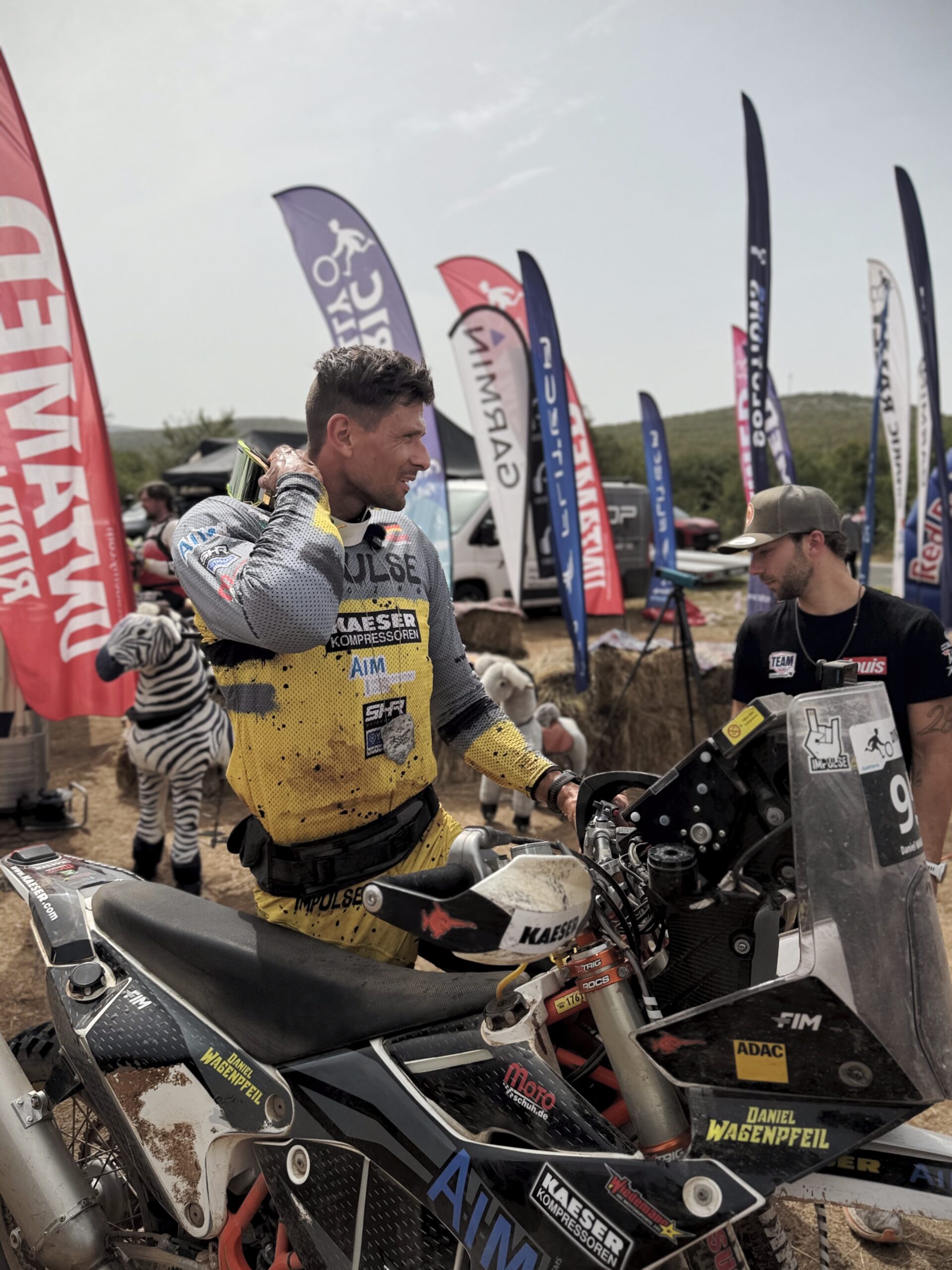
For Daniel Wagenpfeil, the Dinaric Rally 2026 was a first: it was his first rally. The German rider started on a KTM in the M3 class for Wiedemann Motorsports. He thus entered new sporting territory, but already brought extensive experience from another particularly demanding off-road discipline.

Daniel comes from motocross and sand racing. As the only German rider, he contested the FIM Sand Races World Championship, competing against some of the best sand specialists in the world. The races run over deep sand tracks and beaches, where high speeds, extreme physical strain and constantly changing ruts come together.

In the 2025 season, Daniel completed the entire Sand World Championship. With starts in France, Argentina, Italy and Portugal, among others, he gained international experience and finished the championship 15th overall. In 2024 he had already scored world championship points with several strong results.

The switch to rallying nevertheless demanded a lot of new skills from him. Unlike in motocross or sand racing, a rally is not just about speed and fitness. Roadbook navigation, pacing his energy and responsibility for the motorcycle over several long days play an equally important role.

At his first rally, Daniel was able to get to know exactly these routines. Every stage brought new experiences: from reading the roadbook and making quick navigation decisions to dealing with long liaison sections and daily life in the bivouac.

The Dinaric Rally is meant to be not the end but the beginning of a long-term project. Together with experienced Dakar rider Mike Wiedemann and Wiedemann Motorsports, Daniel is already setting his sights on a big goal: possible participation in the Dakar Rally 2028.

A demanding road still lies ahead of him until then. Further rallies, navigation training, international racing experience and the necessary sporting qualification are part of it, as are technical and financial preparation. With his experience from the Sand World Championship, his perseverance and the support of Mike Wiedemann, however, Daniel has a strong foundation for this undertaking.

Mano Welink and Reini Reinfelder in the Thick of It

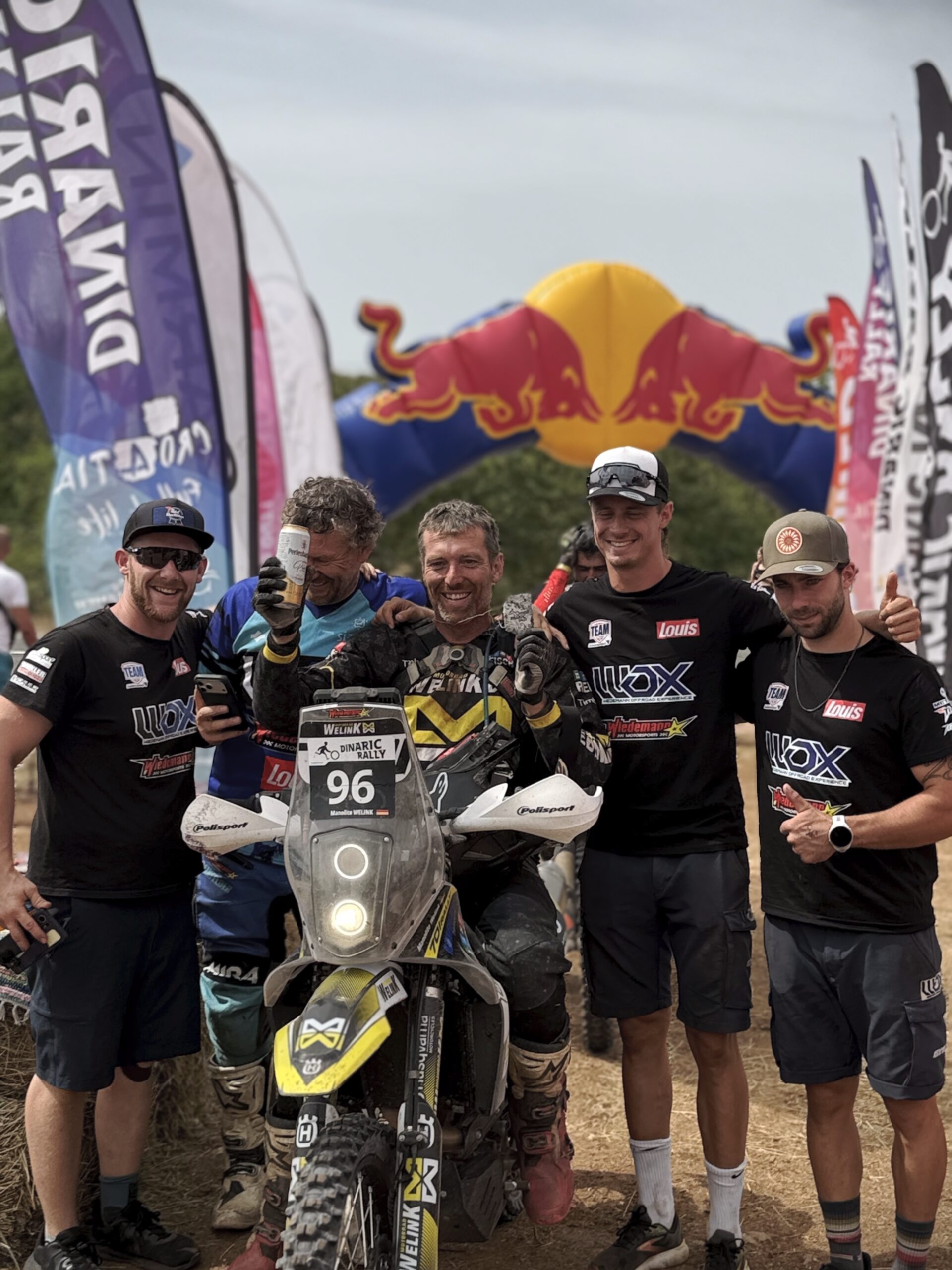
But a rally is not shaped by the overall winner alone. Manolito “Mano” Welink and Reini Reinfelder were also among the well-known German faces of this rally week. They stood for exactly that mix of commitment, enthusiasm and togetherness that could be felt everywhere in the Knin paddock.

On a multi-day rally, far more than pure riding time counts. Motorcycles have to be checked daily, roadbooks prepared and physical reserves carefully managed. Add early starts, long liaison sections and the mental strain of navigation that forgives no lapse in attention.

For Mano, the Dinaric Rally came only a few weeks after his participation in the Red Bull Romaniacs. The switch from technical hard enduro to fast, navigation-intensive rally raid showed his versatility as an off-road rider.

Reini Reinfelder also faced the long days and varied terrain of the Dinaric Alps. Together with Daniel Wagenpfeil, the riders showed what else this sport is about: accepting challenges, gathering experience and standing ready at the start again even after a difficult day.

Wiedemann Motorsports as a Shared Point of Contact

With Wiedemann Motorsports, several riders had a team at their side that brought together experience from different areas of off-road sport. Team founder Mike Wiedemann knows the particular demands of major rallies from his own experience. He has competed in the Dakar Rally several times and knows what sporting, technical and mental preparation such a project requires.

At the Dinaric Rally, Reini Reinfelder and Mano Welink, as well as Daniel Wagenpfeil, were part of the Wiedemann Motorsports set-up. In the bivouac this meant not only technical service but also an exchange of experience, support and mutual motivation.

For a rally newcomer like Daniel in particular, this environment was especially valuable. The Dinaric Rally thus became a first important step on a path that, together with Mike Wiedemann, could lead him to the Dakar 2028.

More Than a Race

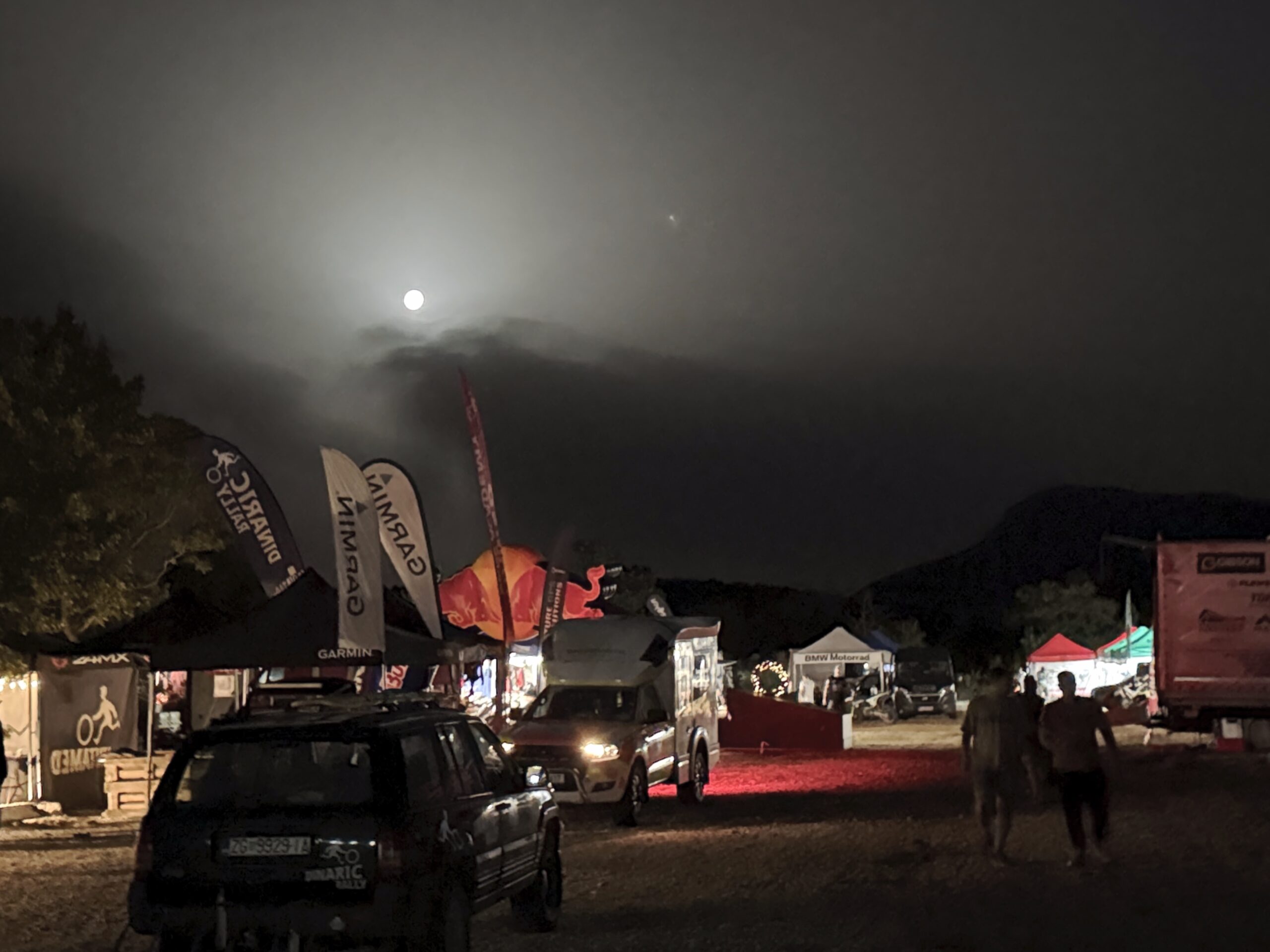
In the paddock, the special side of rally raid sport showed every evening. While the bikes were being worked on and the next day prepared, the riders swapped stories, lines and navigation mistakes. Competitors on the course became helpers, advisers and friends in the bivouac.

It is precisely this combination of sporting competition and community that makes the Dinaric Rally special. The event offers no artificially created backdrop. The rugged mountains, the dust, the heat and the long days are real, as are the exhaustion and the joy when rider and motorcycle reach the finish together in the evening.
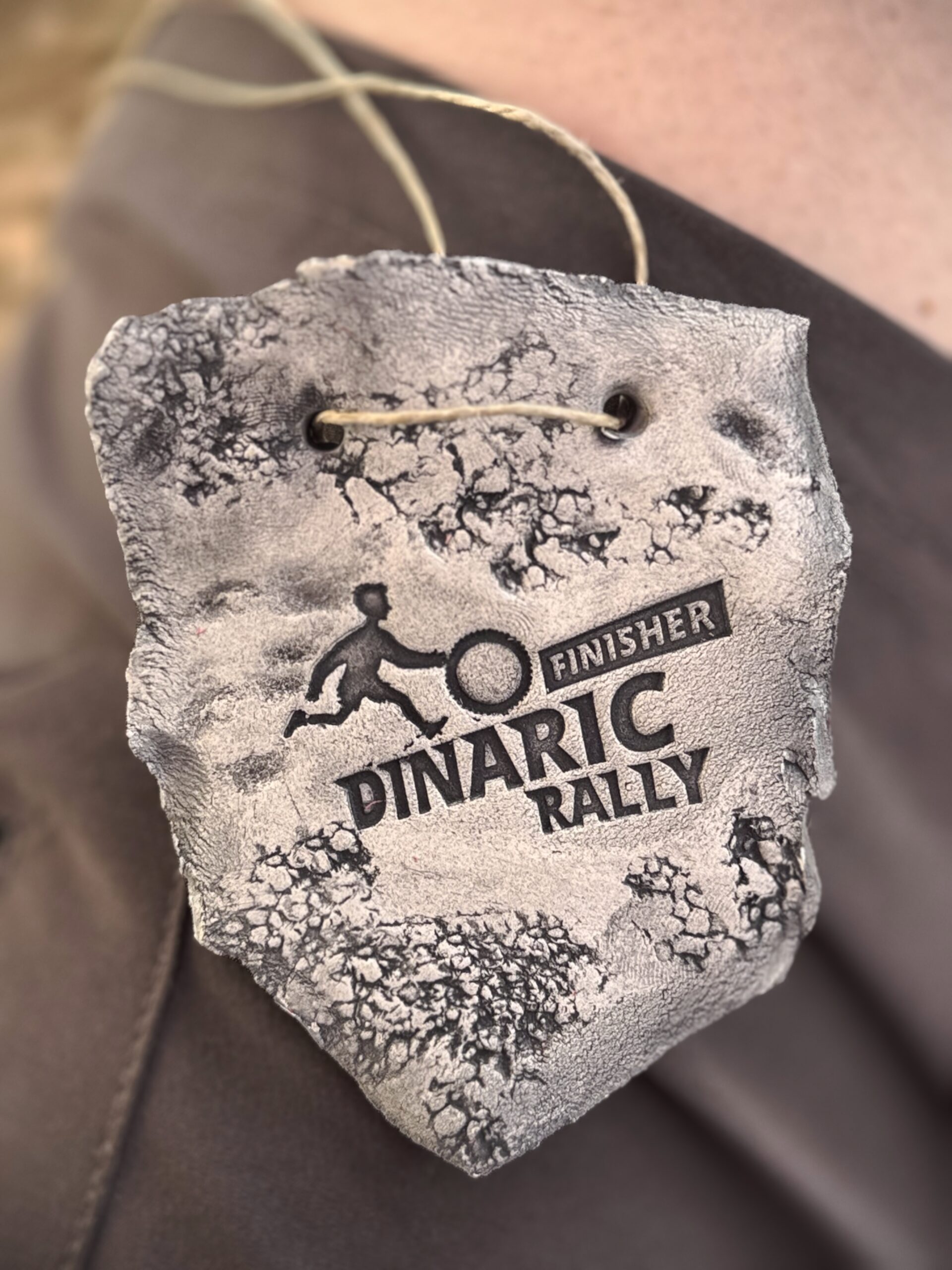
A rally raid is therefore not told through the results list alone. Behind every finish lie countless hours of preparation, technical work, physical training and the will to keep going even in difficult moments.

A Fitting Finish in Knin

With the last stage, an intense week in the Dinaric Alps came to an end. For Maxi Schek, the overall win on the BMW F 900 GS made it a special sporting success. Mano Welink and Reini Reinfelder also took on the demanding stages, while Daniel Wagenpfeil gathered important experience for his sporting future at his first rally.

The Dinaric Rally 2026 has once again shown that rally raid means far more than fast motorcycles and timed stages. It is about orientation, perseverance and the willingness to embrace an adventure whose course can never be fully planned.

For Maxi, the week ended with the overall win. For Daniel, it may one day be seen, in hindsight, as the beginning of his path to the Dakar Rally. And for everyone involved, what remains are dusty motorcycles, tired faces and memories that last far longer than any results list.


Further Information

PS: There is also an audio supplement in the MakeItRally podcast. Why not give it a listen.

Published inAllgemein