Skip to content

STRiX at Dakar Mission 1000

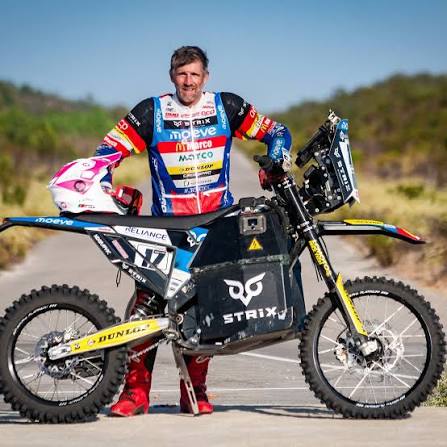
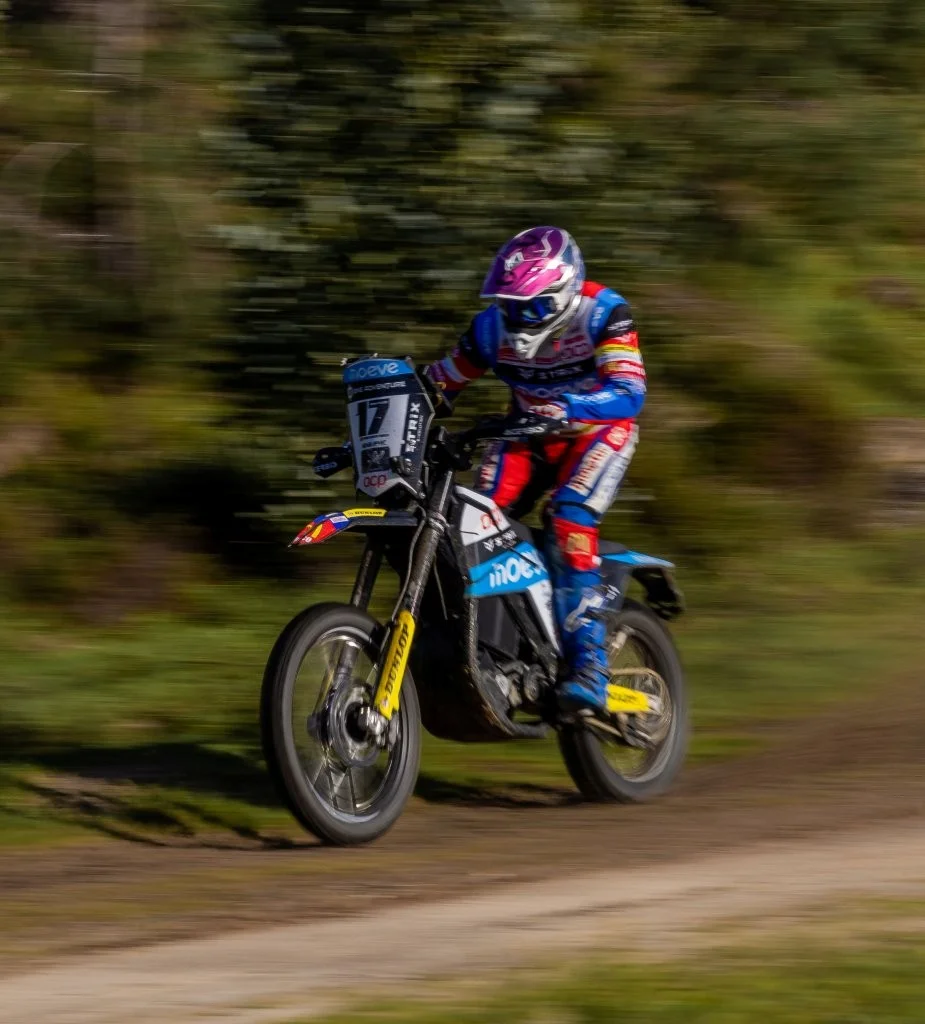
STRiX has Dakar 2027 in its sights, with an electric motorcycle and Pedro Bianchi Prata at the handlebars. The Slovenian manufacturer is developing a competition model for Mission 1000 together with the experienced Portuguese rider. The goal is ambitious: to fight for victory in this challenge while advancing electric rally technology. STRiX project announcement

As of 21 September 2026. Assessment based on official project and organiser information; no test ride by the author.

Mission 1000 in brief

Mission 1000 is part of the Dakar Future programme and started in 2024. Manufacturers and development teams can test alternative powertrains there under desert conditions. Projects using electric, hydrogen or hybrid technology are eligible; A.S.O. reviews the applications. It is a separate technology challenge within the Dakar environment. Dakar: concept and participation

The distances are tailored to this development brief. For 2026 the organiser announced 13 stages with a total of 1,071 competitive kilometres, mostly around 100 kilometres per day. This scale explains the name and the approach: put vehicles under repeated stress off-road, test range and reliability, and learn from the results. The 2026 route data are no guarantee for 2027. A.S.O.: Mission 1000 for Dakar 2026

Pedro Bianchi Prata: rally experience on both sides of the garage

The man at the handlebars brings more than three decades of off-road experience. Pedro Bianchi Prata comes from Porto, began his motorsport career in 1991 and founded Team Bianchi Prata in 2000. His own biography lists eight Portuguese championship titles in enduro and cross-country. Today he also works as a team principal and coach, offers navigation training and accompanies riders at rally events. Official rider and team biography

He made his Dakar debut on a motorcycle in 2007. As he recounts in an interview with the Automóvel Clube de Portugal, he had to cover part of a stage on the rear rim alone. It is an episode that makes his perseverance more tangible than a bare statistic. Dakar itself lists ten participations on two wheels for the intended STRiX rider. Dakar: presentation of the project

Bianchi Prata is also one of the successful veterans in the bajas: at the Baja TT Dehesa Extremadura 2024 he finished third in the motorcycle overall classification and won the veterans’ classification. This is confirmed by the FIM race report. His experience also extends to running a factory team: the official Dakar service catalogue lists him as team coordinator at Honda HRC for 2018 and 2019. Dakar: team profile

He gained electric rally experience before the STRiX project. His team entered ninth overall at the ADDAX Rally 2025 with a fully electric motorcycle. This gives him experience with navigation, race pacing and electric energy supply to bring to STRiX. In our view, the combination of riding, coaching and team work is particularly valuable for development: he knows the demands in the saddle as well as the work that gets the motorcycle ready again for the next day. Team report on the ADDAX Rally 2025

STRiX relies on development in competition

For 2026 STRiX describes a development programme with four international rallies as well as baja events in the Portuguese championship, the European championship and the World Cup. This is the announced test plan; it cannot be inferred that all starts have already taken place.

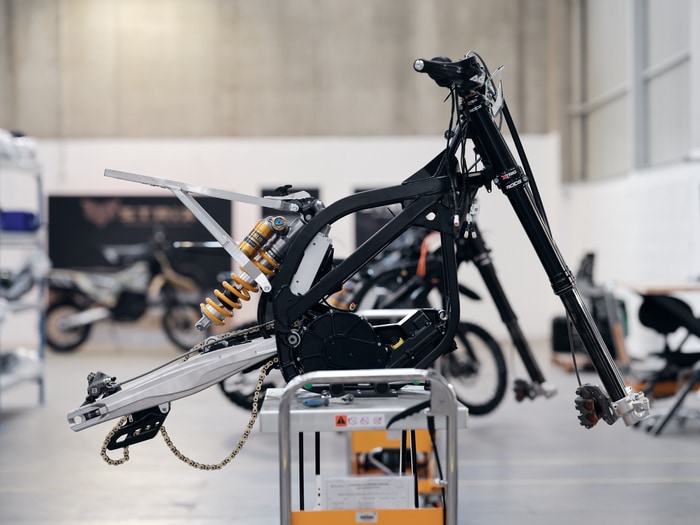
One focus is the battery system. Technology partner EDMTECH is to help fit more energy into the available space and improve range under race conditions. The project also cites thermal management, resistance to vibration and impacts, and intelligent energy control. MOEVE is listed as main sponsor. Partners and development goals at STRiX

What is already known about the motorcycle

At the opening of its test track in Hoče on 14 July 2026, STRiX says it also presented a Dakar version of the motorcycle. The company also unveiled developments to the production machine, including the battery, its own battery management and new software. The presentation shows a concrete development step; it is not yet proof of durability over a complete Dakar event. STRiX: presentation in Hoče

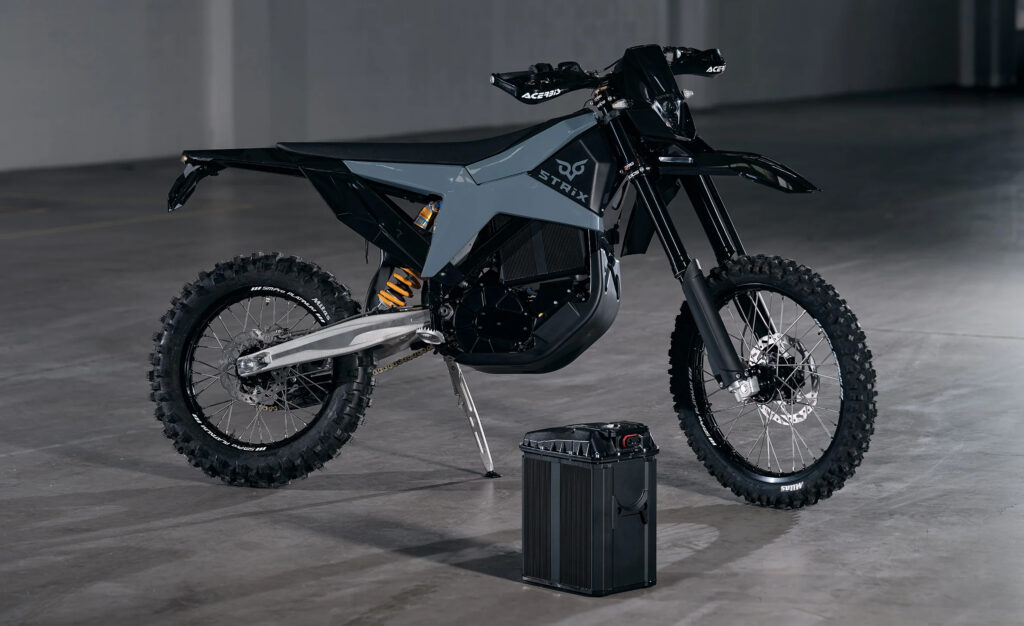
For technical orientation: for the standard STRiX Electric Hard Enduro, the manufacturer quotes 67 kW peak power, 138 kilograms and a swappable 6.2 kWh battery. These figures describe the enduro model on sale and are not confirmed data for the Dakar 2027 configuration. Final battery capacity, weight, race range and the specific charging or swapping strategy of the rally project are not quantified in the project statements reviewed here.

2027: Mission 1000 becomes more demanding in sporting terms

For 2027 Dakar announces a stronger focus on competitive performance: one to two speed test zones are planned per stage. Riders must reach a reference time there, which produces a daily points ranking. Missed waypoints lead to penalty points. For STRiX this means having to master speed, navigation and energy reserves together. Dakar: direction of Mission 1000 from 2027

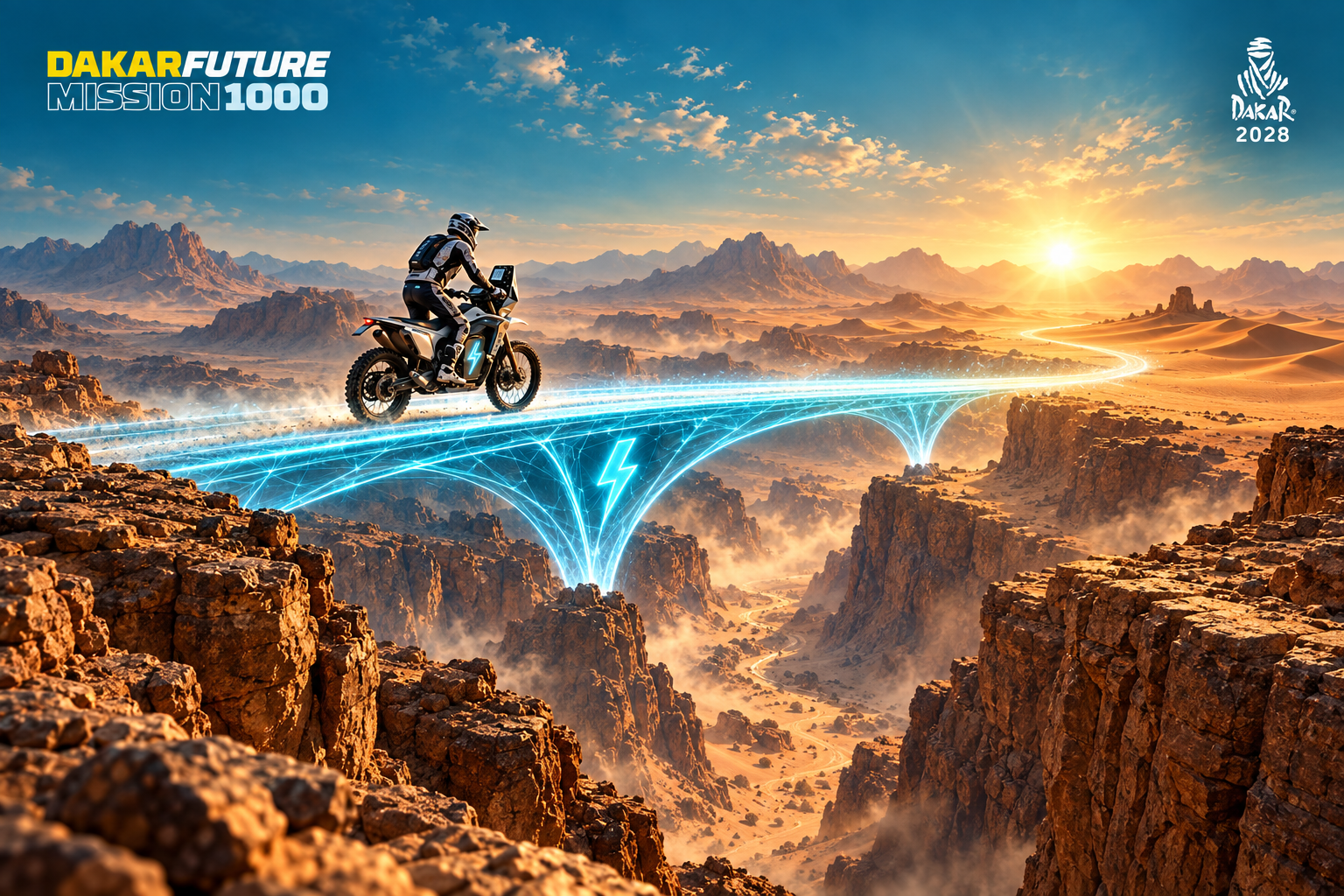
The outlook: a possible bridge to Dakar 2028

The organiser intends to select a promising project that can take part in the Dakar in 2028 under adapted, more flexible rules. Dakar cites the special-project concept “Garage 56” from Le Mans as a model. Which project will be allowed to take this step has not yet been decided; no commitment to STRiX can be inferred from this. Nor does the programme announce a general switch of the motorcycle categories to electric power. Official Mission 1000 outlook

In our view, this is where the real appeal lies: Mission 1000 can show which solutions prove themselves under repeated stress. For an electric rally motorcycle, peak power is not all that counts. What matters is how much rideable distance a battery allows at race pace, how stable the power stays in the heat and how well the energy supply fits into a long rally day.

STRiX is therefore an interesting Dakar project for 2027. An experienced rider, a targeted battery programme and a more demanding Mission 1000 framework create conditions for meaningful tests. Whether this becomes a package capable of winning will have to be shown in competition. For rally riders, it will be particularly interesting to see which advances later become practically useful beyond the Dakar.

Published inAllgemein

17.09.26 – News Compact

+++ News Flash +++

  • Sharish update: Santos out, Ténéré set for confirmed Trail win
  • 130 motorcycles in Morocco: Rally2 shapes a Dakar-sized field
  • Trophy in Mexico: BAJA RALLY offers a Kove Rally 450 to the best amateur
  • Genghis Khan Rally 2027: registration is due to open on 22 September

+++++++++++++++


Sharish: Santos loses lead through retirement, Ténéré on course for Trail win

Category: Big-Bike Rally

Status: Confirmed – provisional results; final confirmation of the Trail win likely – 90–95%

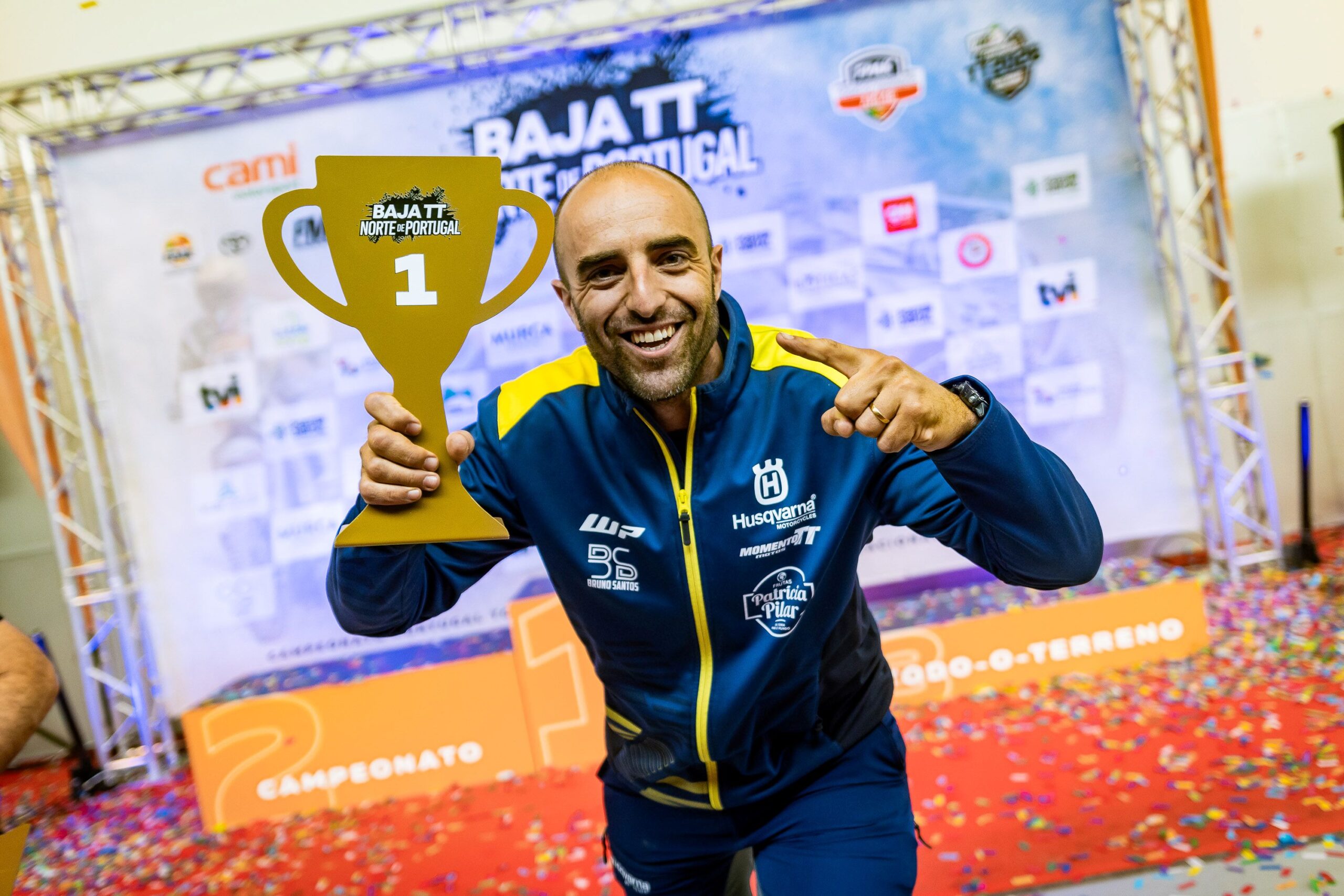
Bruno Santos had led the Baja TT Sharish Gin on a Husqvarna after SS1, with a 35-second advantage over Tomás Dias, as AutoLook reported on 19 September. However, the official provisional result of 20 September lists Santos as retired and has Micael Simão on a KTM in the lead, 14.4 seconds ahead of Dias. António Maio, on his Yamaha Ténéré, is ninth overall and the best rider in the Trail class in that list. The likelihood of final confirmation of his class win is rated at 90–95%, because an official provisional result exists but the final classification is still outstanding.

Rallye du Maroc: 130 bikes – and almost 85 per cent of them in Rally2

Category: Road to Dakar

Status: Confirmed – published entries; assessment editorial

The Rallye du Maroc reports a total of 130 motorcycles for 2026: ten RallyGP, 110 Rally2 and ten Rally3, plus three quads, which are to be counted separately. According to the organiser’s statement of 18 September, the motorcycle field thus matches in numbers the size planned for the Dakar 2027. By calculation, around 85% of the motorcycles are in Rally2, which underlines the importance of the field beyond the RallyGP front, even though Rally2 does not automatically mean amateur status. In addition, there are 13 riders in the new Malle Moto classification, while the organiser announces ZX Moto, among others, with Skyler Howes in RallyGP and Tobias Ebster in Rally2. Our assessment: Morocco thus offers a particularly meaningful comparison between factory front-runners, Rally2 up-and-comers and privateers on the road to the Dakar, although an entry does not in itself guarantee a Dakar place.

BAJA RALLY: A Kove Rally 450 as prize for the best amateur

Category: Amateur/Paddock News

Status: Confirmed – announced prize in kind, no winner yet

BAJA RALLY announces a Kove Rally 450 as a prize in kind for the best-placed amateur; the organiser’s post explicitly describes the motorcycle as a trophy for the best amateur in the overall classification. According to the official schedule, the 2026 edition takes place from 27 September to 3 October, with six stages from 28 September. This is therefore a prize offered for the upcoming race, not a handover that has already taken place. For ambitious privateers, the scheme sets an additional sporting incentive; exactly which riders are eligible must be clarified from the entry conditions.

Genghis Khan Rally 2027: registration start announced for 22 September

Category: Amateur Rally Calendar

Status: Confirmed – website announcement; actual opening on exactly 22 September likely – 70–80%

The official Genghis Khan Rally website announces the event’s return in August 2027 with six stages and the opening of registration on 22 September 2026. As of this edition’s editorial cut-off, 20 September, that means “in two days” and not “today”. A findable post on the official Instagram profile gives a different date, 21 September, which is why the actual opening on exactly 22 September is rated at only 70–80% despite the website announcement. A consistent confirmation of the date, or the actual go-live, is still outstanding for this assessment.

Editorial cut-off: 20 September 2026. Percentage ranges are subjective editorial estimates based on the sources named, not statistically calculated probabilities; they relate only to the open statement explicitly identified in each case.

Published inNews

The F2R Y1000 Is Now on Sale

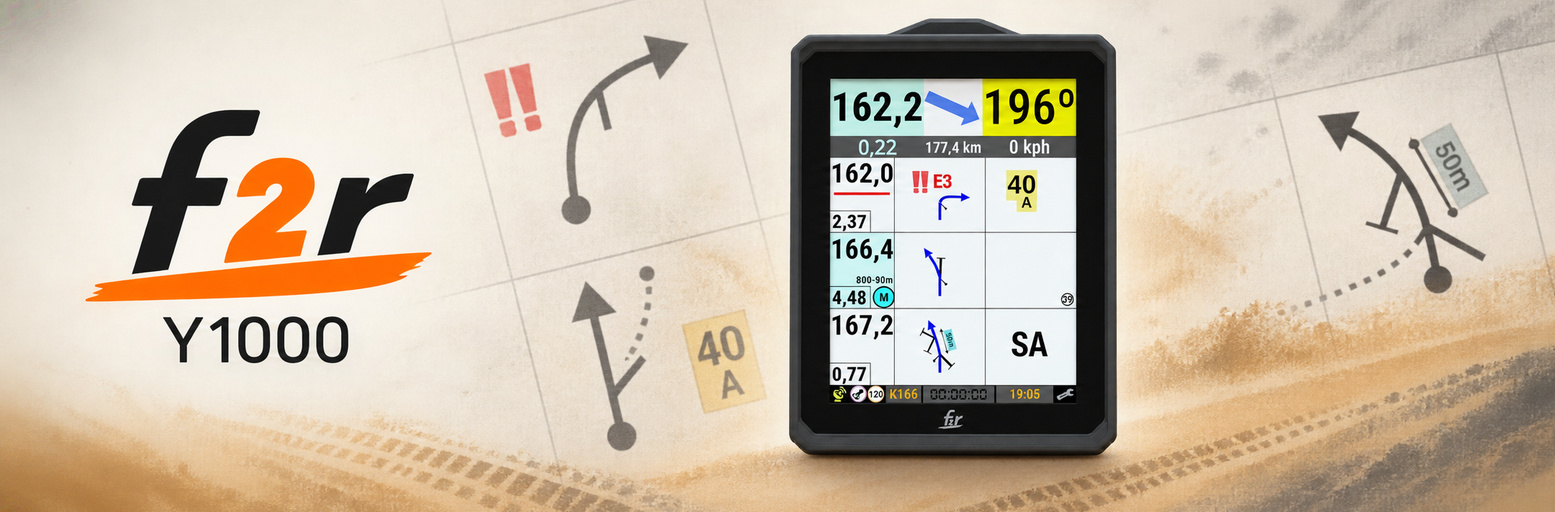
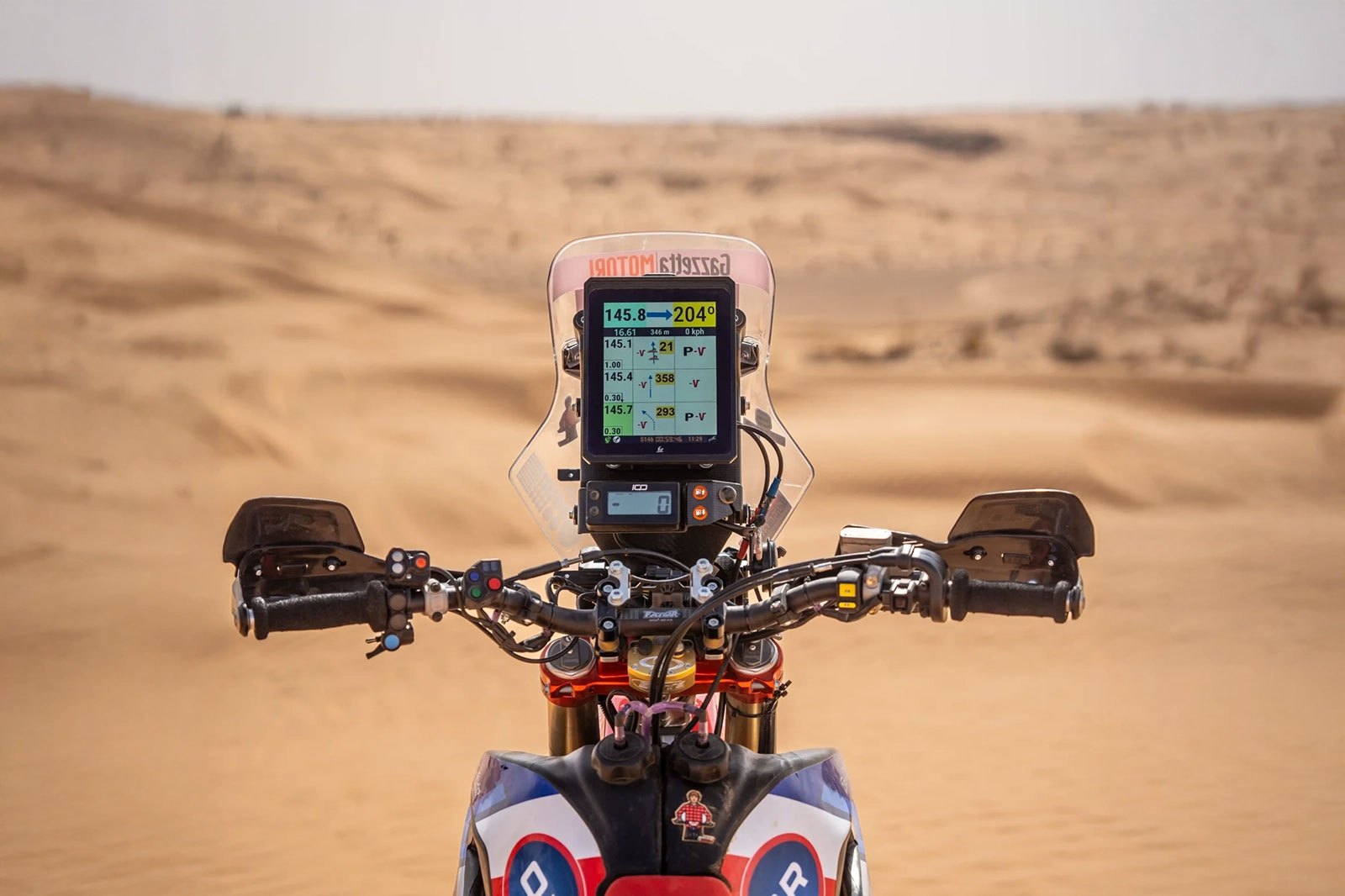
Almost 1,800 euros for a digital roadbook: the F2R Y1000 has to earn its higher price off-road. What matters is legibility during a special stage, a dependable power supply and controls that work with gloves on. But how well has the device actually been tested, where can it be bought – and when is a simpler tablet with TerraPirata enough?

As of 19 September 2026. Research and assessment based on the linked sources; no test ride of our own.
Availability: sold out at the manufacturer, listed by a retailer

Availability differs between suppliers. When checked directly, the F2R shop showed the Y1000 at 1,795 euros as sold out. A notification for new stock is offered; no firm restocking date was given there.

THATS-RALLY listed the single unit at 1,735 euros including VAT, also sold out. OFF-THE-ROAD, by contrast, showed 1,785.95 euros including VAT and dispatch in four days. These are snapshots of shop displays, not reserved stock. Shipping costs, delivery country and the final checkout price belong in the comparison.

The scope of delivery matters too: with the F2R single unit, the DR001 handlebar remote control is available separately. A suitable motorcycle mount and any desired accessories may be extra. Before a rally, therefore, budget for the complete, mountable system. Scope of delivery at F2R

What do you pay for with the Y1000?

F2R cites a CNC-milled aluminium housing, four-millimetre display glass and a 4:3 display designed for roadbooks. The cooling concept is said to allow permanently high brightness. The detachable GammaBox contains the Android electronics; the dedicated roadbook app bundles, among other things, distance counter, compass heading and waypoint guidance. Other Android apps remain usable. These are manufacturer claims, not performance figures measured by us. Technology and functions

The practical value therefore lies mainly in the hardware and controls designed for rallies. Anyone who repeatedly struggles with hard-to-read displays or a sensitive power connection may benefit from a specialised device. Whether that justifies the premium depends on your own use.

One peculiarity is worth knowing: according to TerraPirata’s device overview, the Y1000 has no internal battery and is powered directly from the motorcycle. A cleanly routed and fused power supply is therefore part of the overall system. At around 1.3 kilograms, a sturdy mounting bracket is also needed. F2R weight specification
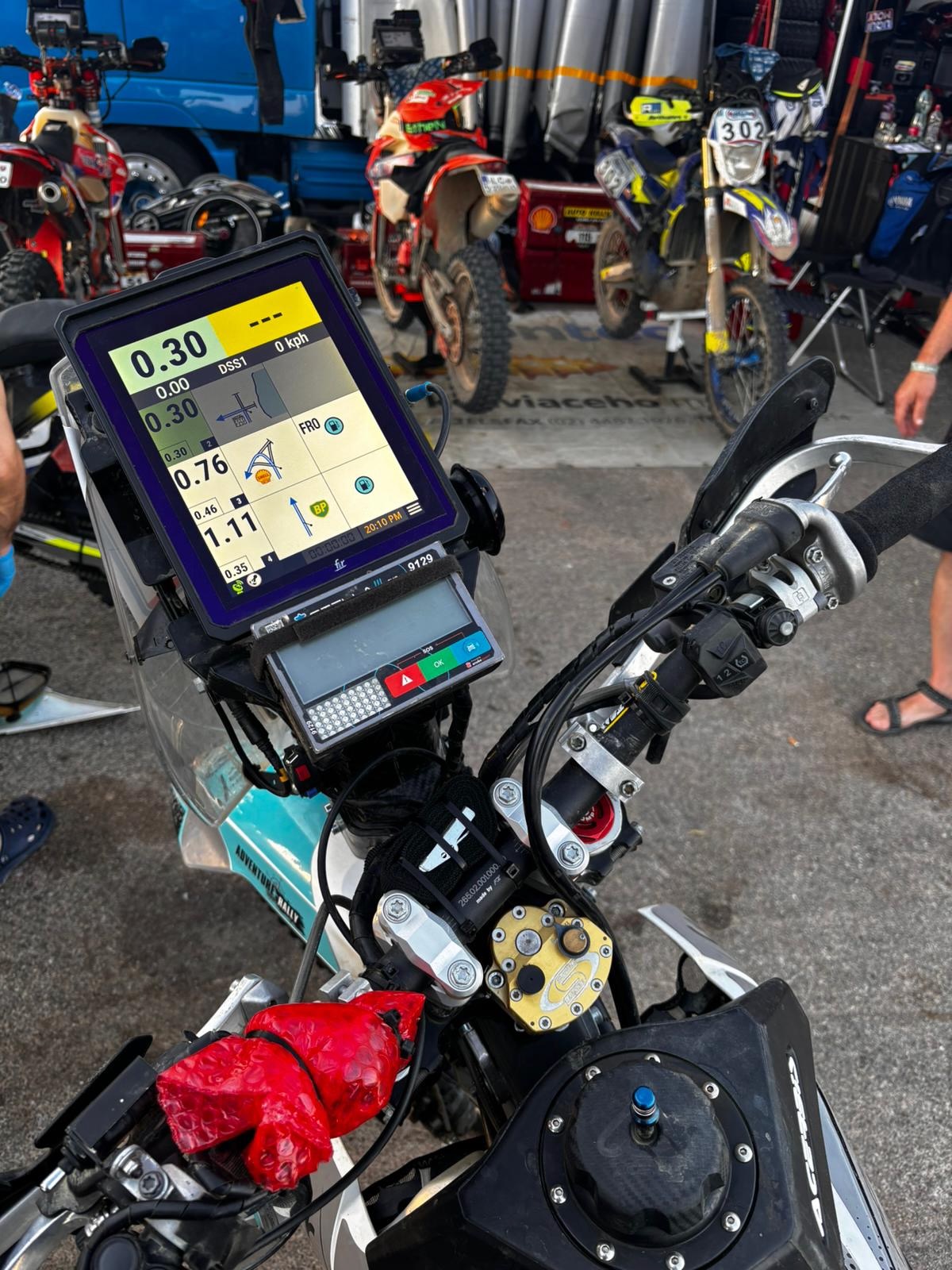
Real rally use: reliable indications, with limits

F2R puts development at three and a half years and more than 55,000 test kilometres. This figure comes from the manufacturer. F2R product description

More concrete are the rider reports published on the F2R development page: Isaac Feliu cites the Hellas Rally and Rodibook 2024, Iván Merichal the Addax Rally 2024 in Morocco. Another tester describes seven race days at the Greece Rally 2024. This gives traceable indications of competition use. However, selected feedback on a manufacturer’s page is no substitute for an independent comparison test. Nor does the involvement of Dakar riders prove the Y1000 was used in racing at the Dakar.

Particularly revealing is Sascha Christof’s personal Hellas Rally report at OFFROADCRACKS from June 2025. He praises the legibility in sun and dust and the easy loading of the daily roadbooks. After a water crossing, however, the display froze and went black.

After consulting an F2R developer, he says, water droplets on the touchscreen are said to have triggered a standby-like state. Activated touch protection would, according to the report, have prevented this; the relevant instruction was missing at the time. The author mentions other riders affected. This is an important practical finding, but not proof of water damage. Whether later software versions have changed the behaviour cannot be deduced from it.

Our assessment: The Y1000 has actually been used in rally conditions. The sources do not, however, justify a blanket promise that it works without faults in all conditions. Before the first race, touch protection, remote control, restart and roadbook import belong in your own training.

Simple tablet with TerraPirata: a sensible start?

The TerraPirata app “Rally Roadbooks” is offered free of charge to riders and already includes important navigation functions such as distance counter, compass heading and waypoints. For learning tulips, distances and CAP headings, a suitable existing tablet can therefore be an economical way in.

The app alone does not make an everyday device rally-ready, however. Mount, power supply, handlebar control, sunlight and wet conditions must suit the use. In its own practical evaluation, TerraPirata describes, among other things, damaged charging ports and problems with mounts on various devices. These experiences relate to specific models and setups; they are not a general failure statistic.

F2R and TerraPirata are also not mutually exclusive: the Y1000 supports TerraPirata’s roadbook distribution via RDS. What is being compared is therefore mainly different hardware solutions within a partly shared software world. Anyone starting cheaply should calculate the price of the fully mounted setup – not just the price of the tablet. A free app also does not mean that roadbooks and events are free.

Concrete alternatives: Beginner, Medium and Premium

The following tiers are our assessment by budget and purpose, not a ranking from a direct comparison test. A more expensive device does not automatically improve the rider’s navigation technique. What matters is how well the complete setup suits training, tours and races.

Beginner: Samsung Galaxy Tab Active3 with TerraPirata

For first roadbook training sessions, a refurbished Tab Active3 is a concrete money-saving option. At Back Market, the 64 GB version was offered at the time of research from around 90 euros, plus the stated service fee. Condition, seller and scope of delivery affect the price. A sturdy motorcycle mount, a suitable power supply and, where applicable, a compatible handlebar remote control come on top.

This suits riders who want to learn to read tulips and correct distances. The limits lie particularly in legibility in harsh sun and the durability of the charging connection; TerraPirata describes corresponding experiences for the Active series. With an older used device, check the battery, ports and compatibility with the current app version before buying. For the first multi-day rally, the finished setup should already have survived several longer training sessions.

Medium: DMD-T865X with off-road mount

For regular training and a mix of touring, off-road and roadbook, the DMD-T865X is a sensible middle way. Thork Racing shows an entry price of 730.01 euros including the tax applied in the shop. The offer includes a mount and the power wiring; note the mount variant and delivery country when it comes to the final price. According to the manufacturer, the eight-inch device offers a 1,300-nit display, Android and an unlocked DMD2 licence.

For more demanding off-road riding, we would choose the heavy-duty off-road mount with screwed power connection on offer. This is a different version from the road mount. A handlebar remote control and the fixing to the specific motorcycle must be budgeted for separately. The advantage over a cheap tablet lies in the package already designed for motorcycle use; this does not amount to proven superiority over the Y1000 in direct rally comparison.

Premium: Carpe Iter Caretta as an alternative to the Y1000

Anyone seeking a high-quality device for roadbooks and demanding journeys should compare the Caretta Navigation Kit. The Carpe Iter shop lists it at 799 euros excluding VAT; at a calculated 19 per cent, that is 950.81 euros, plus shipping. The checkout for the delivery country remains decisive. Included are the device, charging mount, an AMPS base for a 12 mm crossbar and a fused power cable. A separate handlebar remote control is not part of the kit as listed.

Carpe Iter cites a seven-inch display with 2,200 nits, Android, an internal battery and a vibration-damped mount. The display values are manufacturer claims and not a jointly measured brightness comparison. Our assessment: an interesting premium alternative for riders who switch a lot between roadbook and map navigation. With its 4:3 format and dedicated roadbook controls, the Y1000 remains particularly interesting for targeted rally use. Multi-day rally experiences with other Carpe Iter models cannot automatically be transferred to the Caretta.

Carpe Iter CI Pad V4C: older premium alternative in comparison

The CI Pad V4C belongs alongside the Caretta as a model in its own right. Its features make it particularly interesting for riders who already own a V4C or find a suitable offer for a complete setup. The V4C product description from VenturaX cites Android 13, an internal battery with a nominal 9,650 mAh and a device weight of around 650 grams. No current complete price is set here: tablet, mount, power supply and remote control must fit together for the specific offer.

For demanding terrain, the screwed M8 power connection is relevant. Carpe Iter offers the Lightweight Holder either active with charging contacts or passive for supply via M8. A separate GPS tripmaster can work alongside; for shared handlebar control, the combination of Terrain Command III and Tripmaster HUB described below applies. As a result, its distance values are not automatically transferred to the tablet app.

Our assessment: An existing, working V4C does not have to be replaced merely because of the Y1000’s higher GPS rate. What matters is whether reception, sun legibility and power supply work reliably in your own training. When buying an older device, check the battery, charging ports and software state. V4C, V4D and Caretta have different GNSS equipment; their technical specifications must not be mixed up.

The fair price comparison is therefore: tablet or kit plus handlebar control, suitable motorcycle mounting and complete power supply. With the Beginner setup, more has to be put together yourself; DMD and Caretta already bring part of these components with them. The Y1000 is priced above them and should offer a concrete added value for your own use.
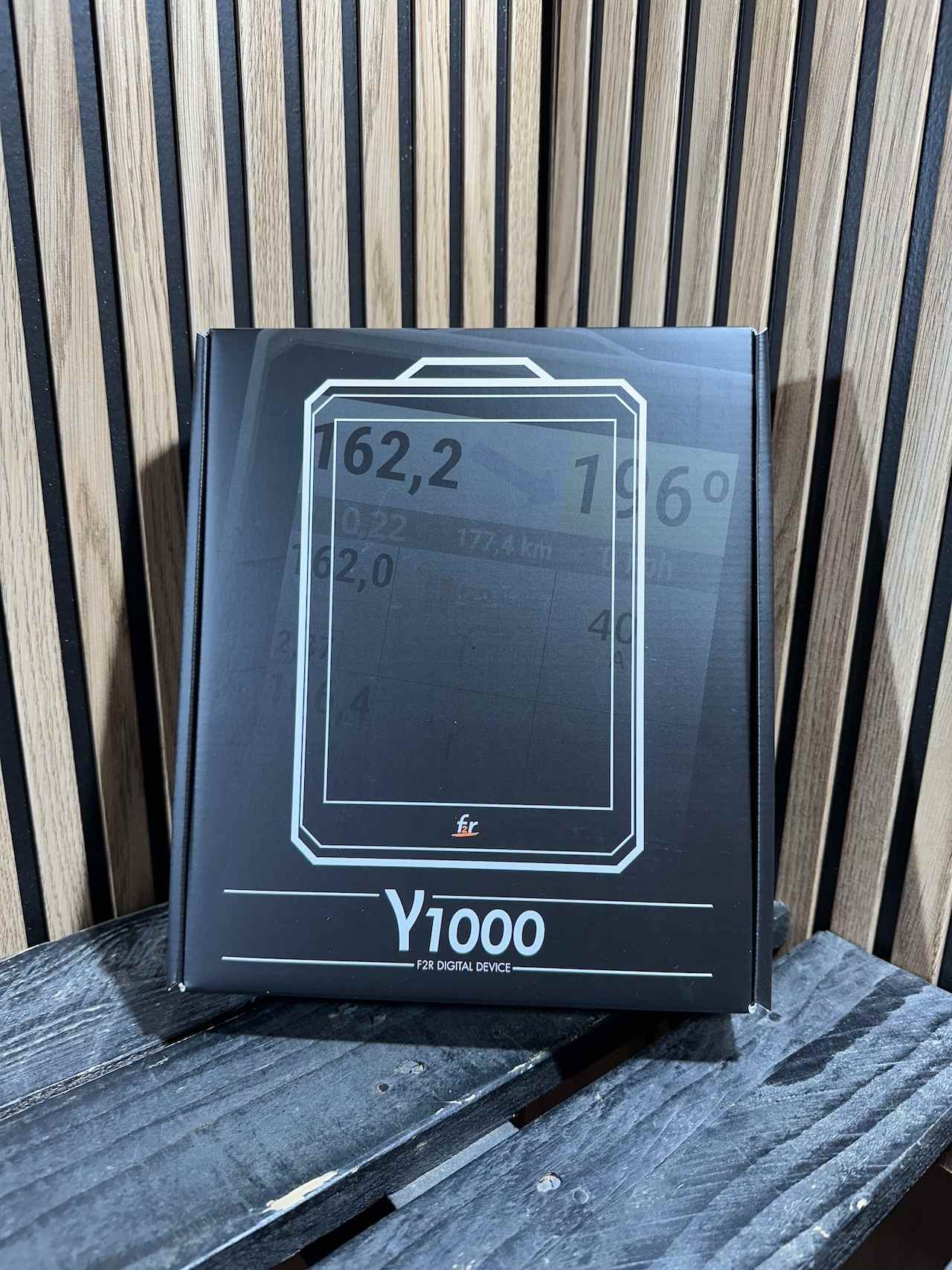
GPS when riding by roadbook: why 25 Hz can make a difference

The fast GNSS receiver is a factual argument for the Y1000’s higher price. F2R cites up to 25 position updates per second. Carpe Iter gives 10 Hz for the Caretta; for the older V4C, the linked retailer description cites up to 5 Hz. For the Samsung Tab Active3 and the DMD-T865X, the manufacturer documents checked here publish no clear rate. Attributing 1 Hz to them across the board, or presenting a lower rate as proven, would therefore not be reliable.

A worked example shows the significance: at 90 km/h, the motorcycle covers 25 metres per second. Between two position fixes there are 25 metres at 1 Hz, 2.5 metres at 10 Hz and one metre of travel at 25 Hz. These are intervals along the route travelled, not position errors. More frequent measurements can improve the response of the tripmeter and CAP display and the recording of tight corners. How quickly the display actually responds also depends on the app, operating system and filtering. Furuno: position update and track

Two decimal places for kilometre figures are already commonplace in modern roadbooks. They correspond to a display step of ten metres. A display of 12.34 km therefore does not yet promise a distance measurement accurate to ten metres. Position accuracy, accumulated distance and display resolution are different quantities. Even a fast receiver needs good reception and a suitable distance calculation; shadowing, signal reflections and deviations from the surveyed route remain relevant. In principle, more accurate GPS measurement can make the difference between turning now and turning later.

GPS/GNSS and size compared – manufacturer and labelled retailer data, no joint measurement test
Device Receiver, rate and accuracy Display and housing
Samsung Tab Active3 GPS, GLONASS, BeiDou and Galileo. Specific GNSS module, Hz rate and specified position accuracy not stated in the product description checked. 8 inches, 1920 × 1200 pixels; 213.8 × 126.8 × 9.9 mm without additional mount. Samsung
DMD-T865X Integrated GNSS, connection for external antenna. Module and Hz rate not clearly published. Product page states under 1 m, Thork shop by contrast at most 2 m; measurement standard not explained. 8 inches, 1280 × 800 pixels; 207 × 137.5 × 15 mm without mount. DMD / Thork
Carpe Iter CI Pad V4C u-blox M9N, up to 5 Hz according to model-specific retailer description; GPS, GLONASS, Galileo, BeiDou and SBAS. No statistically defined accuracy of the complete tablet given there. Do not carry over the dual-band specifications of the V4D or Caretta. 7 inches, 1920 × 1080 pixels; 200 × 135 × 20 mm. With mount, according to the offer, 220 × 140 × 40 mm. V4C specification at VenturaX
Carpe Iter Caretta Dual-band GNSS L1/L5, 10 Hz, under 1 m according to the manufacturer; statistical definition not stated there. Specific module designation not given. 7 inches, 1920 × 1200 pixels; 194 × 129 × 22–33 mm. Charging mount: 203 × 165 × 50–56 mm; do not simply add these dimensions. Carpe Iter
F2R Y1000 GPS, Galileo, GLONASS and BeiDou; up to 25 Hz, under 1 m CEP. Module designation and received frequency bands not stated in the datasheet. 8 inches, 4:3, 768 × 1024 pixels; 210 × 160 × 37 mm. Portrait mounting. F2R datasheet
ERTF Unik 4 Moto Event system with external GPS antenna. Module, Hz and a comparably defined metre figure not documented in the materials checked. Own damped mount; allow 35 mm clearance behind the GPS for connectors. No reliable complete housing dimensions in the mounting instructions checked. ERTF mounting
RBI IRIS GNSS navigation and waypoint control. Module, Hz and statistically defined accuracy not stated in the public description checked. Various vehicle versions; check binding dimensions and mount for the specific enduro version with the organiser. RBI

At F2R, CEP denotes a statistical circular error figure, usually referring to 50 per cent of position fixes under the respective test conditions. “Under one metre CEP” does not mean that every measurement point lies within one metre. Without identical test conditions and the same statistical standard, the manufacturers’ accuracy claims are not directly comparable. Ruptela: accuracy figures / u-blox: datasheet and practice

Our verdict: The documented 25 Hz are a concrete technical advantage over the Caretta, specified at 10 Hz, and the V4C, which according to the retailer manages up to 5 Hz, provided the application used can process this data rate. Together with housing, display and controls, they can explain the higher price. Generally superior component quality or better route accuracy than all alternatives has not been demonstrated by this. For tight sequences of tulips, fast, stable data and a easily operated distance correction count together.

Dakar and W2RC: is the F2R Y1000 approved by the FIM?

A blanket FIM approval of the Y1000 as a replacement for the prescribed Dakar/W2RC system could not be established. F2R describes its roadbook software as FIM/FIA-compliant. This manufacturer statement is not, however, an event-specific approval of the device.

The FIM W2RC Sporting Regulations 2026, version of 3 March, Article 29.3 in principle permit the digital displays provided by the organiser. Further displays require prior approval from the FIM Technical Director or Chief Technical Steward. Article 29.2 permits GPS odometers under the functional restrictions set out there, unless the supplementary regulations provide otherwise. No general permission for a freely usable Android tablet follows from this.

For the Dakar 2026, the motorcycle rules refer to ERTF, the mandatory rental of the GPS and, in the appendix, the Unik 4. The W2RC Rally de Portugal 2026 likewise prescribes the ERTF navigation system for all motorcycles in Article 10.5.2; Appendix 5 deals with its electronic Unik 4 roadbook.

The Unik 4 is thus part of the sporting control and safety equipment: roadbook, waypoint checks and the link to the Sentinel system form a procedure laid down by the organiser. A private app with a waypoint function does not replace this integration. For supplementary ERTF displays, Speedocap and the intended cables, for example, are relevant; other tripmasters need their own technical and regulatory check. ERTF documents

For the purchase decision, this means: the Y1000 can be a valuable training device and a race device at events with free choice of equipment. Anyone planning the Dakar or other W2RC rounds must budget for the system prescribed there. A higher GPS rate does not create an entitlement to start; the respective supplementary regulations, current bulletins and any written approval granted decide.

RBI and IRIS: factoring in the event’s system

The RBI IRIS system combines digital roadbook and navigation with functions for tracking, race control and safety. The focus here is on integration into the running of an event.

A concrete example is Baja Europe 2026: according to participant information, all race classes use IRIS, including Enduro. Rental of a unit is included in the entry fee; the mounting kit is provided separately. Navigation, waypoint control and GPS tracking run via the event system.

For this participation, buying a Y1000 therefore does not answer the equipment question on its own. A personal device does not replace a prescribed IRIS. Anyone who mainly rides such events should first check their requirements and included services. Equating a general IRIS purchase price with the F2R device price would be of little help for this rental model.

Who is the higher price worth it for?

  • Beginners and occasional roadbook riders: A suitable tablet you already own, or a cheaper rugged one, with TerraPirata can be enough. The remaining budget can be invested in navigation training and first events.
  • Regular rally riders with free choice of equipment: The Y1000 is interesting if sun legibility, the position updating of up to 25 Hz, housing and controls solve the previous weak points of your own setup. The documented rally use argues for serious consideration, but does not replace your own test.
  • Participants in rallies with mandatory ERTF or IRIS: Plan the event system and its mounting first. An additional Y1000 must justify itself through further races, training or tours.

The Y1000 can be worth its price if its particular features are needed in your own rally routine. For simply displaying a digital roadbook, on the other hand, the high entry price is hard to justify. A sensible purchase begins with the race calendar, the right setup and an honest look at the problems the new device is actually meant to solve.

Published inAllgemein

FE 450 Model Year 2027 – Rally Debut at the Baja TT Sharish Gin

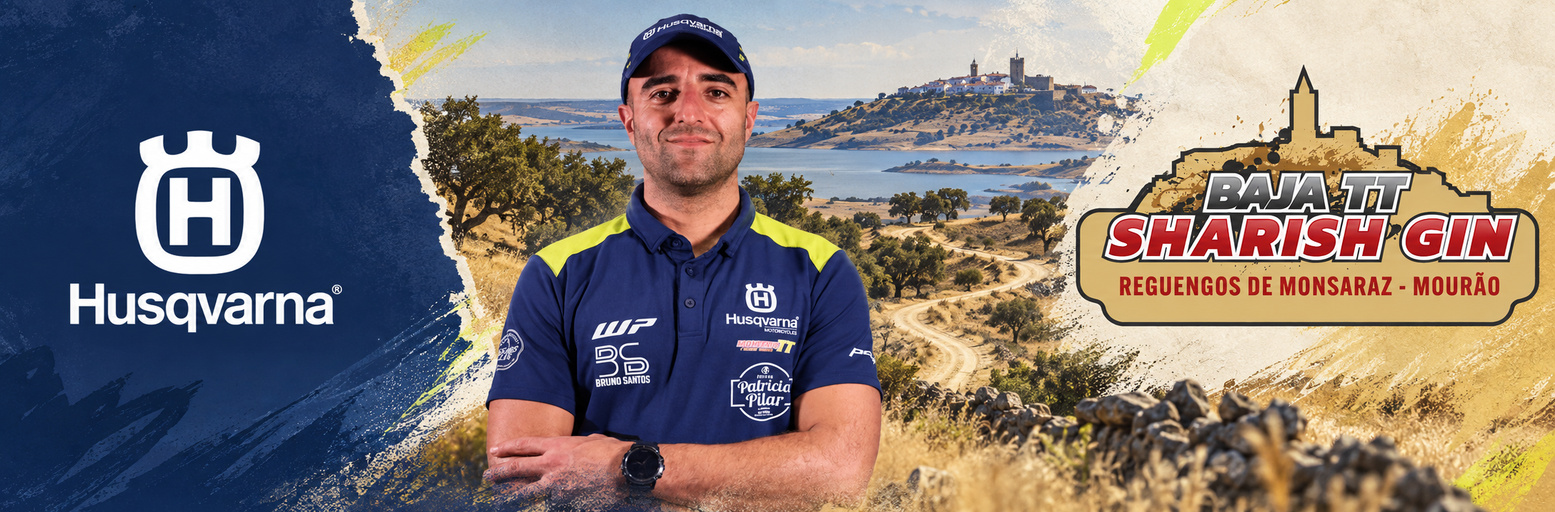
Getting into rally sport does not have to start with a specialised rally replica. Bruno Santos shows how competitive an enduro base can be: at the Baja TT Sharish Gin, the Portuguese rider will use his Husqvarna FE 450 of model year 2027 in a race for the first time. For ambitious amateurs, what is particularly interesting is how an FE can be developed to suit their own ability and planned events.

As of 19 September 2026. This covers the announcement of the model’s debut and the prologue; the final result of the Baja is still to come.

Husqvarna in rally sport: privateers keep the brand visible

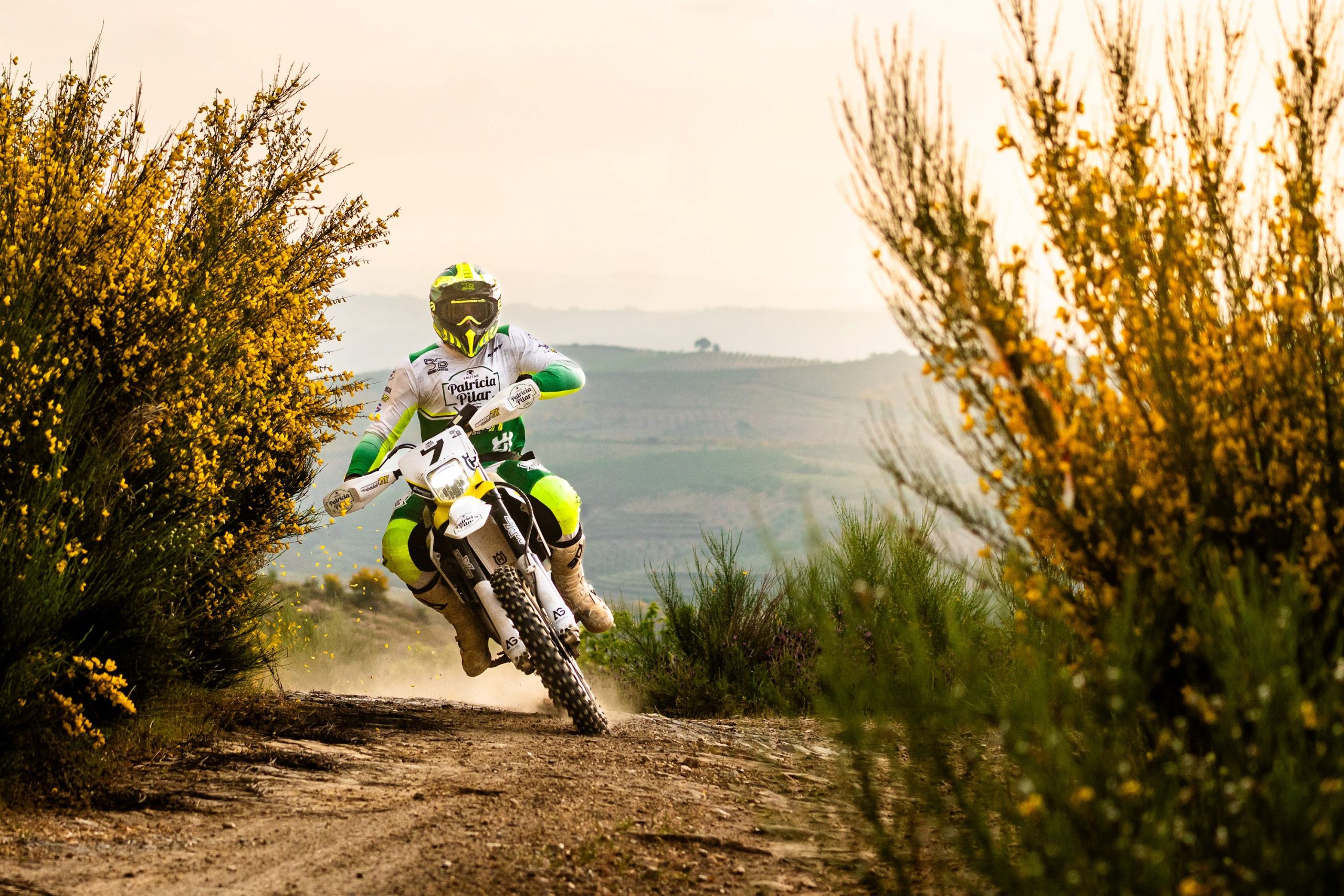
At the Dakar and the World Rally-Raid Championship, Husqvarna today stands for entries by privateers and customer teams. The former factory rally team is a thing of the past: Luciano Benavides moved to Red Bull KTM as early as 2024, as the KTM announcement at the time documents. Santos’ outing with the FE should therefore be seen as a privately organised racing project; his Dakar profile lists the team Frutas Patrícia Pilar.

The FE has already proven its sporting potential. The organiser of the Baja TT Montes Alentejanos explicitly names Santos as the winner on a Husqvarna FE 450 in 2026. He travels to the Baja TT Sharish Gin with three consecutive CNTT wins and the championship lead. The new machine is meant to build on those results.

What has Santos changed on his FE 450?
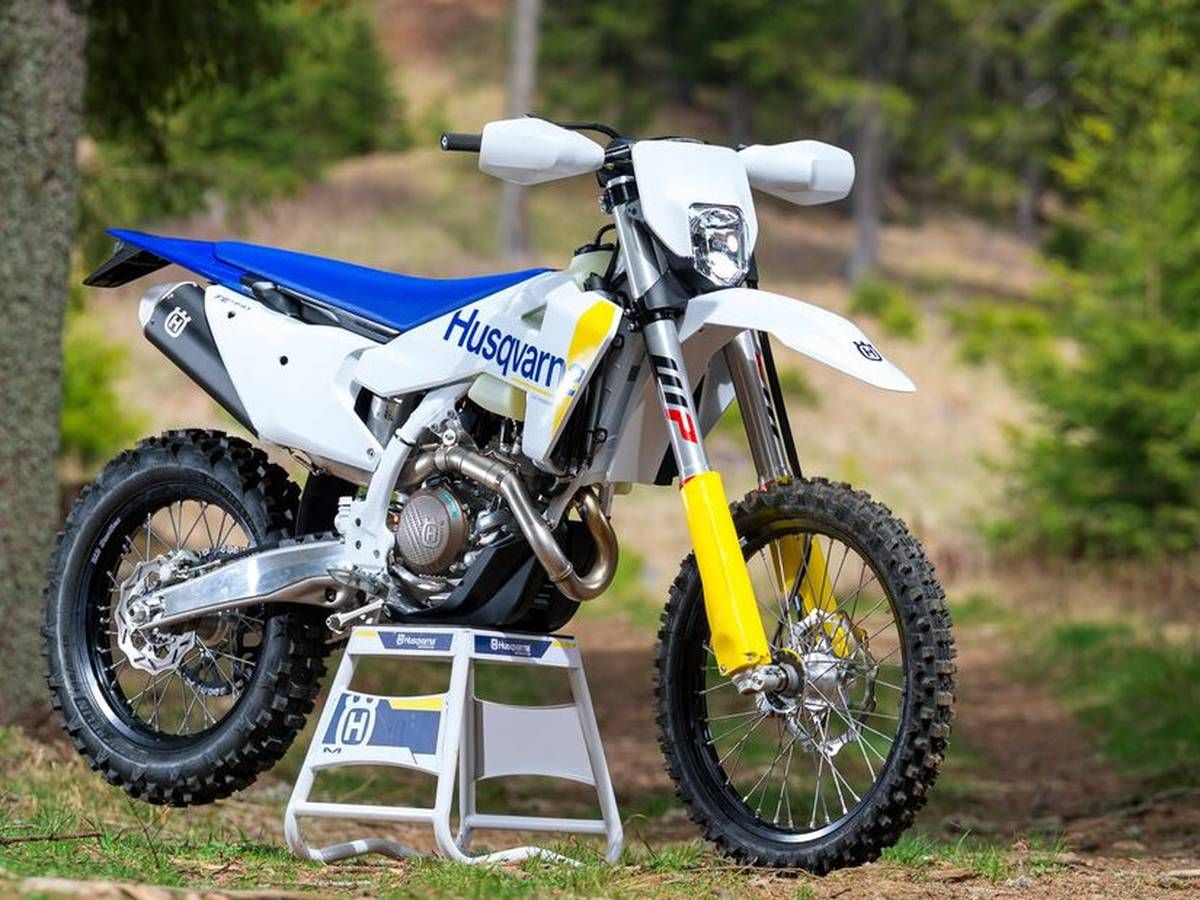
In the announcement of 16 September, Santos confirms the first race outing of the FE 450 model 2027 and says it is already well adapted to these races. However, the release does not publish a specific list of modifications or parts.

This means that neither a particular fuel tank capacity for his race bike nor different suspension components, altered engine mapping or a special navigation unit is documented. Details of his Dakar Husqvarna cannot be transferred to the new FE either: at the Dakar he rides a 450 Rally Factory Replica. Which components Santos has actually replaced on the FE, or merely set up differently, remains open based on the available information.

The production base: sport enduro with a modest entry price

The FE 450 model 2027 comes as standard with a 449.9 cubic centimetre four-stroke engine, six gears and WP XACT suspension with 300 millimetres of travel each. Husqvarna quotes a fuel tank capacity of around eight litres and 109.6 kilograms without fuel. These are production figures, not measured data from Santos’ race bike.

The German list price is 12,299 euros including VAT, plus 495 euros for delivery and ancillary costs – 12,794 euros in total before accessories and modifications. To put the price class in context: a German authorised dealer offers a KTM 450 Rally Factory Replica model 2027 for 39,490 euros. That is an example from the rally replica market and not a current Husqvarna FR list price. Used FR models and individually built FEs can differ considerably in price. Price as of 19 September 2026.

From rally novice to ambitious racer: building up with purpose

For riders with off-road experience, the FE can be a base that is first used for training and suitable entry-level events and later expanded in a targeted way. A 450 sport enduro is, however, not a straightforward beginner’s bike. What matters is your own riding ability, the regulations and the demands of the next event.

The following overview is a guide for building your own bike, not a verified list of Santos’ modifications:

  • Suspension and ergonomics: Set up springs, sag and damping for rider weight, pace and additional equipment; check handlebar, lever and footpeg position. A suitable setup is often a more sensible first step than replacing complete components.
  • Range: Work out fuel consumption and the longest section between refuelling points. If the standard tank including reserve is not enough, extra capacity becomes necessary. A large tank is therefore a question of the route.
  • Navigation and electrics: At roadbook events, plan for the prescribed navigation with an easily legible, stable mount and a reliable power supply. Entering a Baja alone does not prove a need for a large navigation tower.
  • Protection and tyres: Check the existing engine, hand and radiator guards for the intended use; choose tyres and puncture protection to suit the terrain and regulations.
  • Maintenance and budget: Factor in servicing, wear parts, training, entry fees and transport from the start. Extra engine power should only become a topic once there is a specific need for it.

The advantage of this approach: expenditure can grow with the sporting demands. Anyone who first develops riding technique, navigation and race routine does not have to finance a bike for long desert stages at the very first start.

When an FR or rally replica makes sense

With long stages, a large required range and demanding navigation, the demands on the overall package rise. A rally bike developed specifically for this can then be the more coherent solution. How elaborate such concepts are is shown, for example, by the current KTM Rally Replica.

An extensive FE conversion can eat up a considerable part of the initial price advantage. Santos’ own choice of bikes illustrates the different tasks: FE for the Baja described here, Rally Factory Replica for the Dakar. His results show that an enduro base can remain competitive well beyond first training sessions; they do not, however, automatically make the FE the better bike for every rally.

Baja TT Sharish Gin: first race outing of the new model

The Baja takes place from 18 to 20 September 2026 around Reguengos de Monsaraz and Mourão. It is the fourth CNTT round and part of the FIM Europe Baja calendar, as the event announcement explains. In the prologue on 18 September, Santos finished third in the motorcycle classification and fastest in TT2. Tomás Dias won the opener ahead of Micael Simão.

Bruno Santos: from national champion to Dakar top-20 finisher

The rider from Torres Vedras, born on 16 June 1987, combines motorsport with work and family. According to his Dakar portrait, he runs his family’s packaging company and is the father of two children. His international development builds on successes in Portugal:
  • 2018 and 2019: Portuguese rally raid champion in two consecutive years.
  • 2023: National TT3 title and victory at the traditional Baja Portalegre 500. His official biography lists these successes.
  • 2024: Dakar debut with 28th place overall. At the bp Ultimate Rally-Raid Portugal he wins the Rally2 category and even reaches third place in the overall motorcycle classification, documented in the Dakar rider profile.
  • 2026, Dakar: In his third participation he improves to 17th overall and seventh in Rally2. His own review highlights his consistent riding across all stages.
  • 2026, Portugal: Another Rally2 win at the home World Championship round and fifth place in the FIM overall standings, confirmed in the official W2RC live ticker. He then travels to the Baja TT Sharish Gin with three consecutive CNTT wins.

The interesting message for amateurs lies in this sporting path: a well-prepared enduro can remain a sound base from the first suitable competition to demanding Bajas. Santos provides a strong example of this. Which modifications to his new FE contribute to this can only be answered concretely once a technical description has been published.

Published inNewsRally

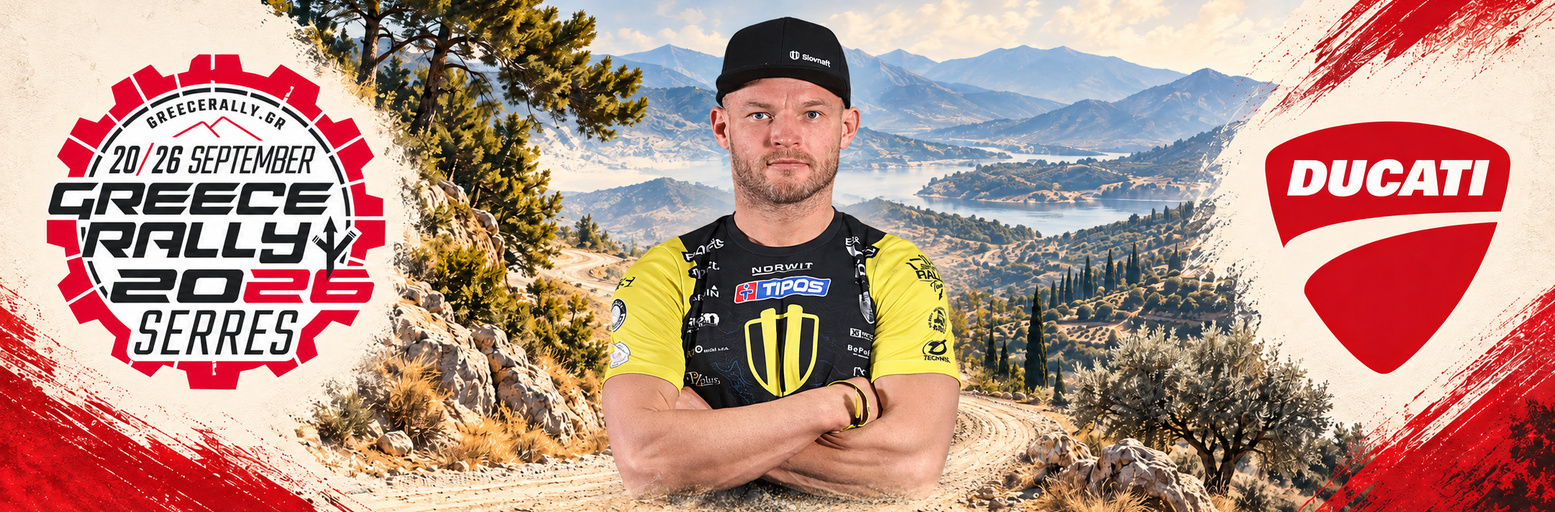
Greece Rally 2026 ahead of the prologue: Štefan Svitko on Ducati

The Greece Rally 2026 is about to get under way, and Štefan Svitko is already generating talk before the first special stage. The 2016 Dakar runner-up and six-time Greece Rally winner has been announced on a Ducati. The rally week begins on 20 September with the prologue near Eleonas. For fans, two intriguing questions come together: who finds their rhythm straight away, and how will the experienced Slovak fare on the Italian motorcycle?

As of: 19 September 2026. Preview of the announced start; prologue results are not yet available at this point.

18 kilometres to start with

The organiser plans an 18-kilometre special stage near Eleonas on Sunday, 20 September. The rally’s start and finish base is the Elpida Resort & Spa in Serres. The event runs until 26 September. The details come from the official route overview; changes to the schedule remain possible.

The prologue provides a first sporting indication. For a reliable assessment of the balance of power, however, a short opening stage is only a beginning. Navigation, concentration and handling the motorcycle over long days will become considerably more important as the rally goes on.

Svitko on a Ducati: the special entry before the start

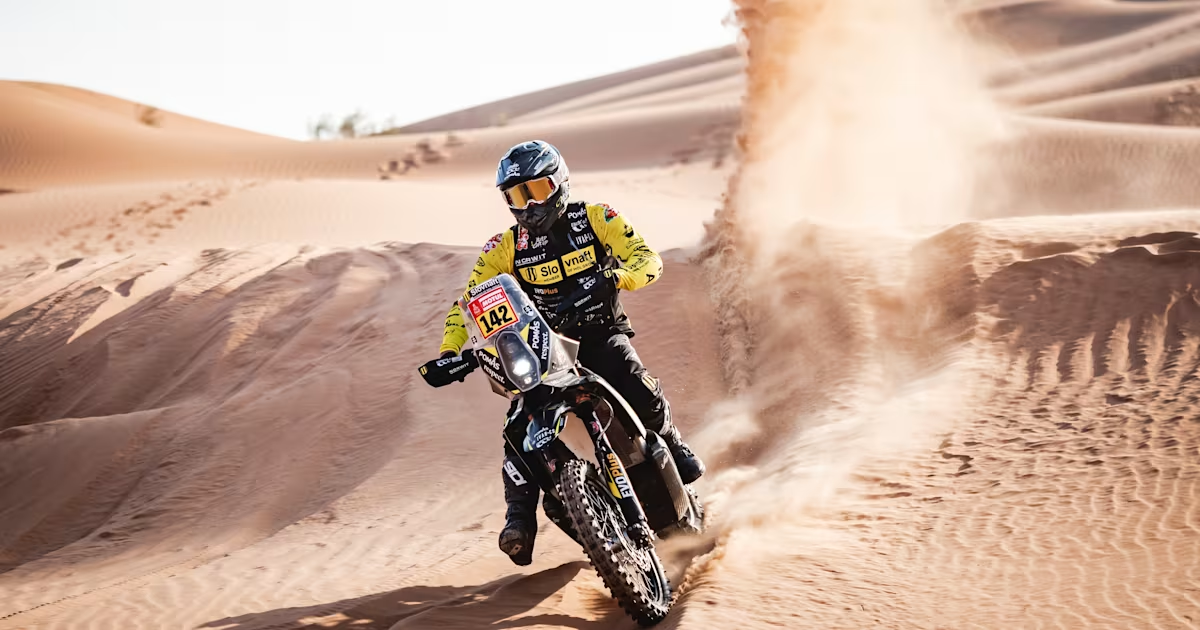
The Greek specialist outlet Enduro24 reported on 11 September that Štefan Svitko is entered with number 142 on a Ducati. It names the M2 class and a collaboration with Ducati Slovakia.

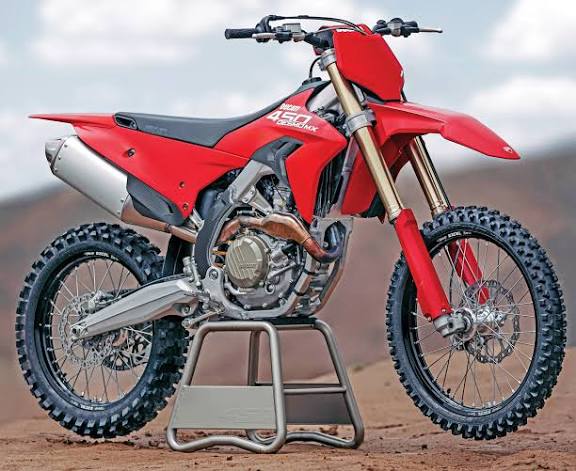
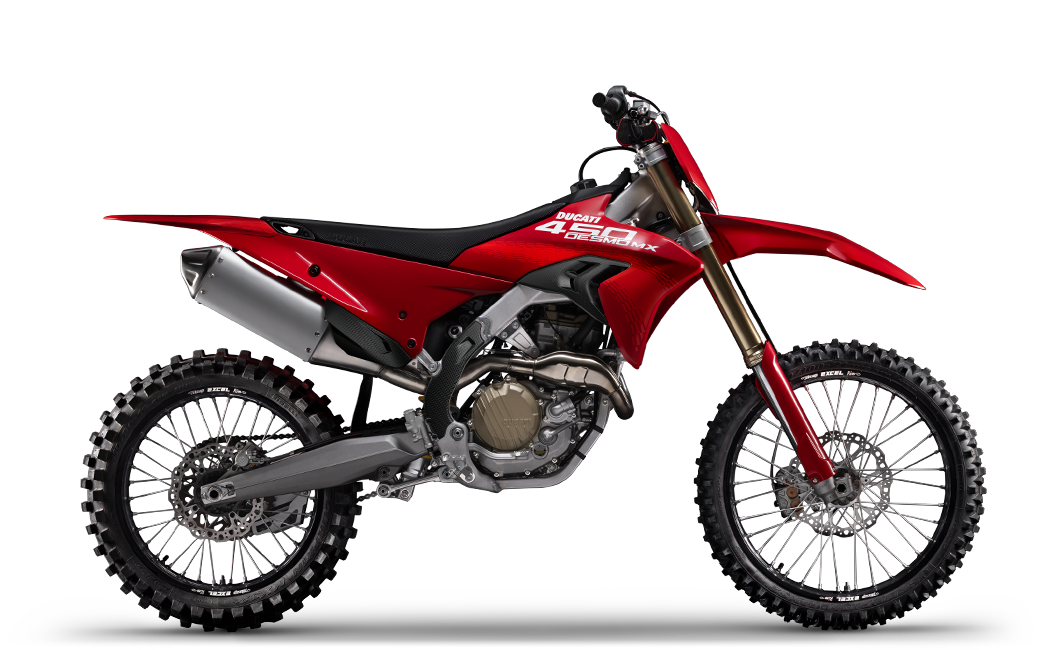
The wording on the model deserves a close look: Enduro24 expects the Desmo450 EDS. That is not yet a clear confirmation of the actual machine or its rally equipment. Nor can a Ducati factory team or a Dakar programme be inferred from this report.

In sporting terms, Svitko brings excellent credentials. According to the Slovak Motorcycle Federation SMF, he won the Greece Rally 2025 for the sixth time. He therefore returns as defending champion and could take a seventh overall win. It is precisely this experience that makes his announced Ducati participation interesting: a rider who knows the demands of this rally meets a new motorcycle set-up.

Who is Štefan Svitko?

Born on 26 June 1982 in Žaškov, Slovakia, Svitko is 44 years old at the start of the Greece Rally. His roots lie in enduro and cross-country; three European championship titles are part of his career. Away from the Dakar, too, he has won major rallies, including the Africa Eco Race in 2022. These milestones are documented in his official biography. In private life he is a father of two daughters and enjoys fishing, as his Dakar profile reveals.

His Dakar story: from best rookie to podium finisher

2010 to 2015: The enduro specialist finds his place

Svitko’s Dakar story begins in 2010, when the rally was still held in South America. The Slovak finished his debut 13th in the motorcycle classification and as best rookie. His next start showed the other side of the race: in 2011 a technical defect forced him out on the eighth stage. But he came back. With fifth overall in 2012 and 2015 and ninth in 2014, he established himself in the leading group. The results are recorded in his career overview.

2016: Stage win and the greatest success of his career

On his seventh Dakar, Svitko made the decisive step. On the tenth stage he took his first Dakar stage win, documented in the KTM race report of the time. At the finish in Rosario he stood on the podium as runner-up in the overall standings. Only Toby Price was faster; Svitko’s deficit was 39 minutes and 41 seconds. This is confirmed by KTM’s final report.

To this day it is his best Dakar result and also the most successful performance by a Slovak rider. For Svitko and his Slovnaft team, 2016 thus becomes the benchmark for the rest of his Dakar career.

2017 to 2019: Setbacks are part of it

The podium was not followed by an unbroken run of success. In 2017 Svitko finished 25th, in 2018 he had to retire with a shoulder injury. In 2019 a motorcycle defect ended his rally on the eighth stage. Both retirements hit him from a promising position in the overall classification. His official review thus also shows how strongly injuries and technology shape a Dakar career.

2020 to 2025: Consistent in Saudi Arabia too

With the Dakar’s move to Saudi Arabia, a new chapter began in 2020. Svitko finished 11th, then eighth in 2021 and 12th in each of the following two years. In 2024 he returned to the top ten in ninth; tenth place followed in 2025. The results overview shows that he remained competitive long after his podium success.

2026: The 17th start ends early

In January 2026 Svitko contested his 17th Dakar, again for the Slovnaft Rally Team on a KTM 450 Rally Factory Replica. On the third stage he crashed after around 140 kilometres, injured his right shoulder and had to retire. This is reported by the Slovak Motorcycle Federation.

His official Dakar profile describes a rider somewhere between classic privateer and factory pilot, supported by a small crew. There, Svitko stresses discipline, consistency and thoughtful riding. That fits a career marked as much by top results as by the willingness to line up again after retirements.

It is precisely this history that makes his announced Ducati outing in Greece interesting. Svitko brings experience from two Dakar locations, an overall podium and many years on KTM. His feedback could be particularly revealing when it comes to rideability, navigation and durability over long stages. Whether the start leads to a longer-term collaboration remains open.

Why the Desmo450 EDS would be an interesting base

Ducati officially lists the Desmo450 EDS as an enduro model. Its features include a single-cylinder engine of 449.6 cubic centimetres, a six-speed gearbox, a 21-inch front wheel and an 18-inch rear wheel. The manufacturer states a fuel tank capacity of 8.5 litres.

For a rally, such an enduro base raises practical questions: How is the navigation device mounted? What range is needed? How do ergonomics and servicing procedures hold up over long riding days? These are points to watch for the possible entry, not conversions to Svitko’s motorcycle that have already been confirmed.


After the prologue the challenge grows markedly

As early as Monday, the organiser plans the Lailias stage with 283 kilometres of special stage. The two marathon days follow on 22 and 23 September; the Erymanthos Forest Village is planned as the overnight location. These key points of the official plan show how quickly a short opener turns into an endurance test.

To assess Svitko’s performance, it is therefore worth looking beyond the first day’s time. Will his performances remain consistent? Will navigation go without major time losses? How will the interplay of rider and motorcycle develop over several days? Only then does a more meaningful picture emerge.

Amateur riders should also keep an eye on Serres

The main competition is navigated by roadbook; separate GPS rules apply to the Rally Challenge and Adventure Ride. The organiser’s information on navigation makes clear that the Greece Rally demands more than pure speed.

A simple priority for your own preparation can be drawn from this: operating and reading the navigation must be as well practised as riding technique. A controlled start, a familiar cockpit and enough reserves for the following days make more sense for amateurs than taking their cue from the pace of a multiple winner.

The prologue opens the sporting story of this rally week. Svitko’s announced Ducati start gives it an additional technical angle. The first times will be exciting; how well the package works over a whole rally will become clear afterwards on the long stages of northern Greece.

Published inNewsRally

Greece Rally with a fire extinguisher: soon standard equipment?

A small fire extinguisher on a rally bike: what looks like a detail in the briefing points to a bigger issue. Citing Forest Service requirements, the Greece Rally demands at least 0.5 kg for motorcycles. For amateur riders this is of practical importance – and a reason to look at forest and vegetation fires in popular rally regions of Greece, Croatia and Bosnia and Herzegovina.

Greece Rally: at least 0.5 kg for motorcycles

In its official briefing, the Greece Rally specifies at least 0.5 kg for motorcycles and 3 kg for SSVs and quads. Vehicles are to be equipped accordingly before each race day. The organisers offer to supply fire extinguishers.

This documents a requirement for this event. It cannot be taken to mean a general fire extinguisher obligation for all motorcyclists in Greece. The short note also does not conclusively explain which designs, test standards and mountings are accepted. Participants should therefore agree their specific model before travelling, or clarify with the organisers the availability and issue of a unit.

Rally landscapes are also sensitive natural areas

Forest tracks, dry meadows and long mountain sections make many rally routes appealing. They also lead through landscapes in which vegetation fires can spread under unfavourable conditions. This is not just about dense forest: grass and scrub vegetation are part of the picture too.

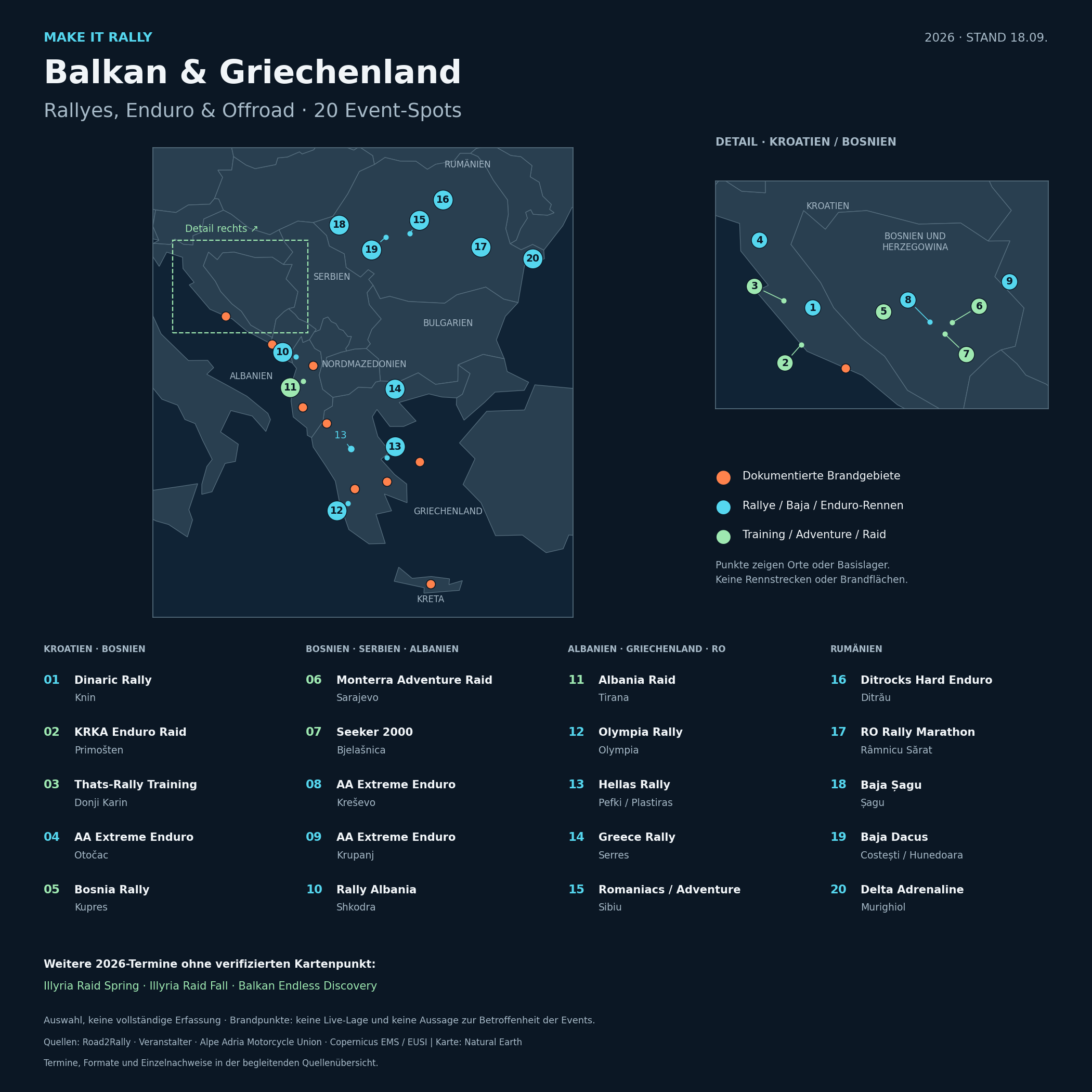
One example of the region’s importance in motorcycle rally sport is the Dinaric Rally with its base camp in Knin, Croatia. Earlier editions also went through Bosnia and Herzegovina; the organiser’s 2022 information documents marathon stages there. Such routes combine sporting experience with responsibility for the landscape being crossed.

The actual fire risk depends on factors including dryness, temperature, wind and local vegetation. A national figure therefore does not say how dangerous a particular rally stage is on a particular day. Likewise, the following figures do not show that rallies or motorcyclists cause fires.

How often does it burn? The trend since 2018

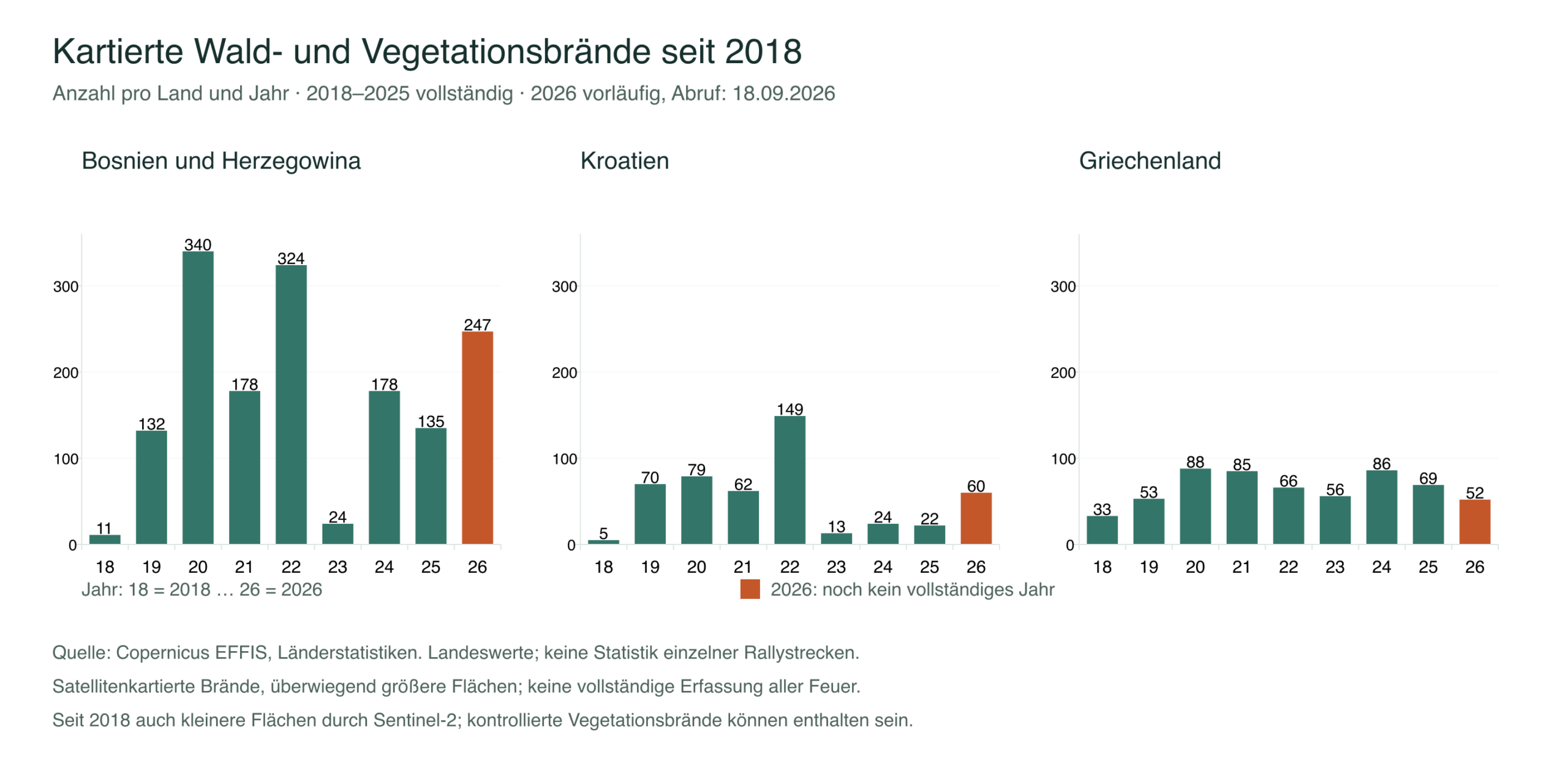
The following overview shows the number of forest and vegetation fires mapped by EFFIS in three relevant countries. It covers the full years 2018 to 2025 and the provisional interim figure for 2026.

[Click image for full size]
The series shows strong fluctuations. In Bosnia, 2020 and 2022 stand out; in Croatia, especially 2022. The figure so far for 2026 in Bosnia and Croatia is already above the respective full-year total for 2025. A steady annual increase cannot be derived from this, however.

The number alone also does not describe the extent of damage: in 2023 Greece had 56 mapped fires, fewer than the 88 in 2020. The mapped burnt area, however, was considerably larger in 2023, at around 174,773 hectares, than in 2020 with 14,915 hectares.

For context: EFFIS is not a complete count of all fires or fire service call-outs. Satellite mapping mainly captures larger burnt areas; since 2018, Sentinel-2 imagery has also allowed smaller areas below about 30 hectares to be recorded. Controlled vegetation fires may be included. These limits are described in the EFFIS methodology.

Burnt area: a look beyond the Balkans

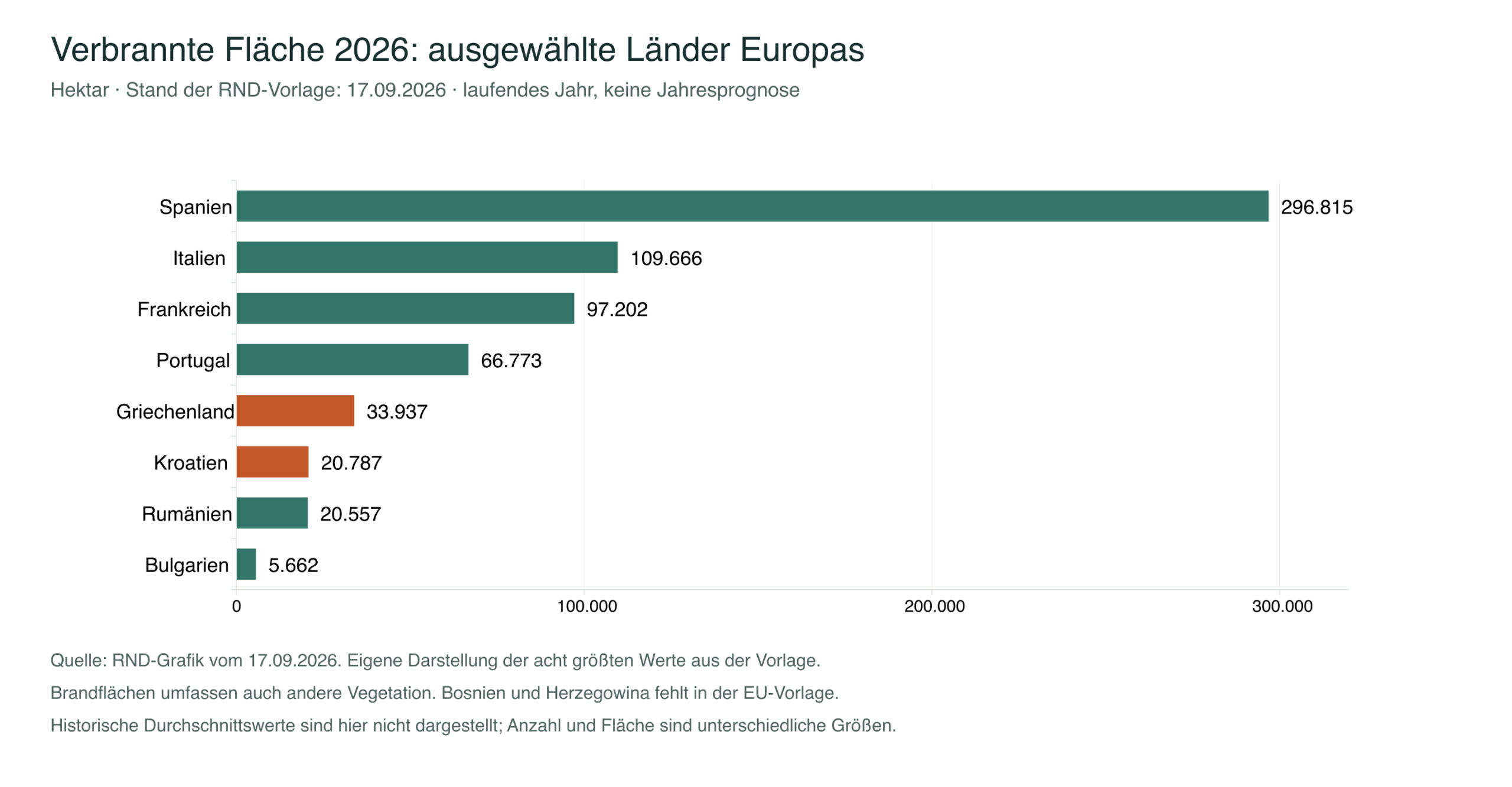
Besides the number of fires, the burnt area also shows how severely individual countries are affected. The following graphic takes the eight largest 2026 values from the RND overview as of 17 September 2026 and presents them anew. Greece and Croatia are highlighted.

Burnt area in 2026 in eight European countries: Spain 296,815, Italy 109,666, France 97,202, Portugal 66,773, Greece 33,937, Croatia 20,787, Romania 20,557 and Bulgaria 5,662 hectares; as of 17 September 2026.
[Click image for full size]
Own presentation based on the RND graphic of 17 September 2026. Selection of eight EU countries; no total for Europe. Bosnia and Herzegovina is not included in the EU source data.

The source gives 33,937 hectares for Greece and 20,787 hectares for Croatia. These are national figures for the area burnt so far, not statements about the risk on individual rally routes. They also cannot be directly equated with the number of fires. The data of this graphic is dated one day before the annual table was retrieved.

The historical averages from the source are deliberately not used here: the screenshot does not clearly explain whether whole calendar years or the corresponding part of the year are being compared. No percentage increase over the long-term average is therefore derived from this graphic.

Climate change and heatwaves: why the danger may grow in future

Climate change is relevant to the longer-term outlook. The IPCC report on the Mediterranean region states with high scientific confidence that increasing heatwaves, together with drought and land-use change, can reduce vegetation moisture, lengthen the fire season and favour large, severe fires.

The IPCC’s physical assessment projects, at global warming of 2 °C and more above pre-industrial levels, an increase in drought and fire-favouring weather conditions in the Mediterranean. These are climate projections for warming levels, not predictions for an individual rally or a particular year.

[Click image for full size]
More fire weather does not automatically mean more fires every year. Whether a fire starts and how large it becomes also depends on ignition sources, vegetation, land use, prevention and firefighting. The fluctuating annual figures therefore do not contradict a long-term rise in weather-related danger. Conversely, a single fire year cannot be attributed to climate change using this table.

This outlook is particularly relevant for Mediterranean-influenced rally regions. However, no blanket percentage forecast can be derived from it for individual areas of Croatia or Bosnia and Herzegovina: altitude, proximity to the coast and local conditions differ. For riders and organisers, it follows that heat and dry periods should be taken seriously in scheduling, route approval and daily briefings.


Check the current fire situation before travelling

An annual table is no substitute for a current situation map. The RND map of current fires and burnt areas in Germany and Europe is suitable as a supplementary overview. Directly from Copernicus, the EFFIS Current Situation Viewer shows fire reports, mapped areas and fire danger forecasts.

With any map, the date of the data and the selected period matter. For whether a rally route can be used, the organisers’ announcements and local official orders remain decisive.

What does “0.5 kg fire extinguisher” mean – and is there one for bikes?

For a classic powder extinguisher, the kilogram figure usually refers to the mass of extinguishing agent: 0.5 kg equals 500 grams of powder. Container, valve and bracket add to the weight carried. One example of a different extinguishing system is the PROTENG Zenova FX500: the supplier gives 0.5 kg of water-based filling and 0.75 kg total weight.

500 ml of contents, 500 grams of unit weight and 0.5 kg of extinguishing agent are different specifications. The Greece Rally briefing does not expressly explain how its weight figure is to be interpreted for different designs. Confirmation of the specific unit is therefore decisive.

Compact units are already available:

  • 0.5 kg powder extinguisher: Premier Fire Services in South Africa lists a Firemate of this size expressly also for motorcycles. This documents the size, but neither a European approval nor acceptance at the Greece Rally.
  • 500 ml liquid extinguisher: The Firexo 500ml Aerosol is offered with a transport bracket. According to the manufacturer it is 295 mm tall and weighs 1.1 kg when filled. The volume figure is not automatic confirmation of a 0.5 kg requirement.
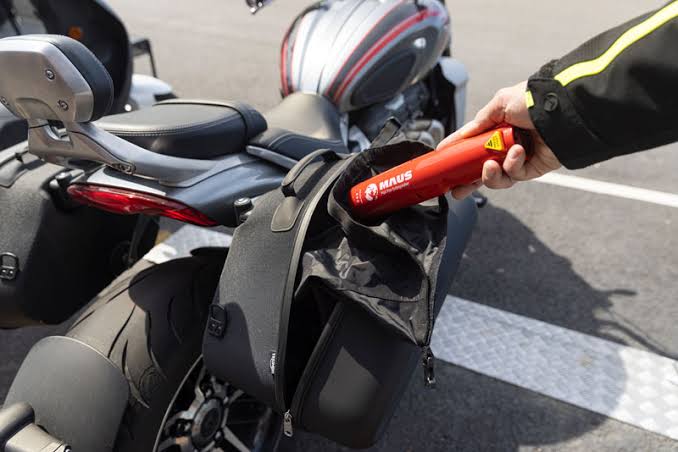
  • Aerosol unit marketed for motorcycles: The MAUS Xtin Klein is, according to the manufacturer, 24 cm long and 480 grams in total weight. It uses a potassium-based aerosol technology and is not a 0.5 kg powder extinguisher. Its acceptance as a substitute must be expressly clarified.

The stated fire classes and suitability for the intended use are equally important. Product advertising aimed at motorcyclists is no substitute for confirmation by the rally organisers. For none of these examples is a Greece Rally approval documented here.

What amateur riders can do in practice

  • Before departure: Read the current regulations and briefing, clarify which unit is accepted and agree a secure, quickly accessible mounting suited to off-road use.
  • Before each riding day: Check hazard warnings, route changes and closures; inspect the fire extinguisher according to the manufacturer’s instructions.
  • During breaks and at the bivouac: Keep hot vehicle parts away from dry grass. The German Fire Brigades Association (Deutscher Feuerwehrverband) expressly warns against hot surfaces coming into contact with vegetation.
  • In case of fire: Alert the rally organisers or the fire brigade and put your own safety first. A small extinguisher is intended for an early response, not for fighting a spreading forest fire. If in doubt, retreat takes priority, as DFV and vfdb explain.

Will fire extinguishers be required more often in future?

The Greece Rally shows an already concrete requirement. The information page for Hellas Rally 2027 also lists a “Fire extinguisher flare” for motorcycles – though with different wording and without confirming that the same unit would be accepted at other events.

Our assessment: in rally regions prone to forest fires, requirements to carry small extinguishing devices could become more likely in future. This is a conceivable development also for events in Croatia and Bosnia and Herzegovina, for example as part of individual permits or in particularly dry conditions.

A corresponding general obligation for motorcycles, or an already announced introduction in these two countries, is not documented by the sources used here. Climate projections underline the importance of precaution; they do not predict a specific new rule. And a fire extinguisher does not make a closed route passable.

For amateur riders the practical conclusion remains clear: fire protection belongs in preparation alongside navigation, range and personal equipment. The short line in the Greece Rally briefing is a good reason to deal with it in good time.

As of: 18 September 2026. EFFIS figures are mapped national values; 2026 is provisional. Product details come from the linked suppliers. The outlook on future event requirements is an editorial assessment.


Published inAllgemeinNews

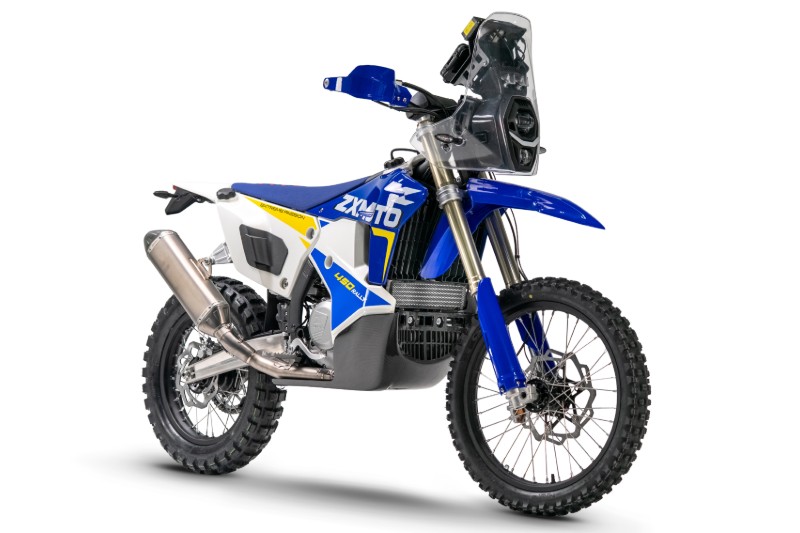
Skyler Howes joins ZXMOTO and becomes Tobias Ebster’s teammate

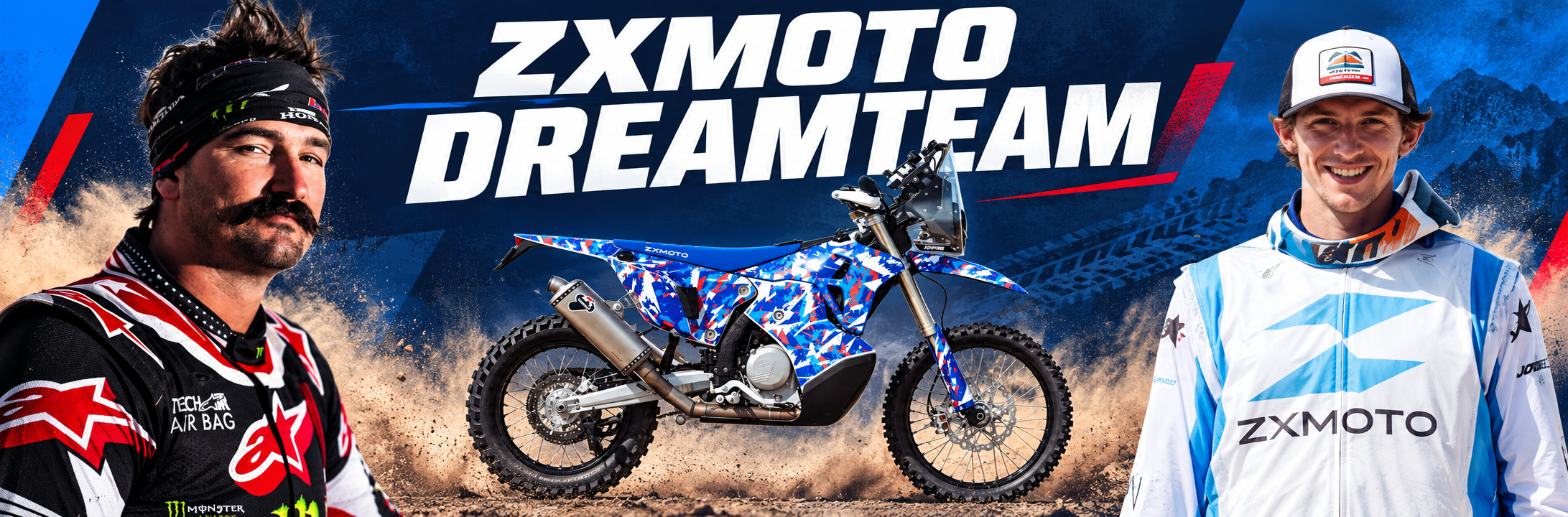
This gives the new rally project a pairing that deserves attention: a Dakar podium finisher with years of factory experience and an Austrian who has worked his way up from the class without assistance to the leading group. A new dream team? The conditions are promising. The Rallye du Maroc 2026 is meant to provide the first shared benchmark.

Skyler Howes strengthens ZXMOTO Joyride

As 131 Off-Road reported on 17 September 2026, Howes is joining the ZXMOTO Joyride Factory Rally Team. The new factory team is due to make its debut at the Rallye du Maroc. The American is scheduled to start in RallyGP there, while Ebster is due to ride in Rally2.

The signing adds to the programme already presented, with Joyride Race Service and the ZXMOTO 450 Rally. A project built around one prominent rider thus becomes a squad that can draw on two different sets of experience.

What Howes brings to the new team

Howes knows competition at the front. His third place overall at the Dakar 2023 is among the most important results of his career, as his Honda rider profile also documents. At the Dakar 2026 he also won stage eleven. Honda reported on this first Dakar stage win on 15 January.

On 30 June 2026, Monster Energy Honda HRC confirmed the split after three seasons together. A different task now begins for Howes: with a new manufacturer, it is not only about results but also about developing a motorcycle and the team’s processes under race conditions.

In our view, this is where much of the value of this signing lies. A rider who knows different factory structures brings points of comparison. His feedback could help to assess the strengths and weaknesses of the new package more quickly. Of course, this is not yet a guarantee of immediate top positions.

Tobias Ebster: long since more than a talent

Ebster’s results to date also speak for themselves. On his Dakar debut in 2024 he won Original by Motul, the category without a dedicated assistance team, and was the best rookie. In 2025 came ninth place in the motorcycle overall standings and second place in Rally2. These results are recorded in the official Dakar profile.

This development is interesting for the ZXMOTO project: Ebster knows both the self-reliance of a rider without a mechanics team and competing with professional support. He has already proved that he can finish a Dakar well up the field.

ZXMOTO UK describes the collaboration with Ebster, Joyride Race Service and the 450 Rally in its presentation of the factory programme. Howes now joins this set-up. Development work is thus shared between two riders, each of whom can contribute their own experience and feedback.

The ZXMOTO 450 Rally has to prove itself in the race

The ZXMOTO 450 Rally is at the centre of it all. The manufacturer’s stated aim is to use findings from rally competition for the further development of its motorcycles. Joyride Race Service takes on the role of the factory team.

In our view, three questions will matter most in assessing the project: How reliably does the motorcycle run over several long days? How well do both riders cope with its handling? And how quickly does the team turn their feedback into improvements?

With a new rally motorcycle in particular, a single fast stage says only so much about the whole package. It will be more telling whether speed, navigation, maintenance and equipment come together over the entire event.

Morocco as the first test ahead of the Dakar 2027

The next key date is the Rallye du Maroc from 28 September to 3 October 2026. The official W2RC preview names a prologue and five stages between Agadir and the bivouac near Zagora. For the FIM field, 1,530 kilometres against the clock, including the prologue, are planned.

This is a suitable opportunity to watch the new team in direct competition. Howes is due to compete in RallyGP, Ebster in Rally2. It is therefore worth looking at their performances within the respective class and also paying attention to consistency over the rally week.

The bigger goal of the ZXMOTO factory programme remains the Dakar 2027. Morocco can provide insights that are hard to gain from short test rides.

A dream team with a clear task

Howes and Ebster make ZXMOTO one of the interesting new projects in rally sport. Both bring proven sporting quality. Together they have the potential to advance the development of the 450 Rally and give the team a clear direction early on.

Whether this promising line-up becomes a successful dream team will be decided on the course. For rally fans, that is one more reason to look closely in Morocco: how quickly will two strong riders, a new motorcycle and the Joyride crew come together?

As of: 18 September 2026. Team change and announced class allocation according to the 131 Off-Road report; other details according to the linked manufacturer and organiser sources.

Published inNews

The Genghis Khan Rally – Premiere 2026

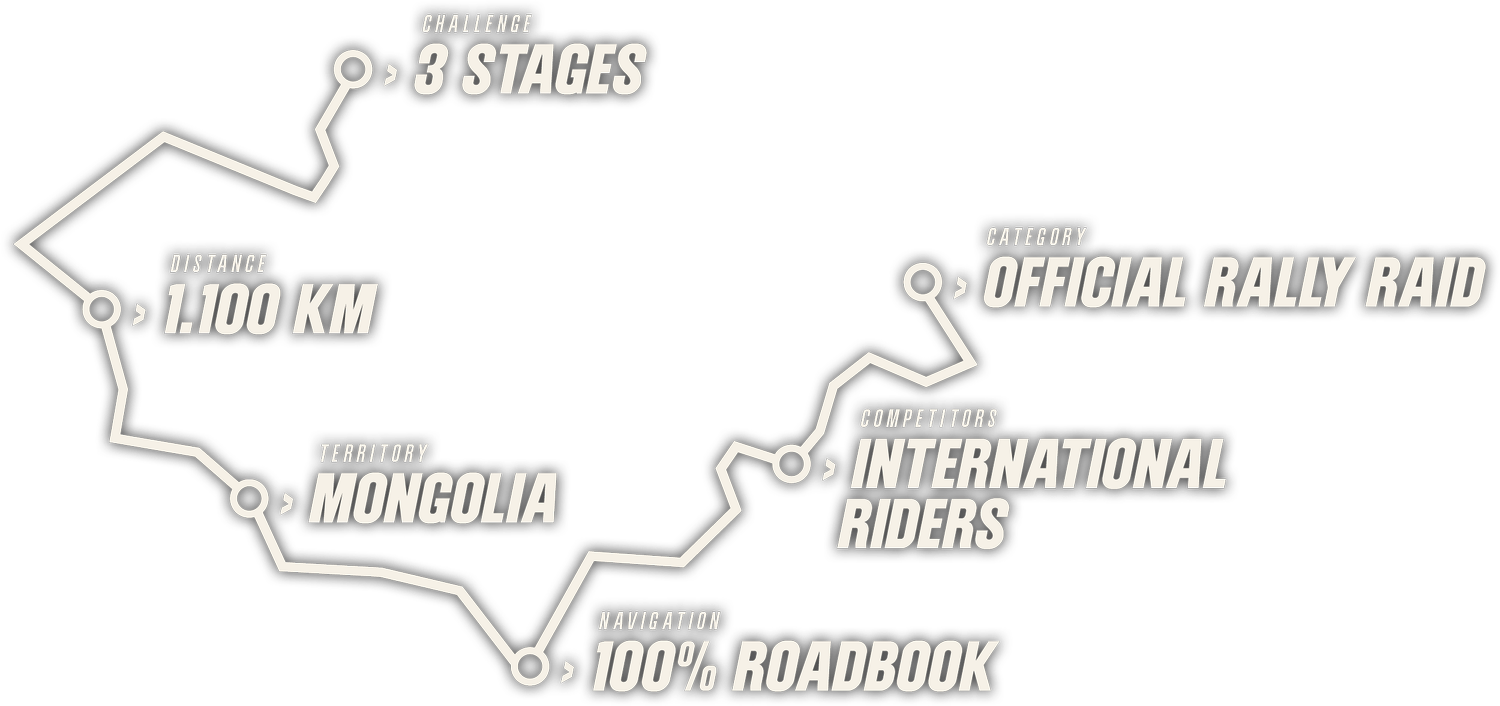
ended with a twist on the final stage for the motorcycles: D. Altangerel made up a deficit of more than 20 minutes and moved to the top of the overall standings. The premiere, held in Mongolia from 9 to 12 September, thus delivers a gripping sporting story. At the same time, attention is already turning to a longer edition in 2027.

The premiere: three long stages between Altanbulag and Buren

Organised by Nomadic Off-Road, the rally used a route designed by Cap 204 SL and roadbooks to FIM specification. The published route plan for 2026 comprised a 22-kilometre prologue near Altanbulag and three major tests: 372 kilometres to Buren, a 379-kilometre loop and 370 kilometres back to Altanbulag. These figures describe the route as announced.

According to the organiser’s website, entry for 2026 was fully booked. The overall results list available contains 44 entries: 24 motorcycles, 15 SSVs and five cars. This is the number of listed participants or vehicles, not a confirmed number of finishers. Some records contain DNF notes with a 20-hour penalty.

Motorcycles: Altangerel turns the race around on SS3

Among the motorcycles, the fastest times on the three tests were shared by three different riders. B. Davaa set the fastest time in his class on SS1 with 7:11:00 hours. On SS2, B. Bayarsaikhan was the fastest motorcyclist with 6:36:37 hours.

Before the final test, Davaa led the motorcycle standings with an accumulated time of 14:39:40 hours. Bayarsaikhan followed with 14:54:01 hours, and Altangerel was on 15:00:15 hours. For Altangerel, that meant a deficit of 20:35 minutes to the leader.

On SS3 the order changed. Altangerel set the best motorcycle time with 7:23:46 hours. Davaa needed 7:55:54 hours. Altangerel thus took 32:08 minutes out of his rival on the final test and, according to the overall results list available, won the motorcycle classification by a margin of 11:33 minutes.

The top three in the motorcycle classification, with total times and gaps within the class:

  1. D. Altangerel, number 021: 22:24:01 hours.
  2. B. Davaa, number 004: 22:35:34 hours, 11:33 minutes behind.
  3. B. Bayarsaikhan, number 001: 22:51:57 hours, 27:56 minutes behind.

The times make this change of lead clearly traceable. However, the table does not show which navigation errors, technical problems or tactical decisions lay behind it.

SSVs and cars: Udiikhuu and Sharkhuu in front

In the SSVs, B. Udiikhuu, number 405, set the best class time on all three tests. His total time of 18:31:43 hours was also the lowest in the list across all classes. B. Gansukh followed with 19:46:57 hours, ahead of E. Jargalsaikhan with 20:09:10 hours.

G. Sharkhuu, number 203, led the Cars class in 21:35:05 hours. Behind him were C. Natsagdorj with 22:57:22 hours and E. Ganbaatar with 25:32:28 hours. For sporting context, the respective classes remain decisive.

2027: six stages and a date in August

The official announcement for 2027 names six stages in August. Registration is due to open on 20 September 2026. Compared with the three main tests of the premiere, the number of stages would thus double. The announcement does not yet give an exact event date with start and end dates.

For riders, a longer rally changes preparation: more consecutive race days demand a maintenance routine that stays reliable over a longer period, and sufficient recovery. In our view, this very expansion will show how well the format can develop into a permanent event for international participants.

What prospective entrants can already plan for 2027

The organiser’s FAQ gives a motorcycle rate of US$5,000 for 2027. US$8,000 is listed for cars and US$7,500 for SSVs. No personal total budget can be derived from this yet; what matters are the services actually included and one’s own travel and vehicle planning.

For navigation, the FAQ provides for robust digital roadbooks. F2R devices are said to be available to rent; RallyComp is planned for tracking and timekeeping. The organiser also describes the transport of luggage, spare parts and tools. Private assistance vehicles are possible subject to the relevant rules and logistical requirements.

Nomadic Off-Road describes its 2027 rally package as a further option: it combines a fully equipped rally motorcycle with mechanic service, entry fee, accommodation and meals. The price is given on request, and flights are not included. Anyone considering this offer should have the scope and schedule confirmed for the six-stage edition.

A premiere with sporting tension and a concrete sequel

The motorcycle standings show how much can change on a single long test. Altangerel’s chase gives the first edition a clear sporting highlight. For the future, the next steps have already been named: more stages and a new edition in August 2027.

Whether this becomes a firmly established rally date remains to be seen. A fully booked premiere and the announced expansion do, however, give reason to keep following the Genghis Khan Rally.


As of: 16 September 2026. Basis for results: the overall results file provided, “Overall_Results.xls”, classifications SS1 to SS3. Names are given as in the file; class gaps were calculated from the total times. Information on the route and on 2027 comes from the linked organiser information.

Published inNewsRally

The Rallye du Maroc 2026 gets its first dedicated Malle Moto classification

The Rallye du Maroc 2026 will have a dedicated Malle Moto classification for the first time. This puts the spotlight on riders who compete without their own assistance team. For them, the working day does not end at the stage finish: after navigation, sand and long liaison sections, there is still servicing to do on their own motorcycle.

What is new at the Rallye du Maroc 2026

The official W2RC preview of 4 September announces a separate Malle Moto classification for the first time in 2026. Participants are due to spend the nights in the bivouac in simple tents. What is explicitly new, then, is the separate classification of these riders. The announcement does not mean that nobody had previously started in Morocco without their own service team.

The rally takes place from 28 September to 3 October 2026. The prologue near Agadir is followed by five stages: first to Zagora, then four loops around the bivouac there. For FIM participants, 1,530 kilometres against the clock, including the prologue, have been announced. In 2026, Morocco is the penultimate round of the World Rally-Raid Championship.

Malle Moto: ride, wrench, start again

The principle is easy to explain: the rider also does the work for which others have an assistance team. Checking the motorcycle, spotting wear, organising tools and carrying out repairs are all part of the daily routine. At the same time, food, sleep and preparation for the next start all have to fit in.

This format is familiar from the Dakar category Original by Motul. There, the organiser describes, among other things, the transport of an equipment trunk and shared infrastructure. Riding without a team therefore does not mean carrying all spare parts on the motorcycle. Which support is permitted and which logistics are included is determined by each event.

How the new classification fits into the sport

The W2RC framework for 2026 provides for Malle Moto as an optional category within Rally2. Organisers can offer it to riders without assistance; they set the specific conditions for their rally. These include, in particular, the organisation of transport for personal equipment.

Participants remain part of the Rally2 sporting environment and can score points for the FIM Rally-Raid World Cup for Rally2 riders. A separate Malle Moto classification thus makes a particular form of participation visible, without turning it into a stand-alone motorcycle world championship.

Which details still need close checking

The news of the new classification is confirmed. However, a complete Malle Moto package of services cannot be derived from it. The 2026 FIM Supplementary Regulations, linked on the organiser’s website and approved on 31 July, contain no section explicitly labelled Malle Moto.

For participants, the additional category conditions are therefore decisive: which trunks and wheels will be transported? Which tools will be available? What help between riders is permitted? Only the confirmed requirements of the Rallye du Maroc should be used here. The Dakar rules cannot be transferred automatically.

Why this premiere is interesting for privateers

The format sets a particular sporting challenge: pace and care for the machine have to go together. A small time gain on the track can lose its value if a laborious repair then cuts into recovery time. Technical routine and an orderly procedure in the bivouac thus become important prerequisites for the next day.

From our point of view, this is exactly where the appeal of the new classification lies. It gives a stage of their own to riders who want to manage the entire effort themselves. The Rallye du Maroc 2026 thus offers an additional reason to look beyond the top positions: at the motorcycles in front of the small tents and the people who get them back to the start the next morning.

As of: 16 September 2026. This is based on the linked official W2RC and organiser information.

Published inNewsRally

ZXMOTO 450 Rally: Australia and New Zealand confirmed – European launch planned for 2027

The ZXMOTO 450 Rally is heading for the showroom. Its addition to the model range is confirmed for Australia and New Zealand, and the Australian website names 2027 as the planned launch year. Sales plans in Europe are also becoming more concrete: the rally model is announced for Spain in 2027, and in Switzerland a dealer listing with a price already exists.As of: 15 September 2026

The 450 Rally gets its place in the range

This is exciting news for rally fans: the ZXMOTO 450 Rally is officially part of the brand’s planned line-up in Australia and New Zealand. Both country sites already list the motorcycle as “Rally 450” with the note “Coming Soon”. The Australian model page also explicitly states “Coming soon in 2027”. This gives a first indication of timing for the market launch there.

Sources: ZXMOTO Australia, ZXMOTO New Zealand

Urban Moto Imports (UMI) is behind the market entry. The company has announced a long-term distribution partnership with ZXMOTO for both countries. Its existing brand portfolio includes Royal Enfield, Benelli and Rieju, among others. The launch is therefore being handled by an established regional importer.

Source: Urban Moto Imports

When will the ZXMOTO 450 Rally go on sale in Australia and New Zealand?

For Australia, the most concrete official statement so far is: 2027. The model page does not yet give a specific month. For New Zealand, the addition to the range is also confirmed; however, no separate binding delivery date can be derived from the announcements reviewed.

There is a risk of confusion with 8 October 2026. On that day ZXMOTO intends to publish prices and open pre-orders for its first model range in Australia and New Zealand. The list confirmed for this so far comprises the 820RR, 500RR, 500F, MX250 and MX450. The 450 Rally is mentioned separately as a future addition. The October date is therefore not, so far, a confirmed order or delivery start for the rally model.

Source: Bike Review

Product launch in Europe: concrete announcements for 2027
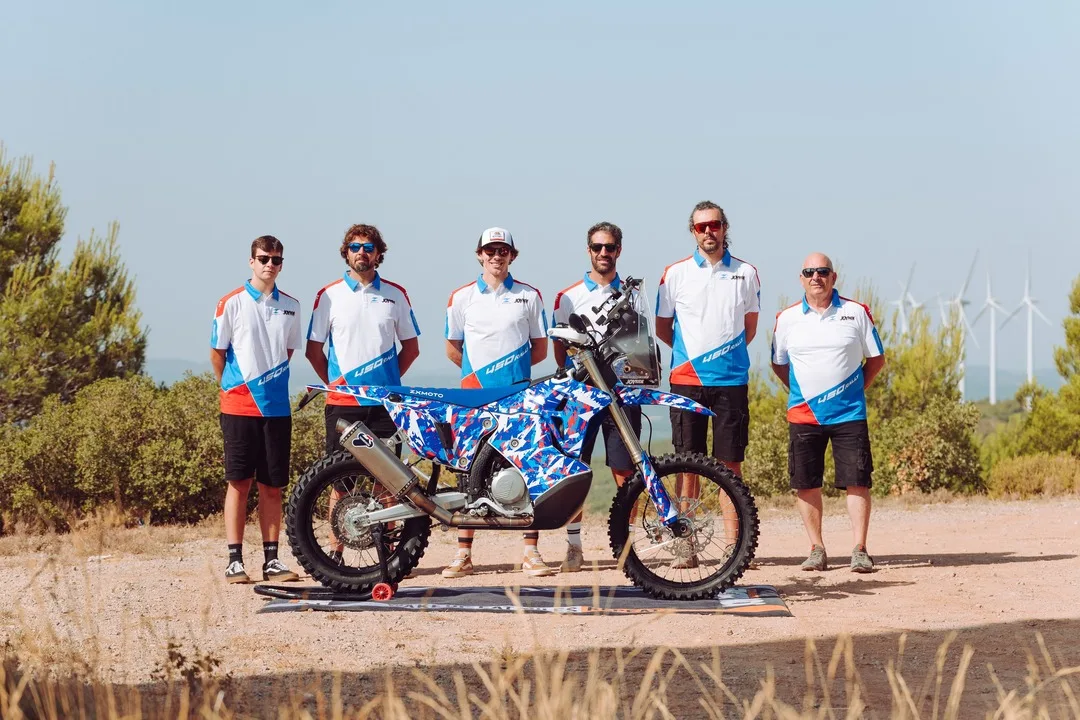
The introduction of the ZXMOTO 450 Rally is also taking shape for European buyers. However, the information available so far relates to individual countries. It does not yet prove a uniform sales start across Europe.

Spain: 450 Rally announced for 2027

According to a report by the trade magazine MotoTaller on the Spanish market entry, the 450 Rally is among the models announced for 2027. The motorcycle is also said to be available to customers there. Desmotrón is taking over distribution of the brand in Spain and is also to build a network of sales and service partners.

This means there is already a concrete sales announcement for one EU market. The report does not yet give an exact delivery month or a Spanish retail price for the 450 Rally.

Source: MotoTaller on ZXMOTO’s market entry in Spain

Switzerland: dealer gives 8,990 CHF and 2027

A further indication comes from Switzerland. Dasimoto in Kradolf lists the ZXMOTO 450 Rally in its model and delivery overview at 8,990 Swiss francs. The expected availability is given there as 2027.

This dealer information provides a first price guide for the Swiss market. It is not, however, a list price valid across Europe and cannot be transferred directly to Germany. The delivery period should also be understood as approximate planning.

Source: Dasimoto: ZXMOTO models and delivery dates

Germany: delivery date and price still open

At the time of research, no reliably confirmed sales start for the ZXMOTO 450 Rally in Germany could be established. A German list price and the final specification offered here are also not documented by the sources cited.

For German prospective buyers, the announcements from Spain and Switzerland are nonetheless relevant: they show that sales of the rally model are being prepared in European markets. When regular ordering and delivery in Germany will be possible remains to be seen.

Dakar project with Tobias Ebster

The 450 Rally is attracting additional attention through its announced motorsport programme. For its Dakar entry, ZXMOTO is working with Joyride Race Service. Tobias Ebster is the intended rider and is to campaign the ZXMOTO 450 Rally in rally raid.

According to the brand, experience from competition is to feed into the further development of its motorcycles. Rally use offers the chance to test the concept under demanding conditions. Which findings and components will actually be carried over into the customer version remains to be seen.

Source: ZXMOTO UK on the Dakar project

Which details of the production version are still missing?

The Australian product page is so far mainly an announcement. A full data sheet for the later local production version is still missing there. The European sales plans also do not yet answer all questions about the specification offered in each market. The following points are particularly important for prospective buyers:

  • Final engine output and ready-to-ride weight of the customer version
  • Fuel tank capacity, suspension equipment and service intervals
  • Specific version and registration status in each country
  • Binding final price and exact start of customer deliveries

The eventual specification will decide who the motorcycle appeals to. Competitive rally use calls for different qualities than longer touring with luggage. The confirmed addition to the range does not answer these questions on its own.

Source for the current state of Australian information: Official model announcement

Conclusion: 2027 will be decisive for the ZXMOTO 450 Rally

The ZXMOTO 450 Rally is confirmed as a future production model for Australia and New Zealand. Australia already names 2027 as the planned start. For Europe, the Spanish announcement and the Swiss dealer listing add to the picture: the motorcycle is also being planned for 2027 there.

A Europe-wide launch with a uniform date is therefore not yet confirmed. For Germany in particular, concrete details on price, specification and start of deliveries are still missing. The outlook is becoming clearer, though: the 450 Rally is meant to reach customers in several markets – and 2027 is the only year concretely named so far.

Published inAllgemeinNews